For most of the life of the house on 47th Street, the economics of a diamond ring were simple. The stone was the expensive part. The gold around it was a smaller share of the ticket, the frame for the picture. In under ten years, that turned upside down. Here is what happened, in numbers, and why it is the reason Dorvelle exists.
The stone fell, fast
The average retail price of a generic one carat lab-grown diamond fell from about $5,450 in 2016 to about $1,425 by August 2023, a drop of roughly three quarters, by analyst Paul Zimnisky’s tracking. Lab-grown diamonds had been made for gem use for decades, but they only became a mainstream jewelry product in the late 2010s, when chemical vapor deposition (CVD) growers learned to produce large, colorless crystals at scale. Then supply did what supply does.
It kept falling after that.
De Beers, the largest diamond miner in the world, gives the cleanest timeline because it sold lab-grown stones itself. Its Lightbox brand launched in 2018 at a flat $800 per carat, a price chosen to sit far below the market at the time. In 2024 Lightbox cut its standard line to $500 per carat, its first cut since launch. In May 2025 De Beers announced it would close Lightbox altogether, pointing to wholesale lab-grown prices that had fallen by around 90 percent.
Those numbers describe wholesale and generic retail, and a finished, well-cut, high-color stone set by a good bench still costs money. But the direction is not in doubt. A two-carat, D color lab-grown stone that would have been a serious purchase in 2016 is now a fraction of that cost. Our lab-grown guide explains how those stones are grown and graded, and graded the same way covers why falling prices did nothing to the grading.
The gold got expensive, fast
Gold traded below $1,400 an ounce through most of 2019, crossed $3,000 in March 2025 and $4,000 that October, and trades around $4,150 an ounce as this is written in early October 2026, roughly triple the 2019 price.
The LBMA benchmark ended 2023 a little above $2,000 on the way up.
Central bank buying, inflation and uncertainty all played a part, and the World Gold Council has documented record central bank purchases in recent years. For a ring buyer, the cause matters less than the result: every gram in a band now costs about three times what it did.
What that does to a ring
A solitaire with about 4 grams of 14k gold holds about 2.33 grams of pure gold, 0.075 troy ounces, worth about $97 at the 2019 price of $1,300 an ounce and about $311 at $4,150. A troy ounce is 31.1 grams, and 14k gold is 14 parts in 24, 58.3 percent, with the rest alloy.
That is the raw metal alone, before casting losses, finishing, labor and the margin every jeweler adds on top. Each of those moves with the metal price, so the gap in the finished ring is wider than the gap in the raw gold.
Now put the two curves on one chart. The stone fell to a quarter of its 2016 price, then lower. The gold went up threefold. On a lab-grown ring, the metal stopped being the frame and became a large share of what you pay for. The house on 47th Street saw it in its own price list: the same design, the same stone, and more and more of the ticket going to the gold.
| Gold price per ounce | Pure gold in a 4 g 14k ring | Value of the metal alone |
|---|---|---|
| $1,300 (2019) | 2.33 g, 0.075 troy oz | About $97 |
| $4,150 (October 2026) | 2.33 g, 0.075 troy oz | About $311 |
Silver, by comparison
Silver trades at a small fraction of gold’s price per ounce, for most of the last few decades somewhere between a fiftieth and a hundredth, and sterling is less dense than 14k gold, so the same design contains less metal by weight. Take the same 4-gram ring, cast in sterling instead, and the silver in it costs a few dollars at today’s prices.
Silver takes a finish: rhodium for white, gold vermeil for yellow. A finish is a service, and we run one: send a piece in whenever you want it looking new and the bench re-plates it, the first time free. See care.
Our answer
When the expensive part of a ring moves, the sensible thing is to move with it.
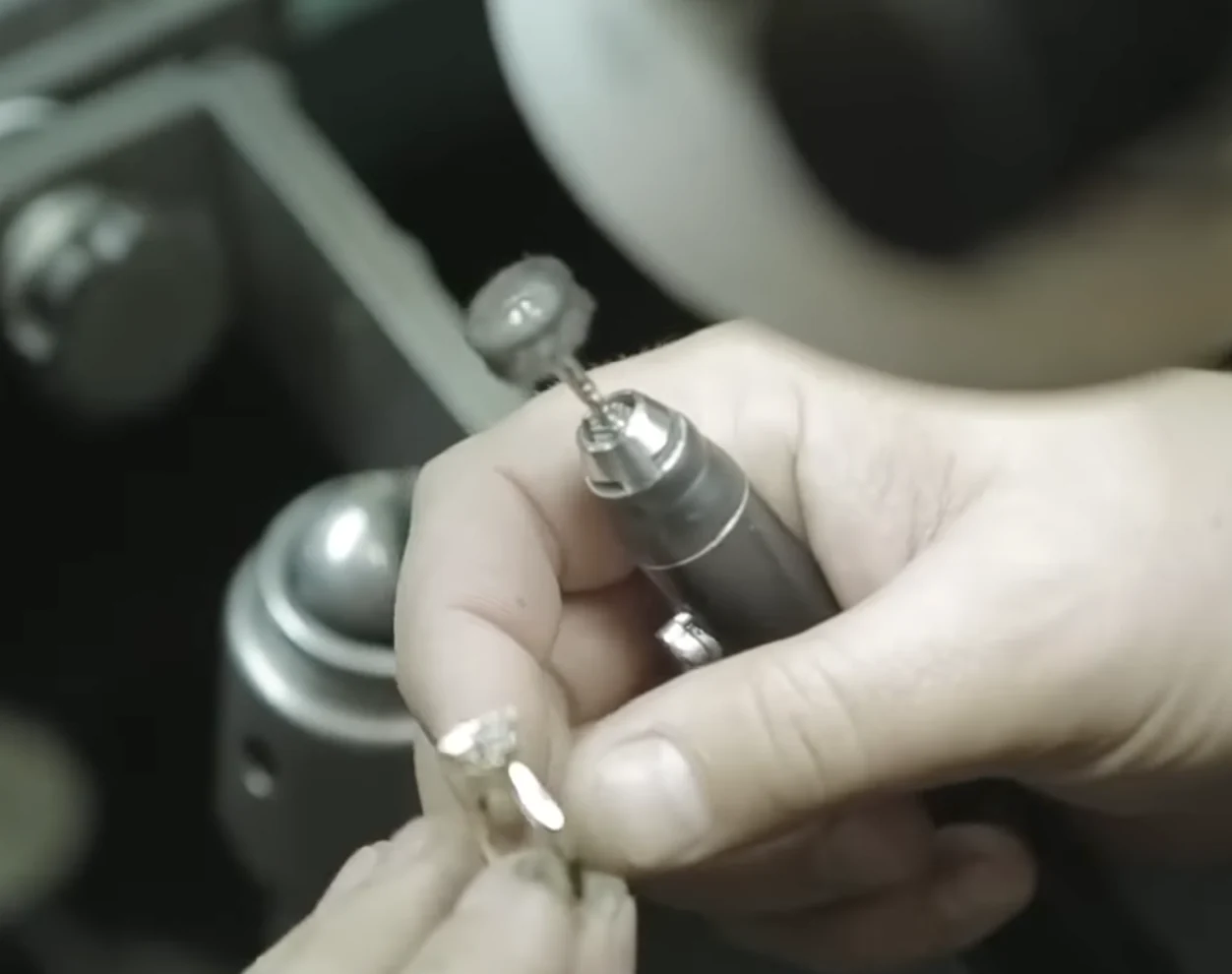
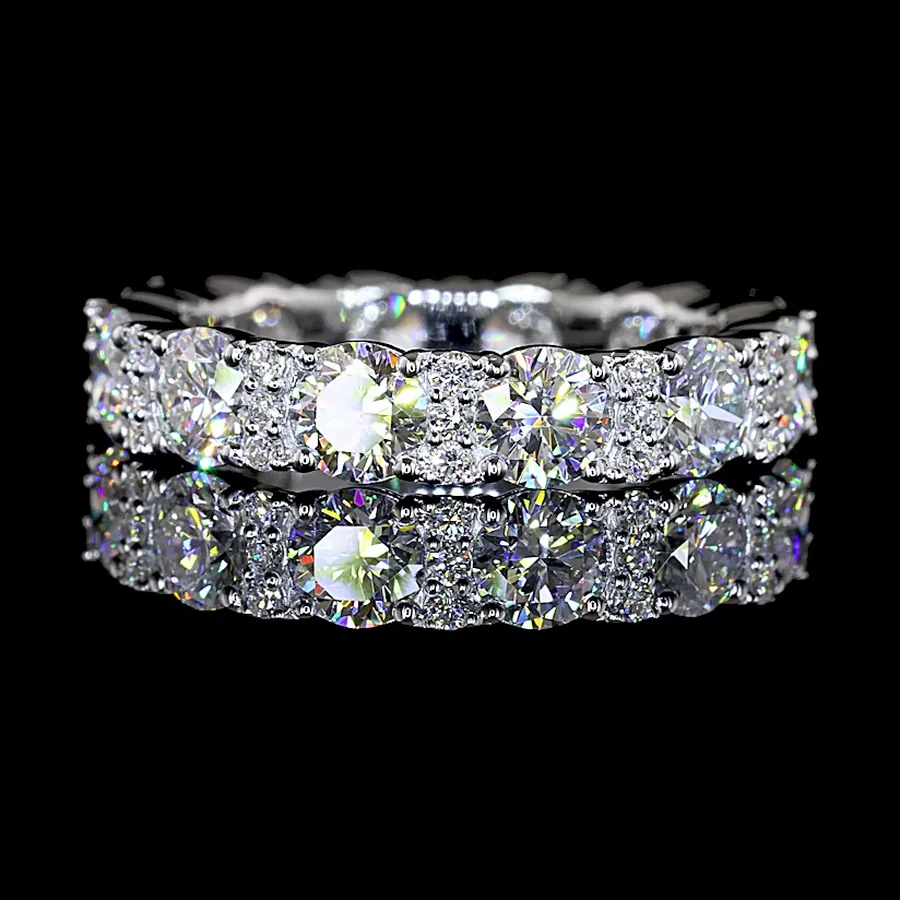
Every Dorvelle piece is a design that already exists in 14k gold on 47th Street, at the oldest standing shop in the Diamond District, open since 1959. We take the same design file, cast it in sterling silver, finish it in rhodium or gold vermeil, and set it with lab-grown diamonds of the same shape, carat weight, color and clarity as the gold version. Same bench. Then we price it for the metal it is made of.
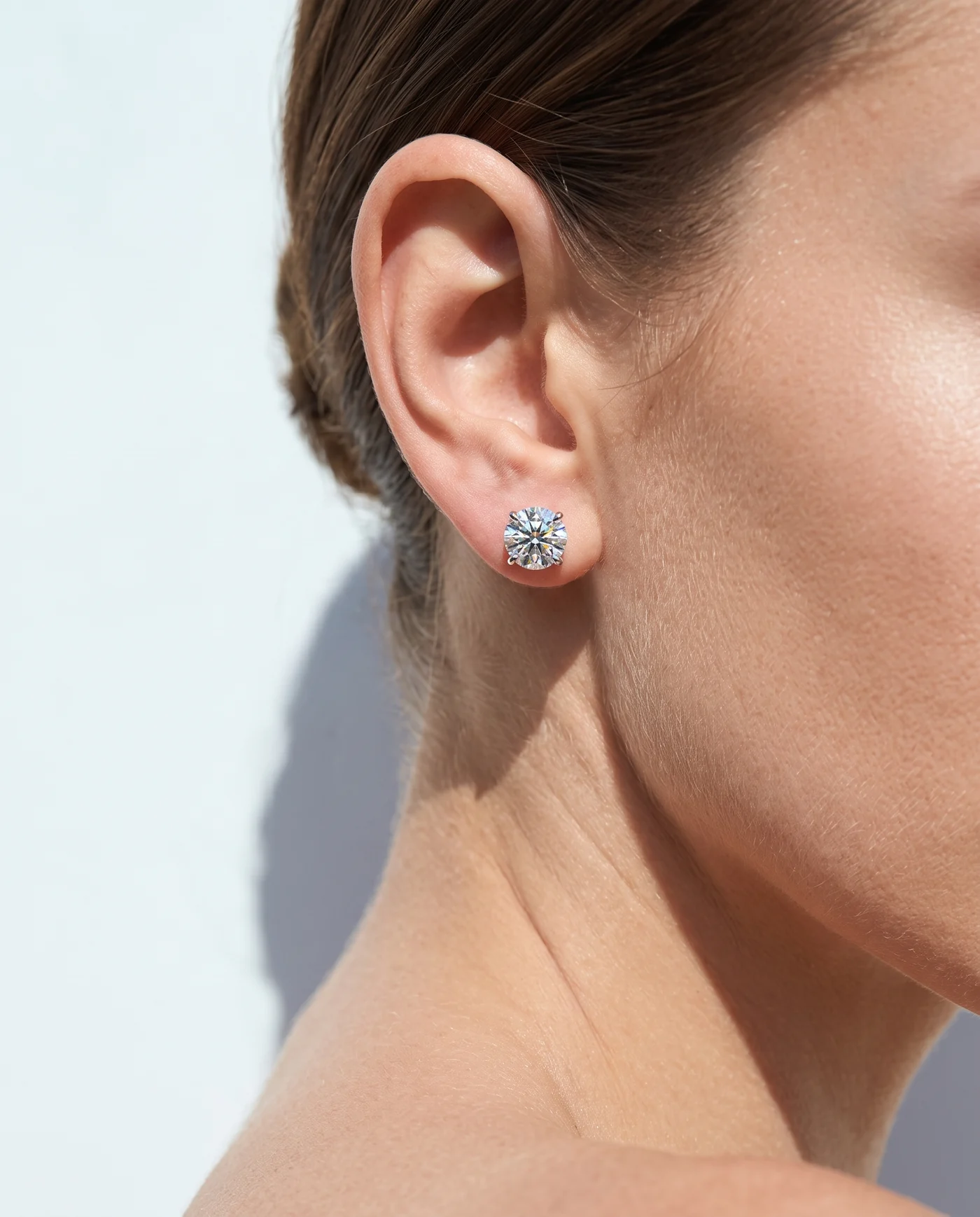
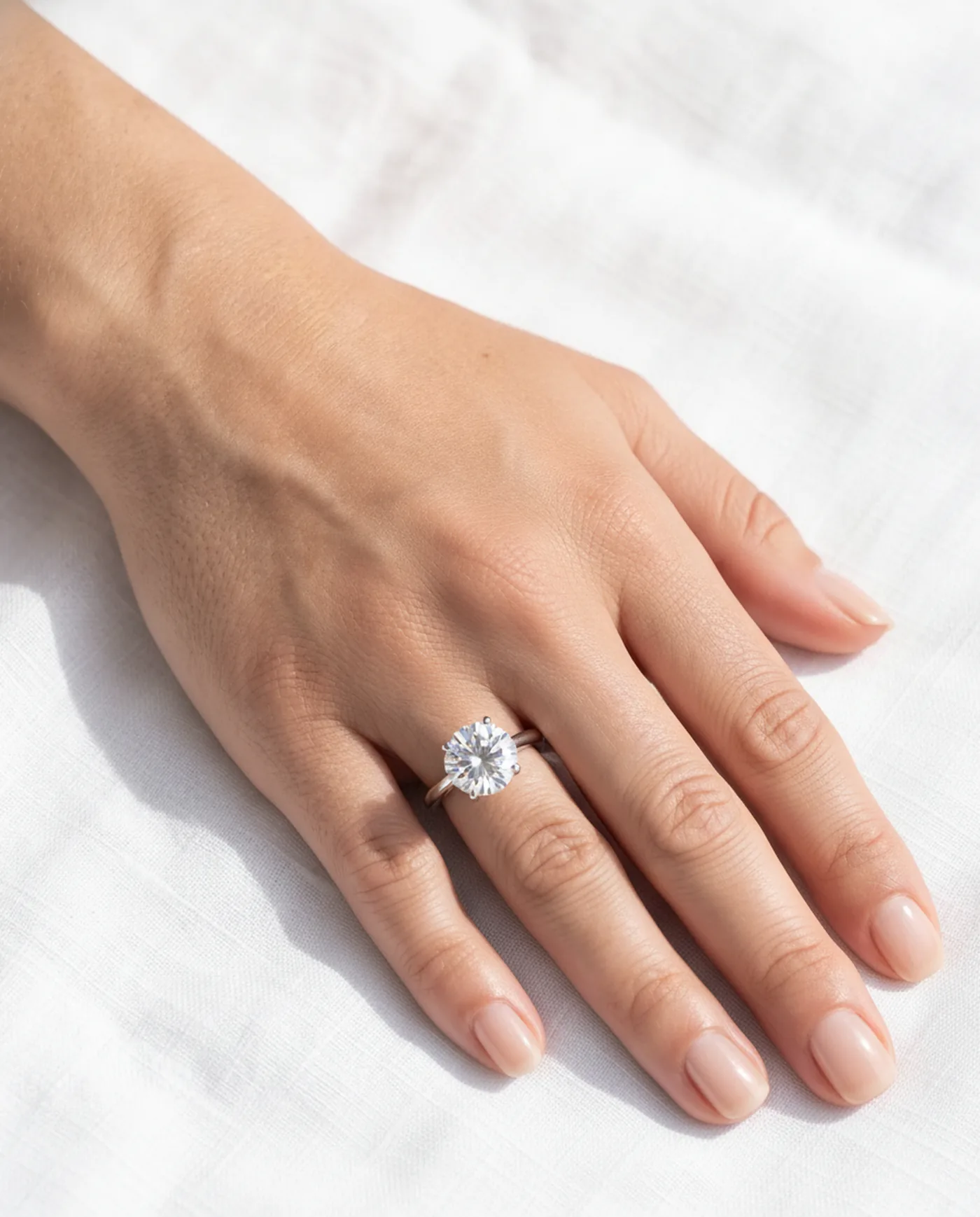
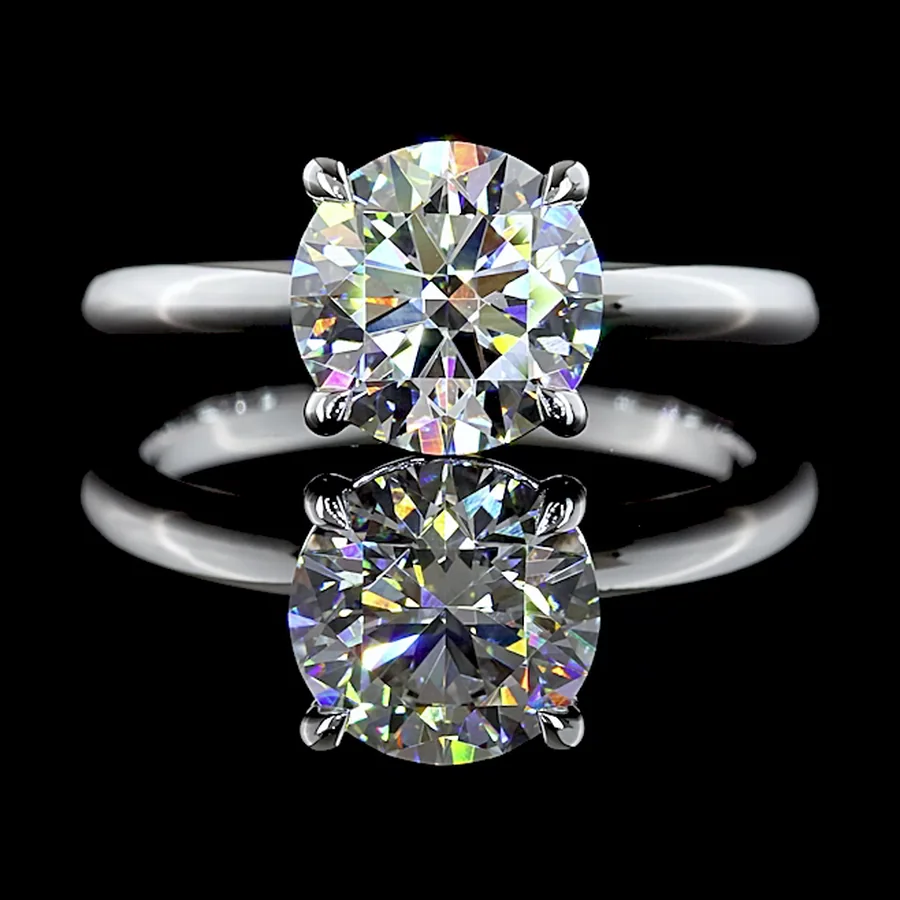
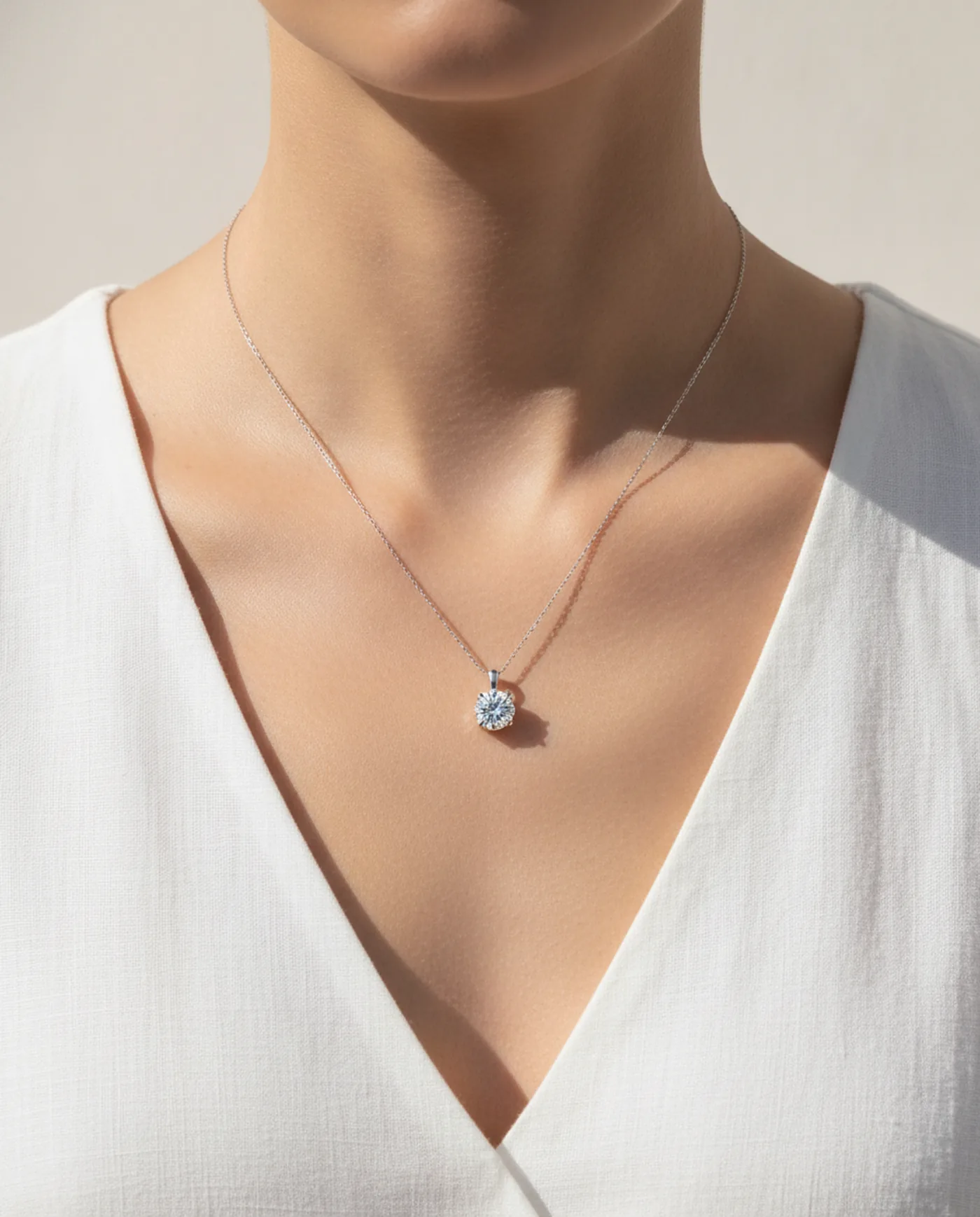
Our round solitaire holds a 2.02 ct lab-grown diamond, D color, VVS2 clarity. In 14k gold, that design is $3,850. In sterling silver, it is $750. Same stone, a different metal underneath it.
Two things make that honest rather than clever.
The stone gets the attention. On a lab-grown piece, the diamond is what people see from across the room. Grade it well, cut it well, set it well. Nobody at dinner is reading the stamp inside the band.
The finish is looked after. We re-plate every piece by mail, first time free, $45 after that. You send it to the bench with a prepaid label, and it comes back within 5 business days of arrival. The care guide covers the rest.
Who should still buy gold
Gold holds its metal value, and a 14k band is yellow all the way through, with no finish on top. If you want a ring that is partly a store of value, the gold version is the right choice, and the house on 47th Street sells it.
If what you want is the stone, the design and the look, the economics have changed in your favor. Read sterling silver for an engagement ring for the straight version of that decision.
The twin test on our homepage puts each design’s 14k price beside ours, with the piece turning on film. See the twin test.