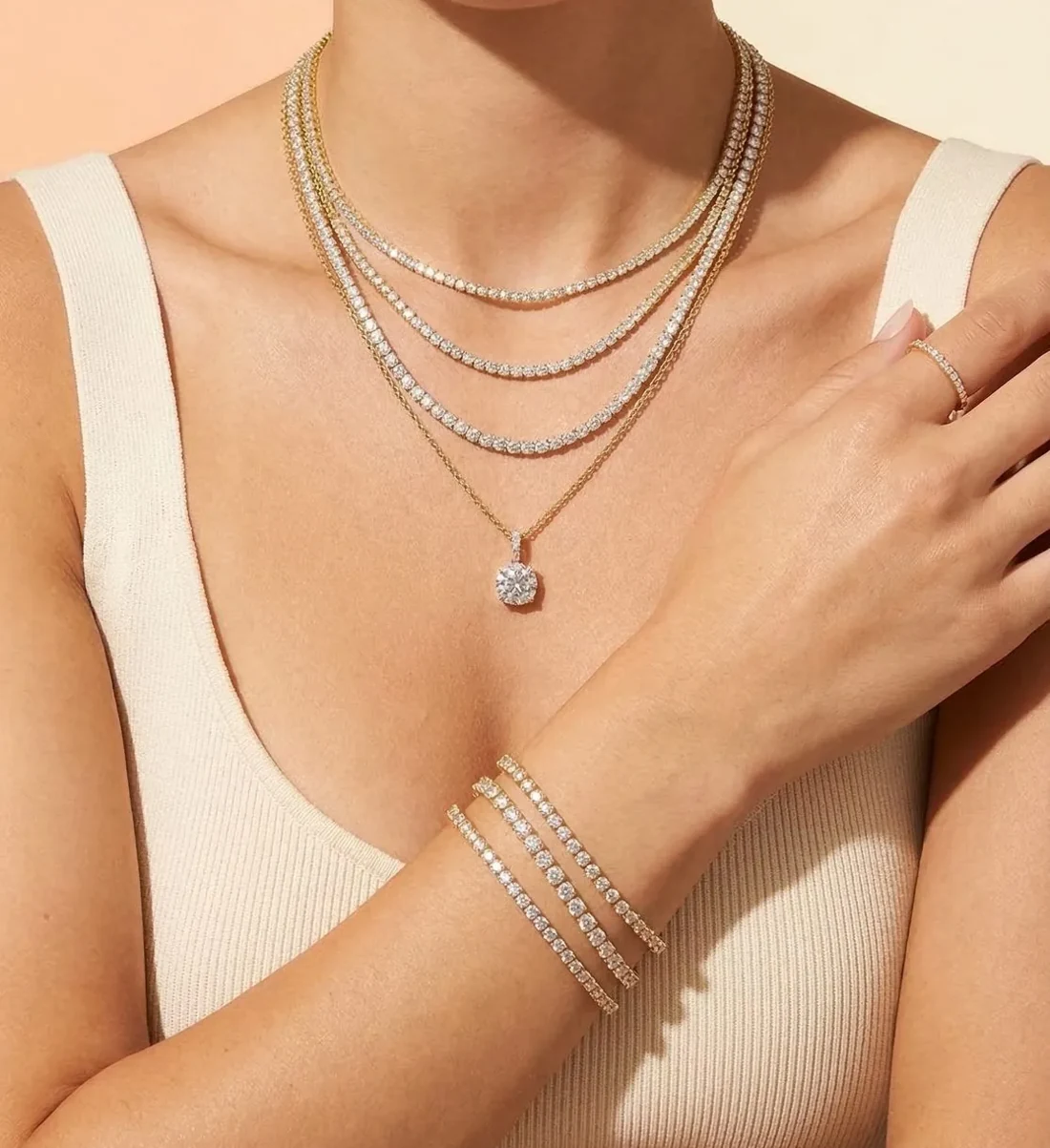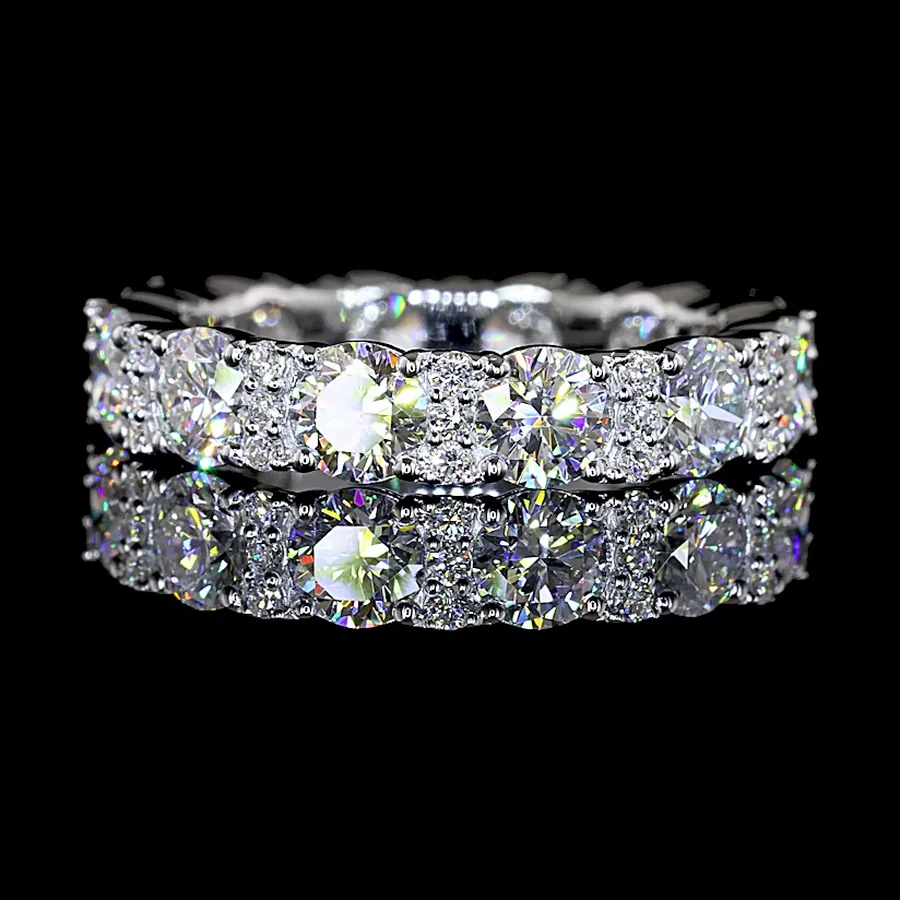
A lab-grown diamond is carbon in the same cubic crystal as a mined diamond. It has the same hardness, the same refractive index, the same fire. So when a grader puts one under a loupe, the questions are the same questions, asked with the same tools, and the answers go on the same scales. Here is how that works, what a report tells you, and what the law says a seller has to tell you.
The 4Cs, one set of rules
The vocabulary most of the world uses for diamond quality was built by the Gemological Institute of America in the early 1950s: the D-to-Z color scale and the clarity scale that runs from Flawless down. Before that, dealers described color with words like “blue-white” and “river,” which meant whatever the person selling wanted them to mean. The 4Cs replaced adjectives with a standard.
Color. D is colorless. Each letter after it carries a little more yellow or brown. D, E and F are the colorless grades; G through J are near colorless. Color is judged face down against master stones under controlled light, because a faceted diamond hides its body color face up.
Clarity. The scale is Flawless, Internally Flawless, VVS1 and VVS2 (very, very slightly included), VS1 and VS2 (very slightly included), SI1 and SI2, then I1 to I3. Grades are set at ten times magnification. A VVS2 stone has inclusions a trained grader has to hunt for at 10x. A VS1 has minor inclusions you will not see with your eye.
Cut. For a round brilliant, the cut grade weighs proportions, symmetry and polish, which together decide how much light comes back to your eye. Fancy shapes like oval and emerald are judged on proportion and how evenly they hold light.
Carat. Weight. One metric carat is 0.2 grams, a unit fixed internationally in the early twentieth century. A 2.02 ct stone weighs 0.404 grams. Two stones of the same weight can face up at different sizes depending on how they are cut.
None of those definitions mention origin. A lab-grown D is graded against the same color masters as a mined D. A lab-grown VVS2 has the same inclusion threshold as a mined VVS2. The growing method leaves its own signatures, the growth patterns and trace elements a lab uses to identify origin, but the quality scales do not bend for it.
| The C | Scale | What it measures |
|---|---|---|
| Color | D to Z | Body color, judged face down against master stones |
| Clarity | Flawless to I3 | Inclusions and blemishes at 10x magnification |
| Cut | Excellent to Poor | Proportions, symmetry and polish, how light returns |
| Carat | 0.2 grams per carat | Weight, not size |
What a lab report tells you
The International Gemological Institute, IGI, grades more lab-grown diamonds than any other laboratory, and it grades them on the full 4Cs: color letter, clarity grade, cut grade, carat weight, measurements and proportions. A lab-grown report also states plainly that the stone is laboratory-grown, usually names the growth method (CVD or HPHT), and notes any treatment after growth, such as the heat and pressure some CVD stones receive to improve color. The report number is typically laser-inscribed on the girdle, the thin edge around the widest point, so the paper and the stone can be matched with a loupe.
GIA has taken a different path. For years it graded lab-grown diamonds on the same color and clarity scales it uses for mined stones. In June 2025 it announced that from the end of that year it would stop doing so, and would describe lab-grown diamonds with two broad descriptors, premium and standard, instead. Its stated reason was that the large majority of lab-grown stones now fall into a narrow band of high color and clarity. That is GIA’s choice about its own reports. The scales themselves did not change, and the stones did not either. A D is a D whoever holds the master stones.
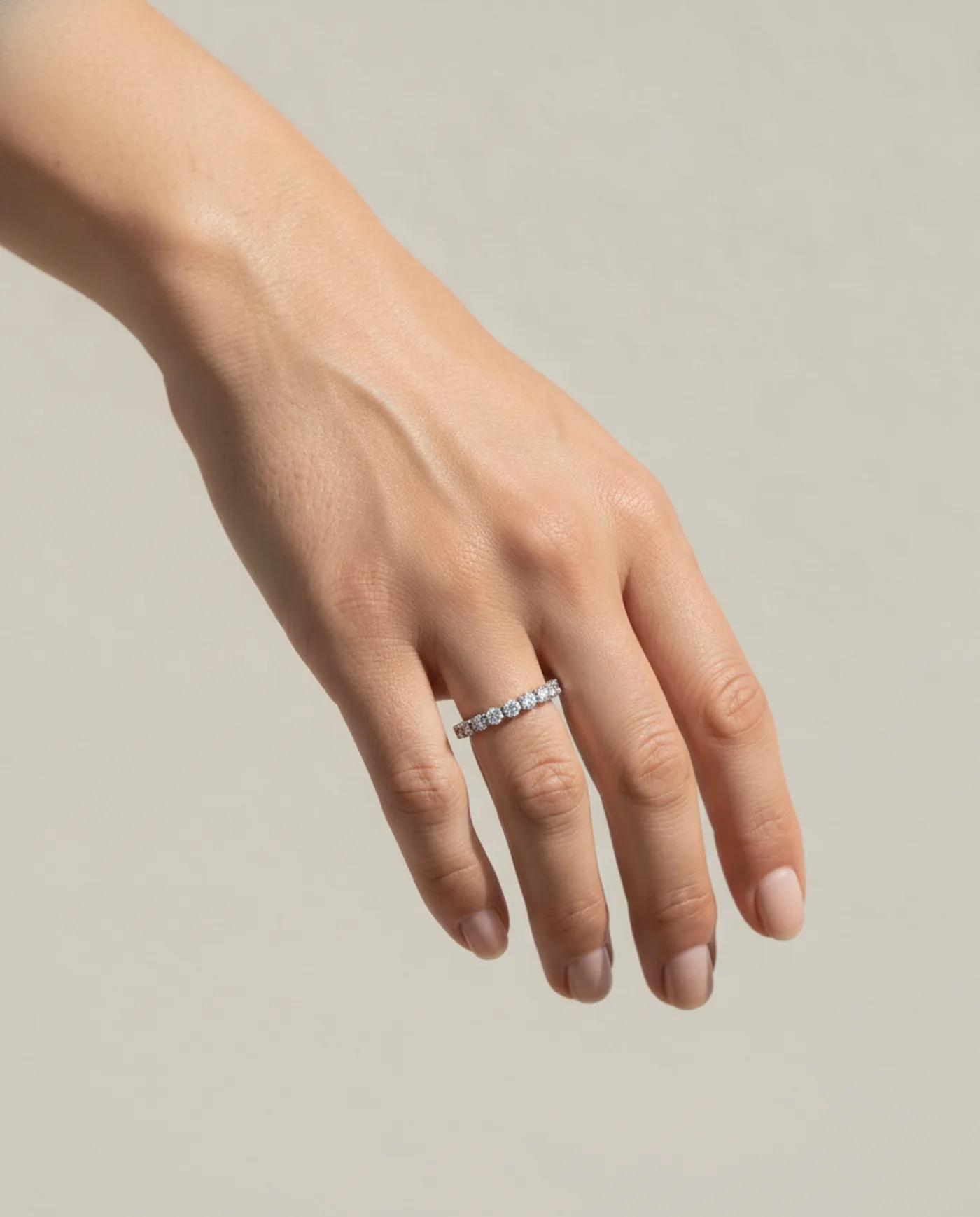
At Dorvelle, center stones over one carat come with a lab report. The small stones in a hoop or along a tennis bracelet are matched by hand in parcels for color and clarity; a report on a stone weighing a few hundredths of a carat would cost more than the stone. Our lab-grown guide lists the grading of every piece we make.
Why D VVS2 in silver is the same stone as D VVS2 in gold
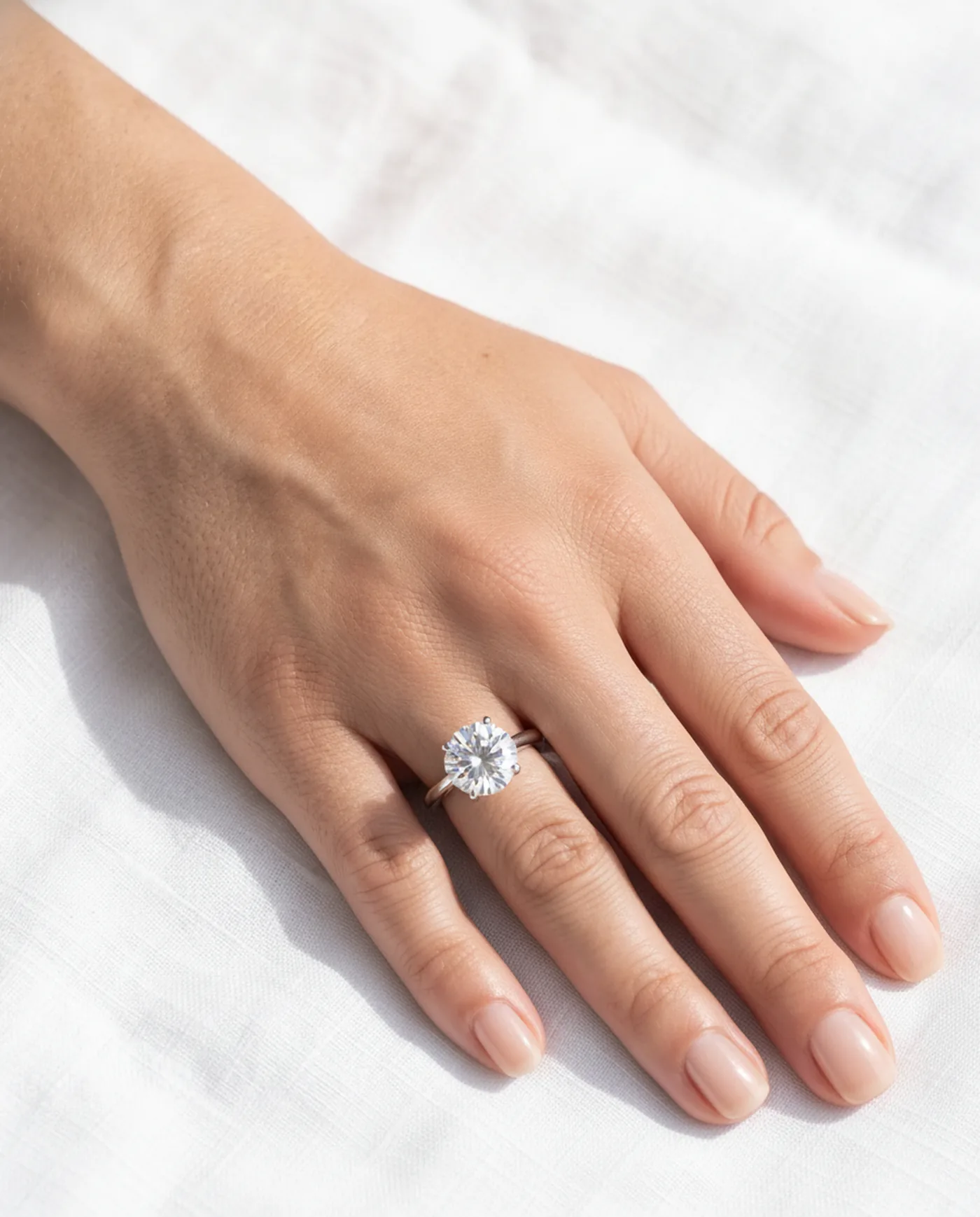
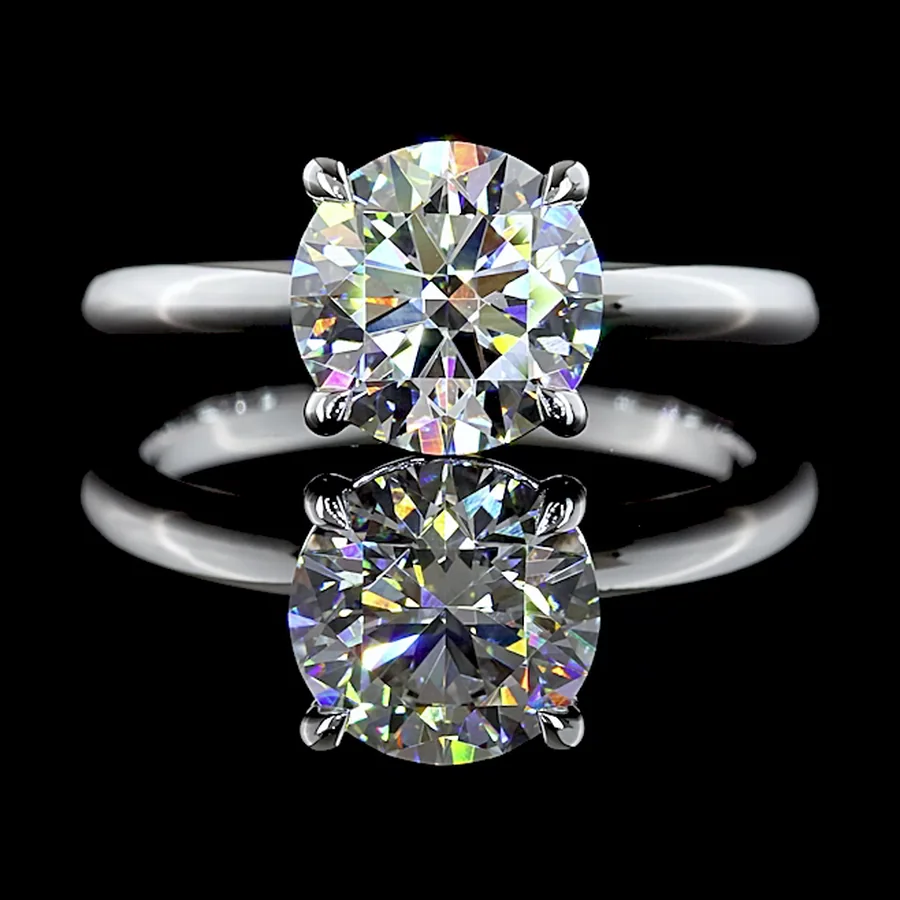
A diamond is graded loose, before it meets any metal, so the 2.02 ct D VVS2 stone in the Dorvelle round solitaire is the same specification whether the ring is $3,850 in 14k gold or $750 in sterling silver.
The report never mentions what it will be set in, because metal has nothing to do with color, clarity, cut or weight. Both versions are cast from the same design file, set with a stone of the same shape, carat weight, color and clarity, by the same bench. The stone is the same specification of stone. That is the whole idea of why the metal became the expensive part.
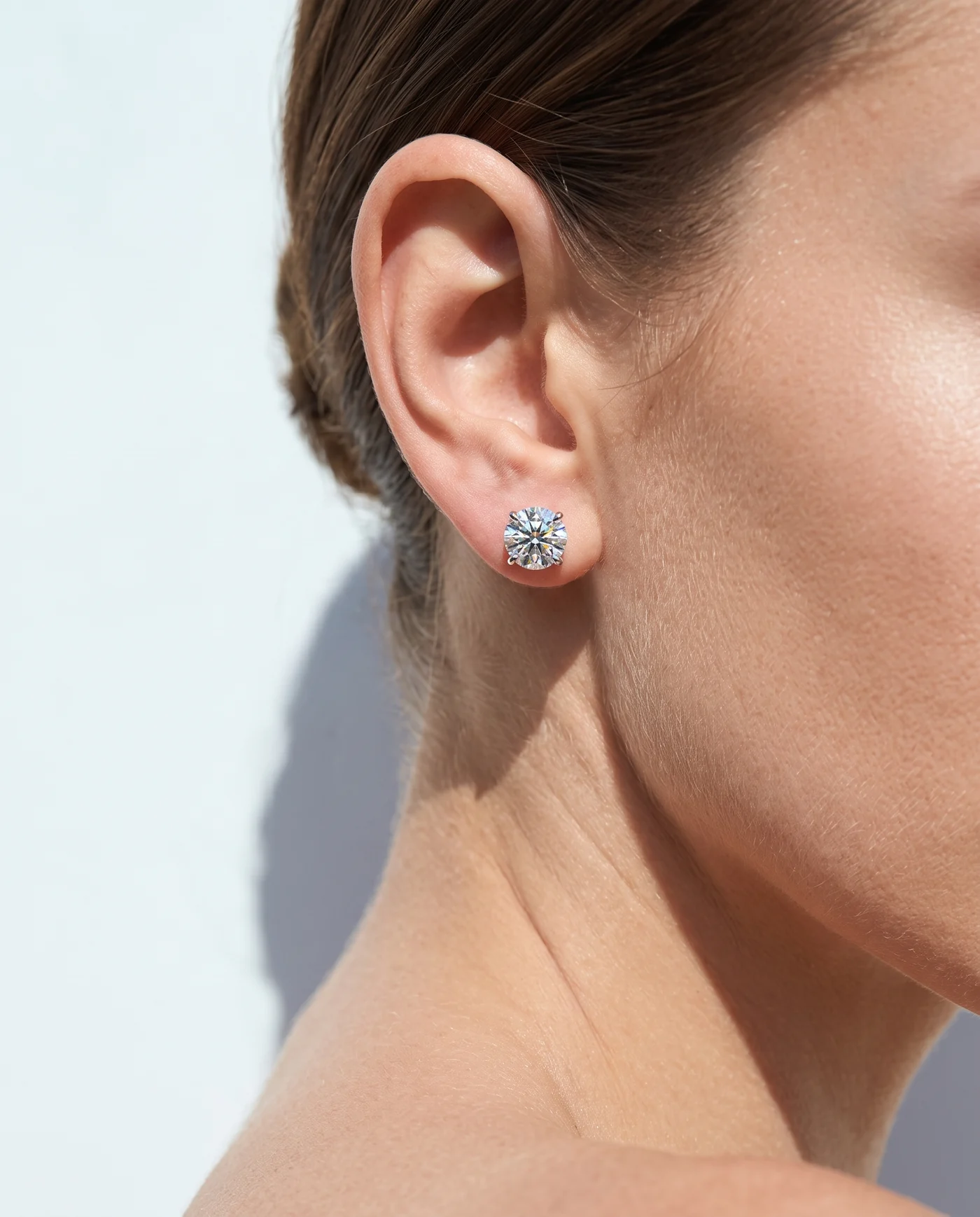
Metal does change how a stone looks once it is set, and here the white finish works in your favor. Yellow prongs reflect a little warmth into a colorless diamond. That is why jewelers often set D to F stones in white metal: the setting stays out of the way and the stone faces up as white as its grade. A D center in a rhodium-white setting shows you its D.
What “lab-grown” must say, by law
In the United States, the Federal Trade Commission’s Guides for the Jewelry, Precious Metals, and Pewter Industries, 16 CFR Part 23, set the rules. The Guides were revised in 2018. Section 23.12 defines a diamond by what it is, a mineral of essentially pure carbon crystallized in the isometric system, which is why a lab-grown stone is a diamond. The Guides then say a seller may not describe a laboratory-made stone as a diamond without clearly and conspicuously disclosing that it was made in a lab.
The qualifiers the FTC names include “laboratory-grown,” “laboratory-created,” and “[manufacturer name]-created,” or another word or phrase of like meaning. The disclosure has to sit next to the word diamond, at the same prominence, every time. The FTC has also cautioned that “cultured” alone is not a clear enough disclosure, and in 2019 it sent warning letters to several companies selling lab-grown stones over how they described them.
That is why you will see “lab-grown” on every page of this site, beside every stone, in every listing. We would write it anyway. A lab-grown diamond is an excellent thing to own, and calling it what it is costs nothing.
Reading a listing like a dealer
When you compare lab-grown pieces anywhere, look for five things: the words lab-grown beside the word diamond, a color letter and a clarity grade, ct or ct tw, who graded the stone, and the metal and finish stated separately.
- The words “lab-grown” or “laboratory-grown” beside the word diamond.
- A color letter and a clarity grade, not “near colorless” and “eye clean” alone.
- ct or ct tw. A single stone in ct. Many stones in ct tw, carat total weight, which is the combined weight and says nothing about the size of any one stone.
- Who graded it. A center stone over a carat should have a report you can look up.
- The metal and the finish, stated separately from the stone.
If a listing hides any of those, ask. If you want to ask us, a specialist will answer.
Where to go next
If you are choosing a ring, read sterling silver for an engagement ring for the honest tradeoffs of the metal, and how to find your ring size at home before you order.
The round solitaire is the clearest case of everything above: one D VVS2 stone, one design, two metals. See the round solitaire.