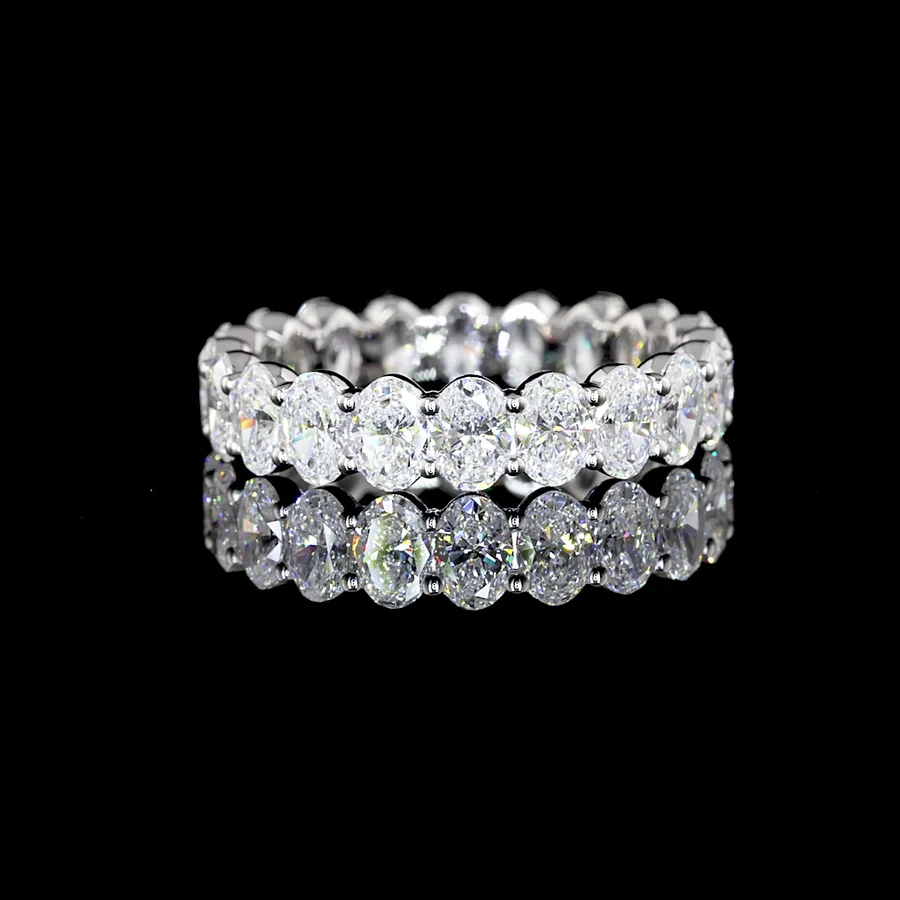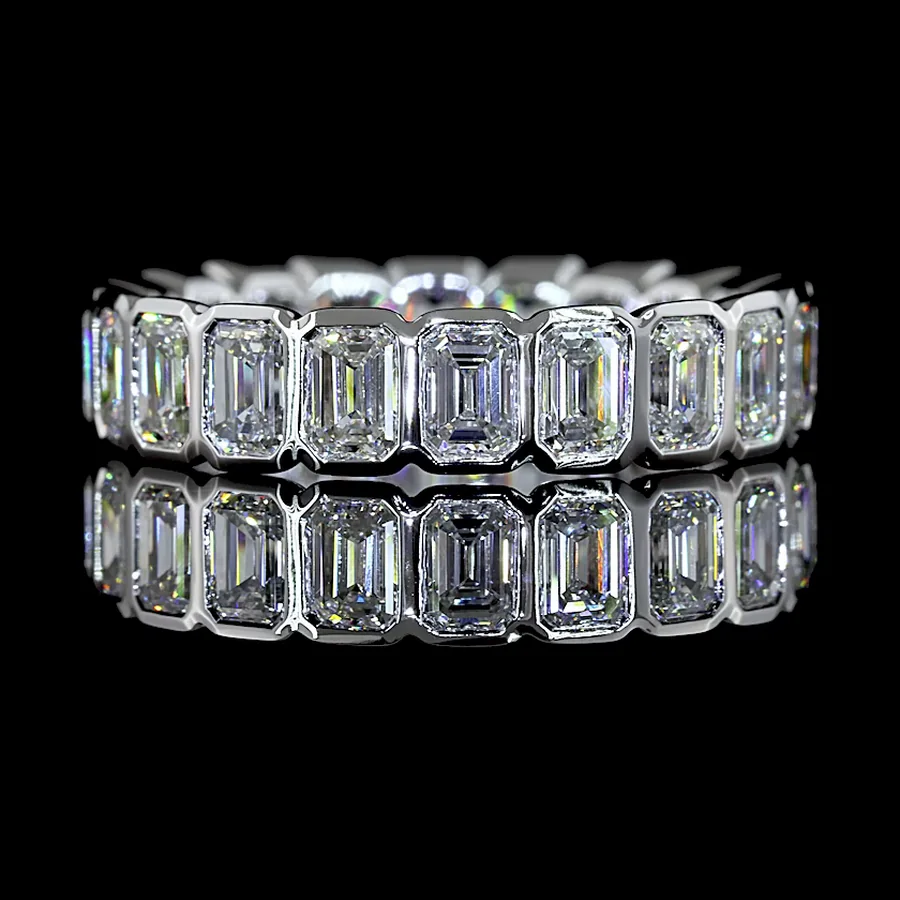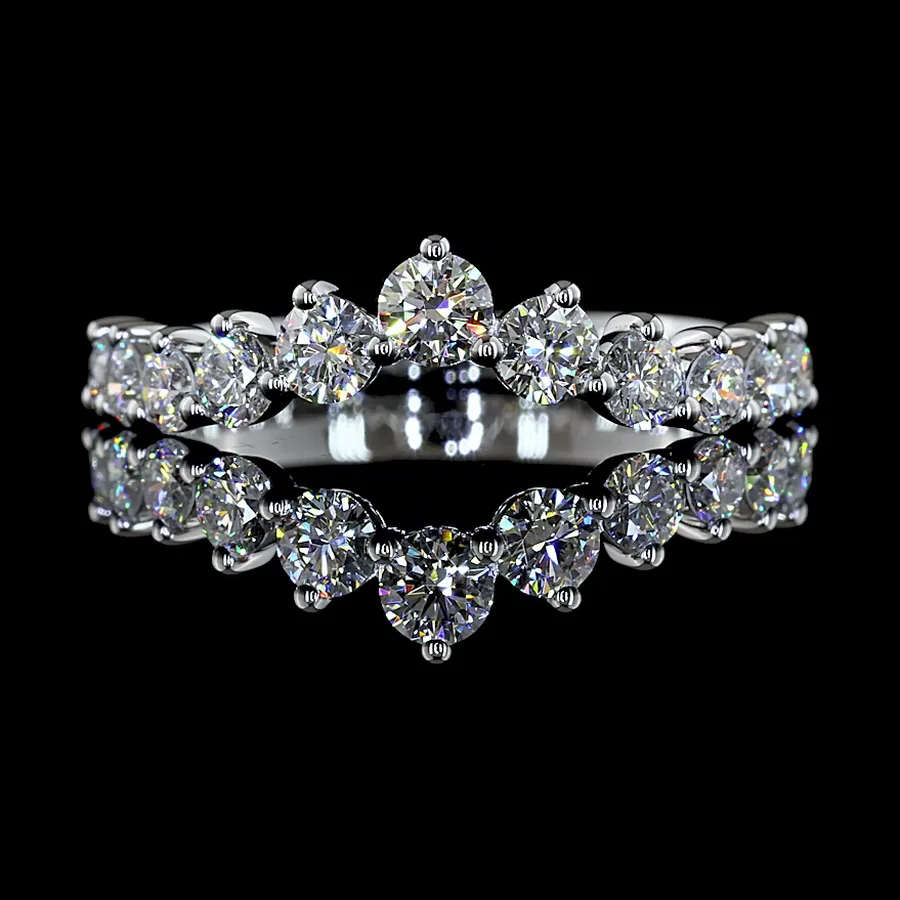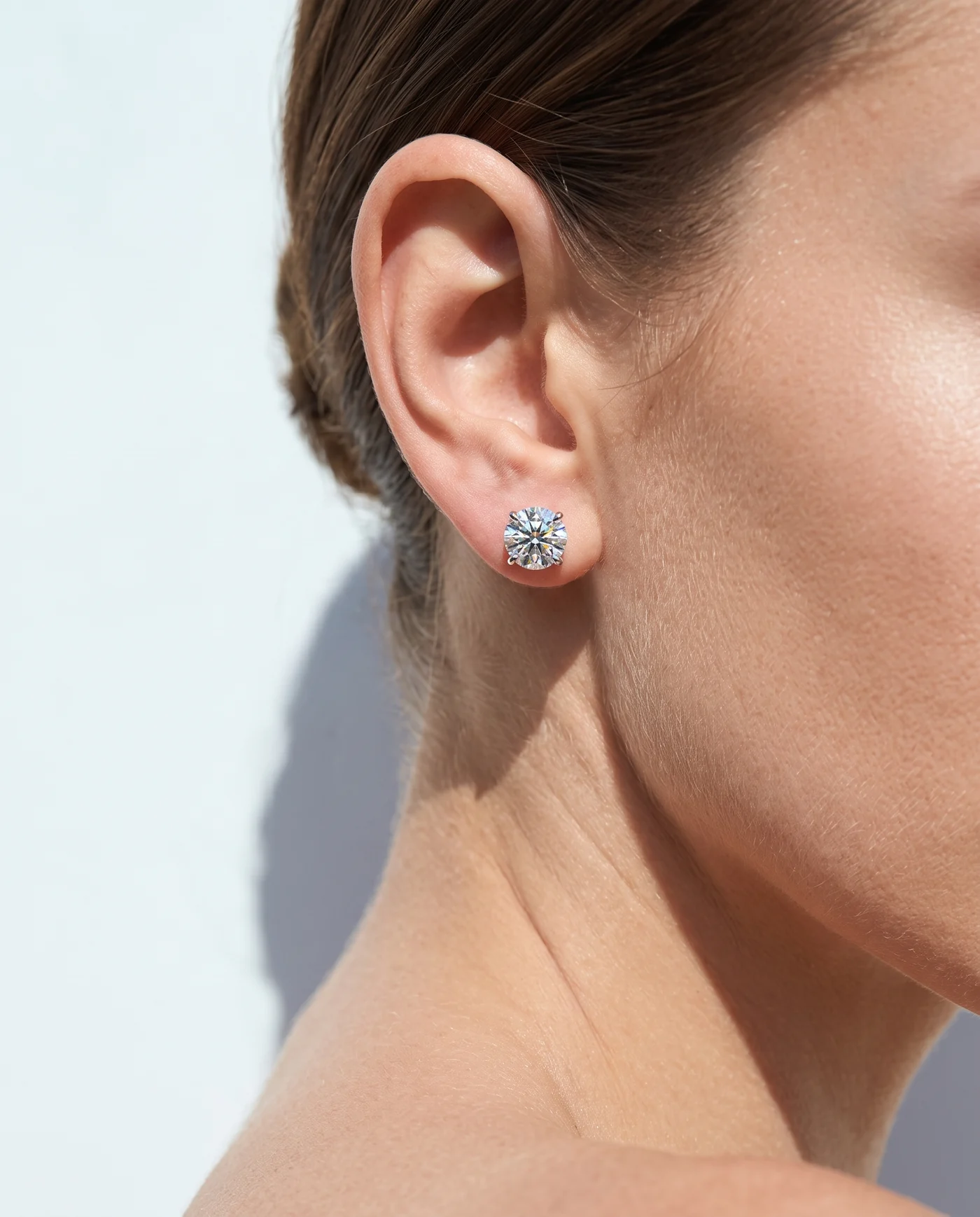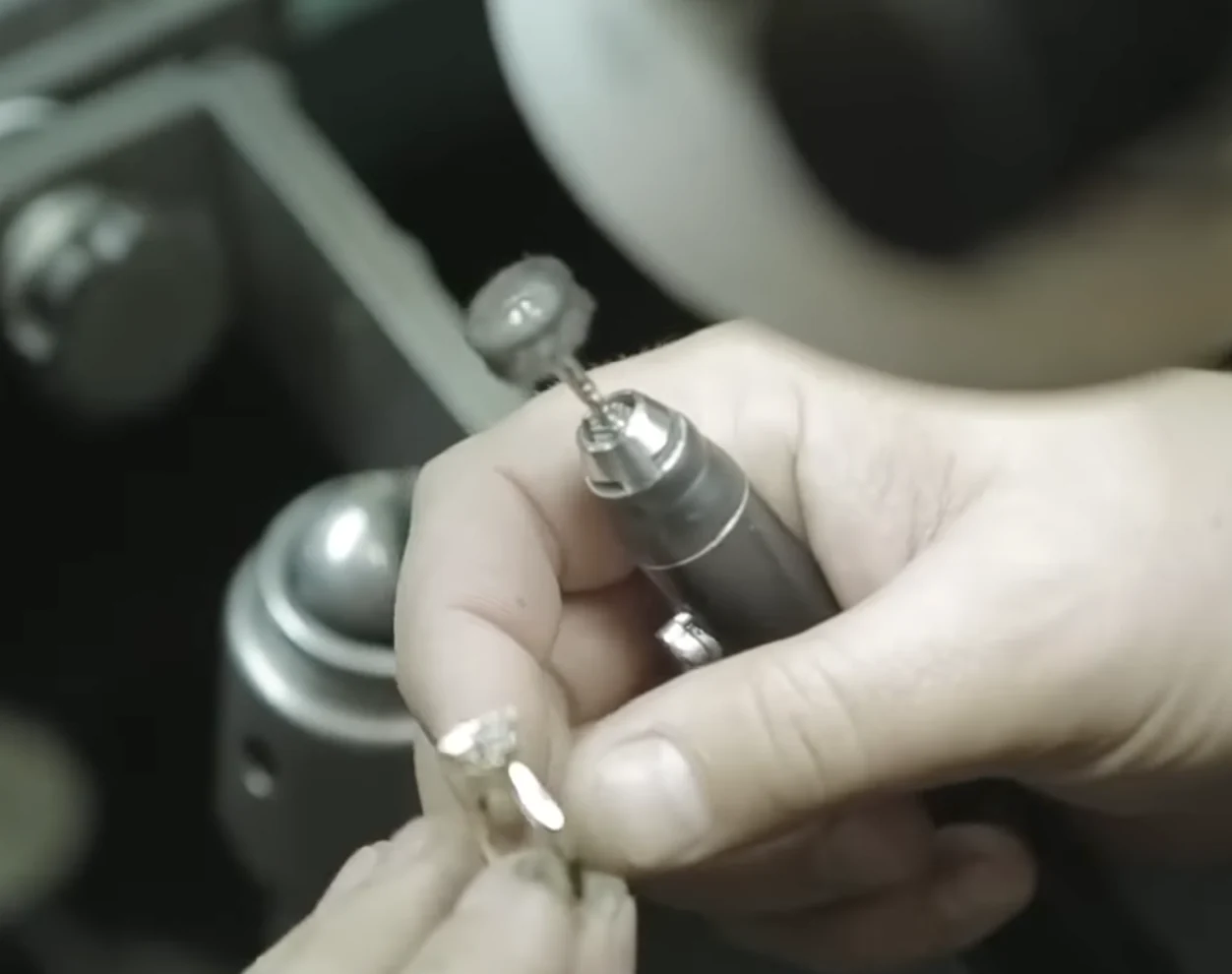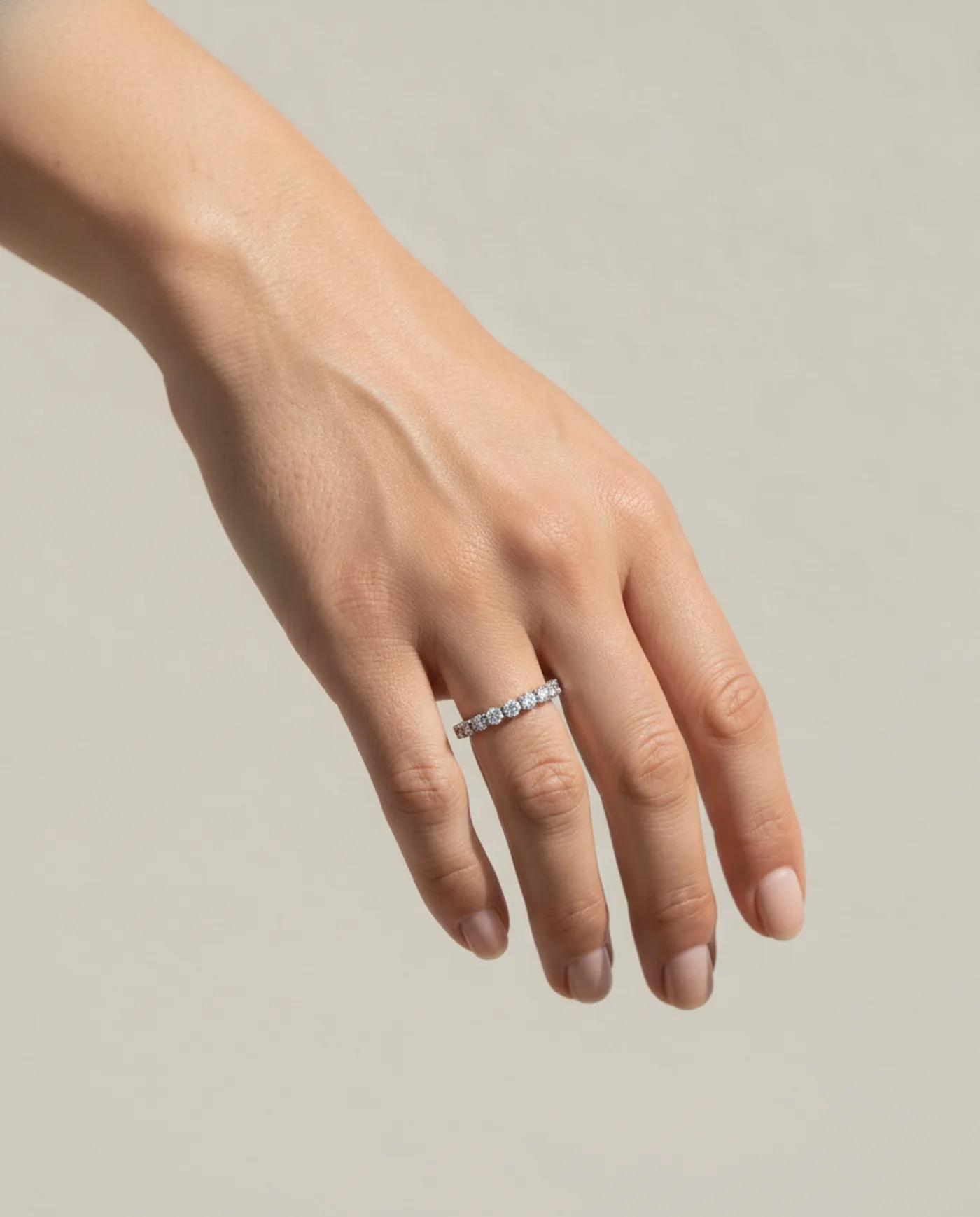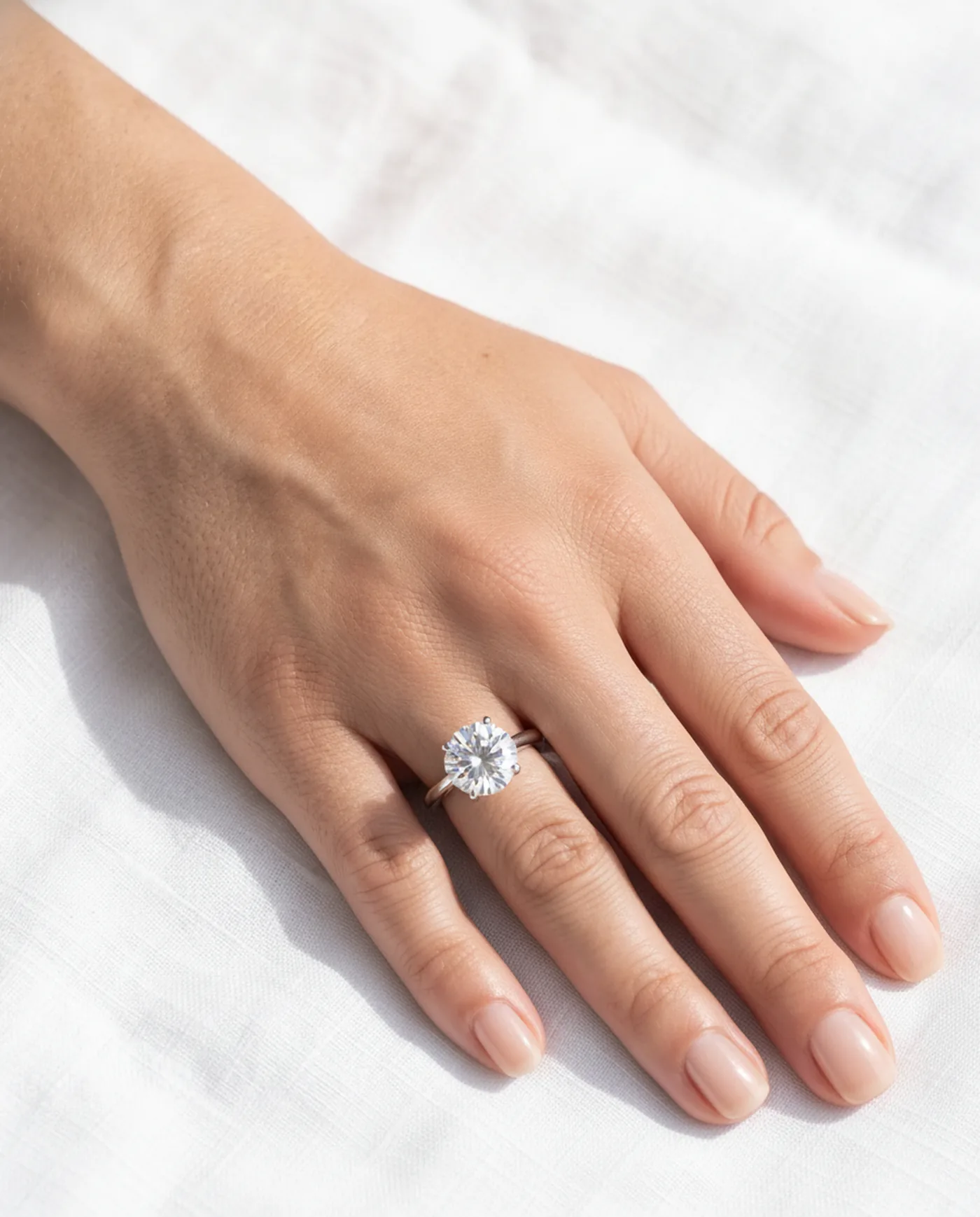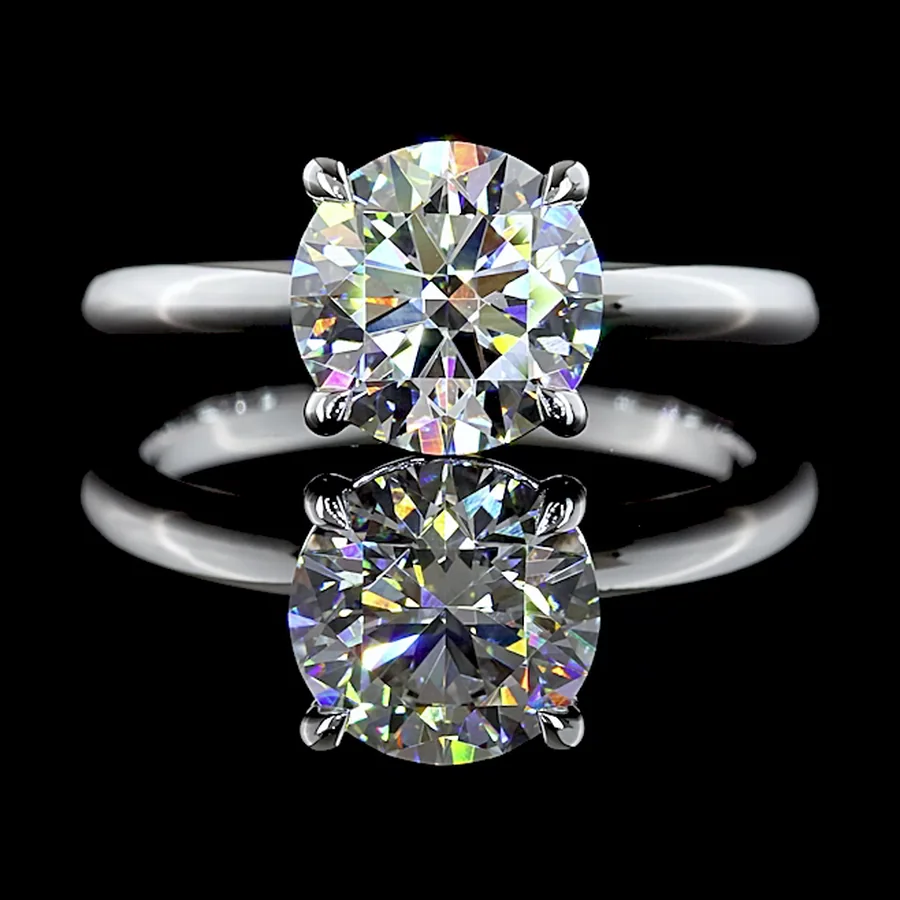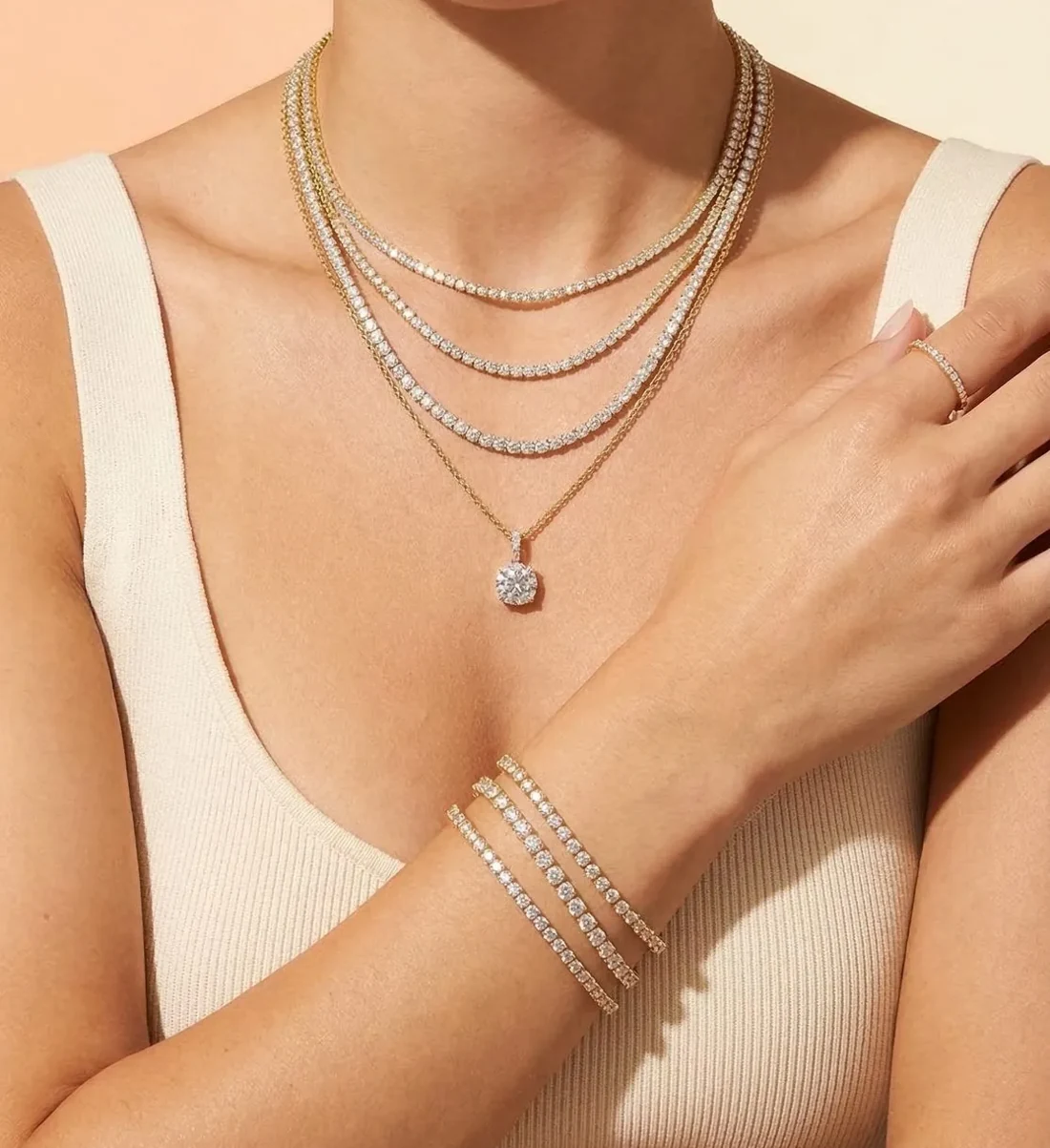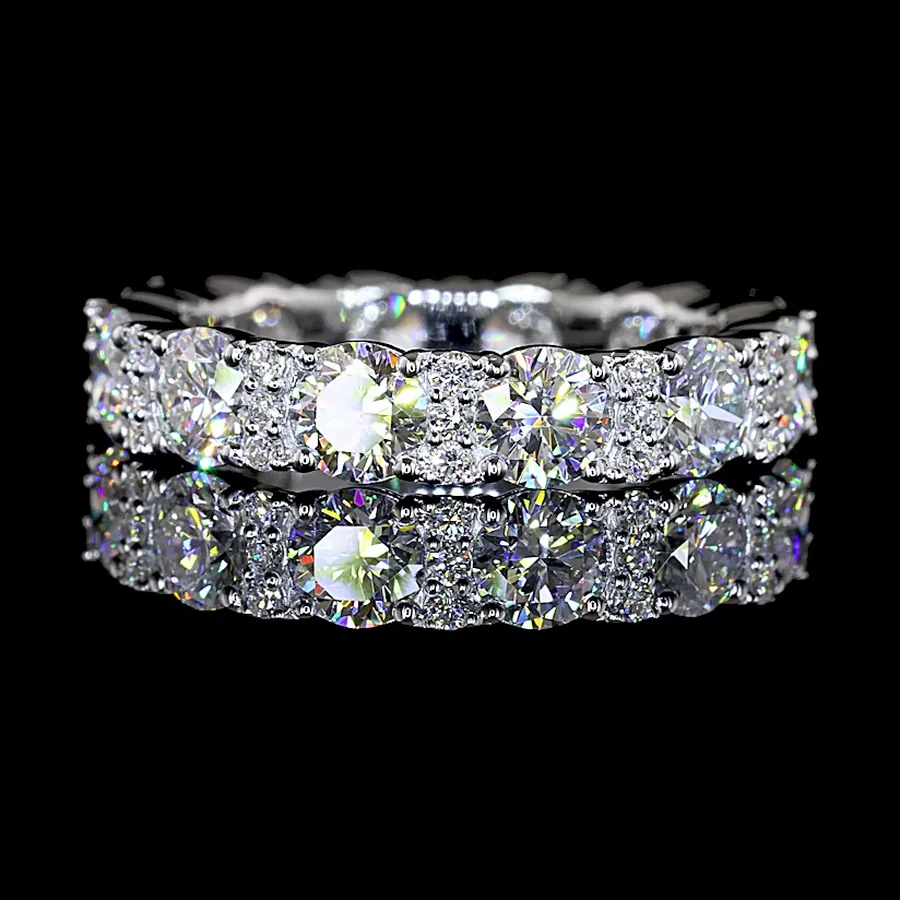
A sterling silver wedding band is a 925 silver ring, finished in rhodium for white or gold vermeil for yellow, worn every day as the ring that marks a marriage. Dorvelle casts its bands from the same design files as the house’s 14k bands on 47th Street, in half eternity, three quarter and full eternity styles, set with lab-grown diamonds.
The four shapes of a band
A wedding band comes in four shapes: plain, half eternity with stones across the top, three quarter with a short plain base, and full eternity with stones all the way around.
Plain. A hoop of metal with no stones. Comfortable, easy to size, and the one most people picture when they hear the word.
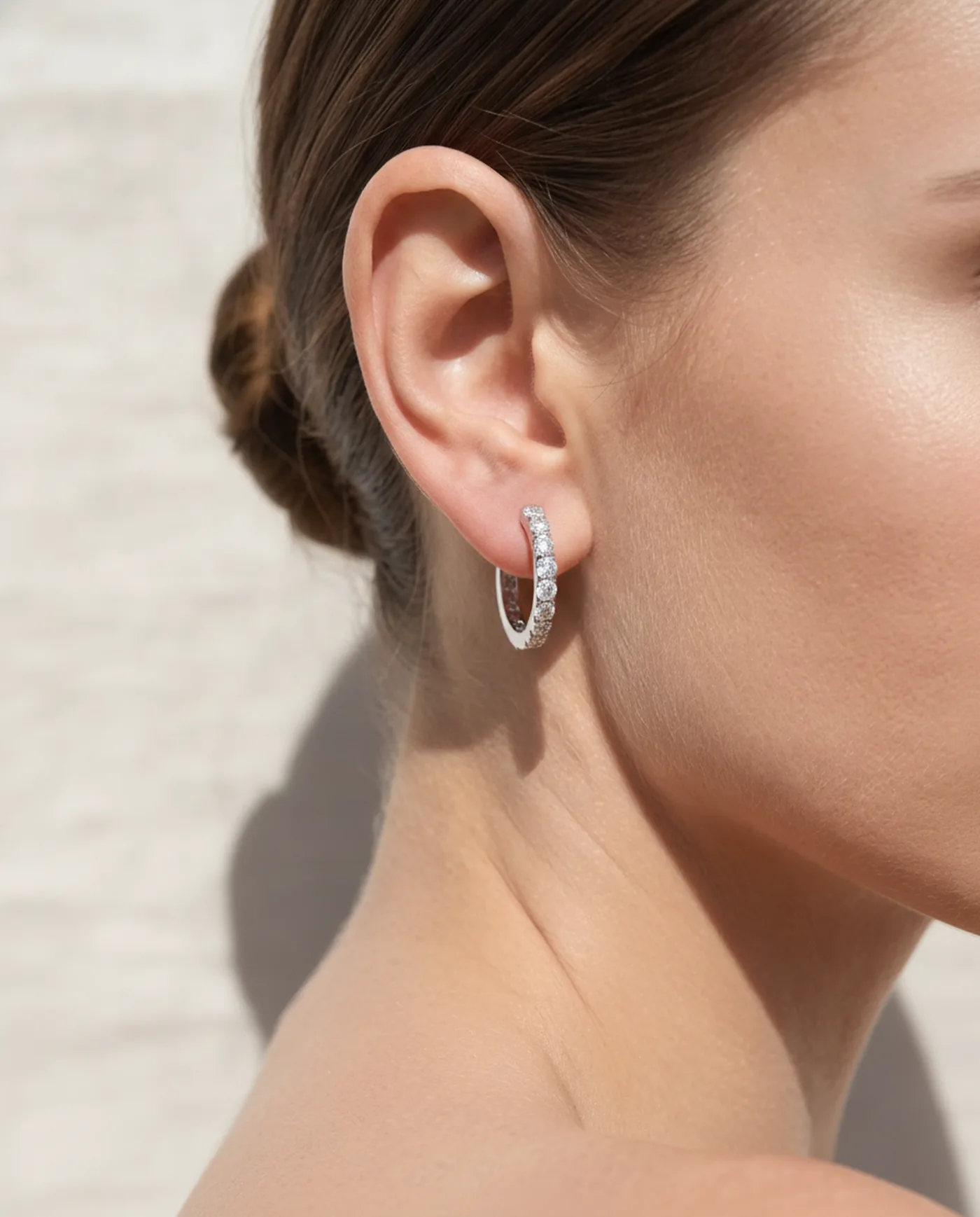
Half eternity. Stones set across the top half of the ring, with the underside left as plain metal. The part you see is all diamond; the part against your palm is smooth. It is the most practical diamond band there is, and the easiest to resize, because a jeweler has solid metal to work with.
Three quarter. Stones most of the way around, with a short plain section at the base. More sparkle from more angles, still with a little metal to size against.
Full eternity. Stones all the way around, with no break. Every angle shows diamond. The tradeoff is size: with no plain section, a full eternity band cannot be cut and resized the way other rings can. It is made in the size you order, so measure carefully.
| Band | Stones | Resizable | Best for |
|---|---|---|---|
| Plain | None | Yes | Comfort, easy sizing |
| Half eternity | Top half | Yes | Daily wear, stacking |
| Three quarter | Most of the way around | A little | Sparkle with room to adjust |
| Full eternity | All the way around | No, made to size | Diamond at every angle |
Matching a band to an engagement ring
Three things decide whether a band and an engagement ring look right together: the finish, the stone shape and the width, and a rhodium finished silver band beside a white gold ring reads as one set.
Finish. White beside white, yellow beside yellow, unless you want the contrast on purpose. A rhodium finished silver band and a rhodium finished white gold ring are the same white, because the surface metal is the same. This is the quiet advantage of silver bands: a Dorvelle band in white sits beside a 14k white gold engagement ring from the house and the two read as one set. Nobody at the table can see which metal is under the finish of which ring.
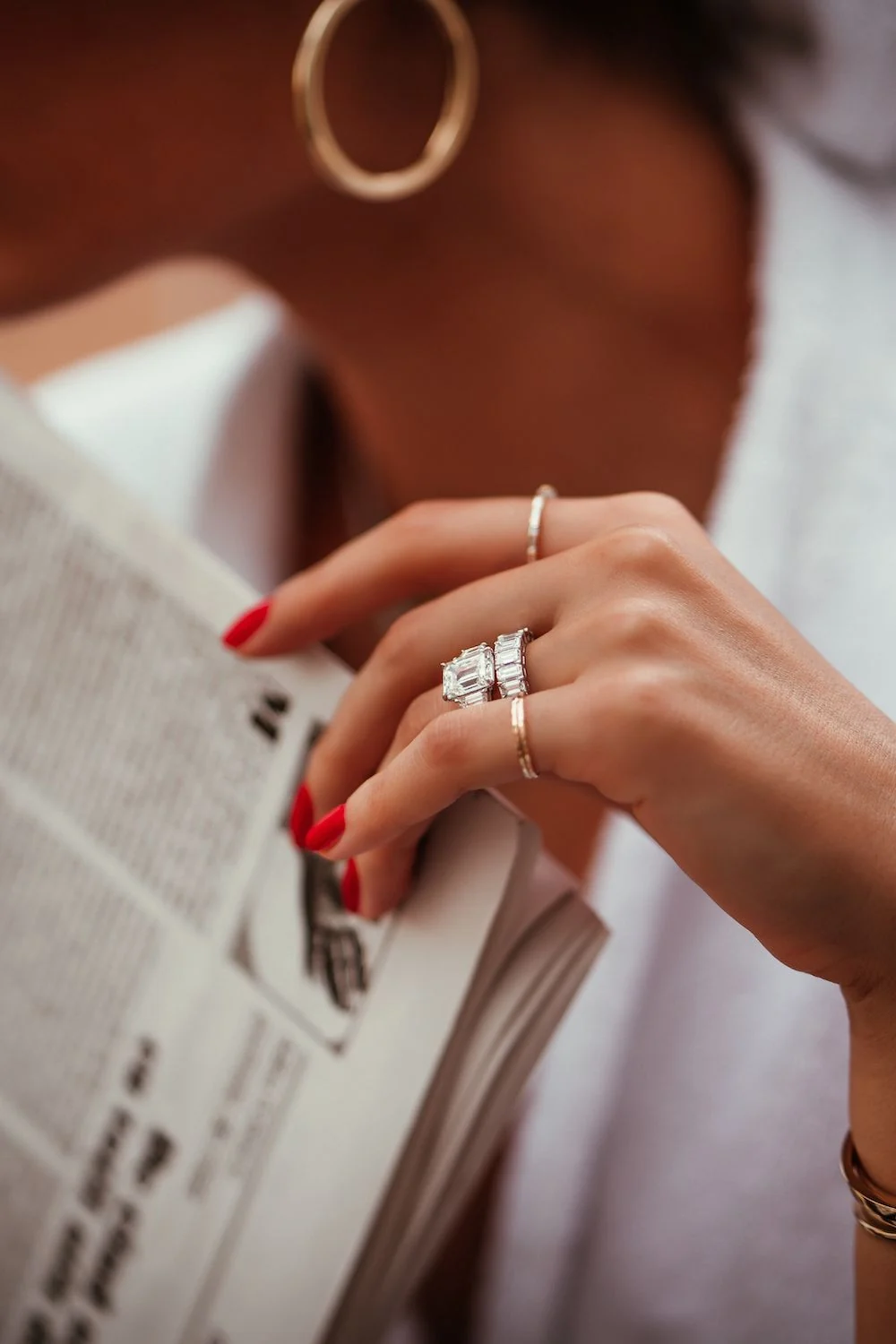
Stone shape. A band of round stones goes with nearly anything. An emerald cut band beside an emerald cut solitaire, or an oval band beside an oval, is the matched look. Mixed shapes are a style of their own and work when the sizes are deliberate.
Width. A band narrower than the engagement ring’s shank lets the center stone stay the point. A band of the same width makes a stack. Both are right; decide which one you are after.
The simplest route is to choose the band from the same family as the ring. Each Dorvelle band is the twin of a 14k band the house makes, so a silver band and a gold ring, or a silver ring and a gold band, will have been designed to sit together.
Size
Bands are worn tighter to the hand than a solitaire, and a wider band fits tighter than a narrow one at the same size, because more metal is in contact with the finger. If you wear a size 6 in a thin ring, a wide band in a 6 may feel snug.
Measure the finger at the end of the day, when it is at its largest. Read how to find your ring size at home, check the size guide, and if you are between sizes, ask a specialist before you order. For a full eternity band, this matters most, since it is made to the size you give.
The finish, and keeping it bright
White Dorvelle bands are finished in rhodium, a platinum-group metal that is harder than silver, gold or platinum and gives the same bright white you see on white gold. Yellow bands are finished in gold vermeil, a thick layer of gold over the sterling. What is rhodium and what is gold vermeil explain both.
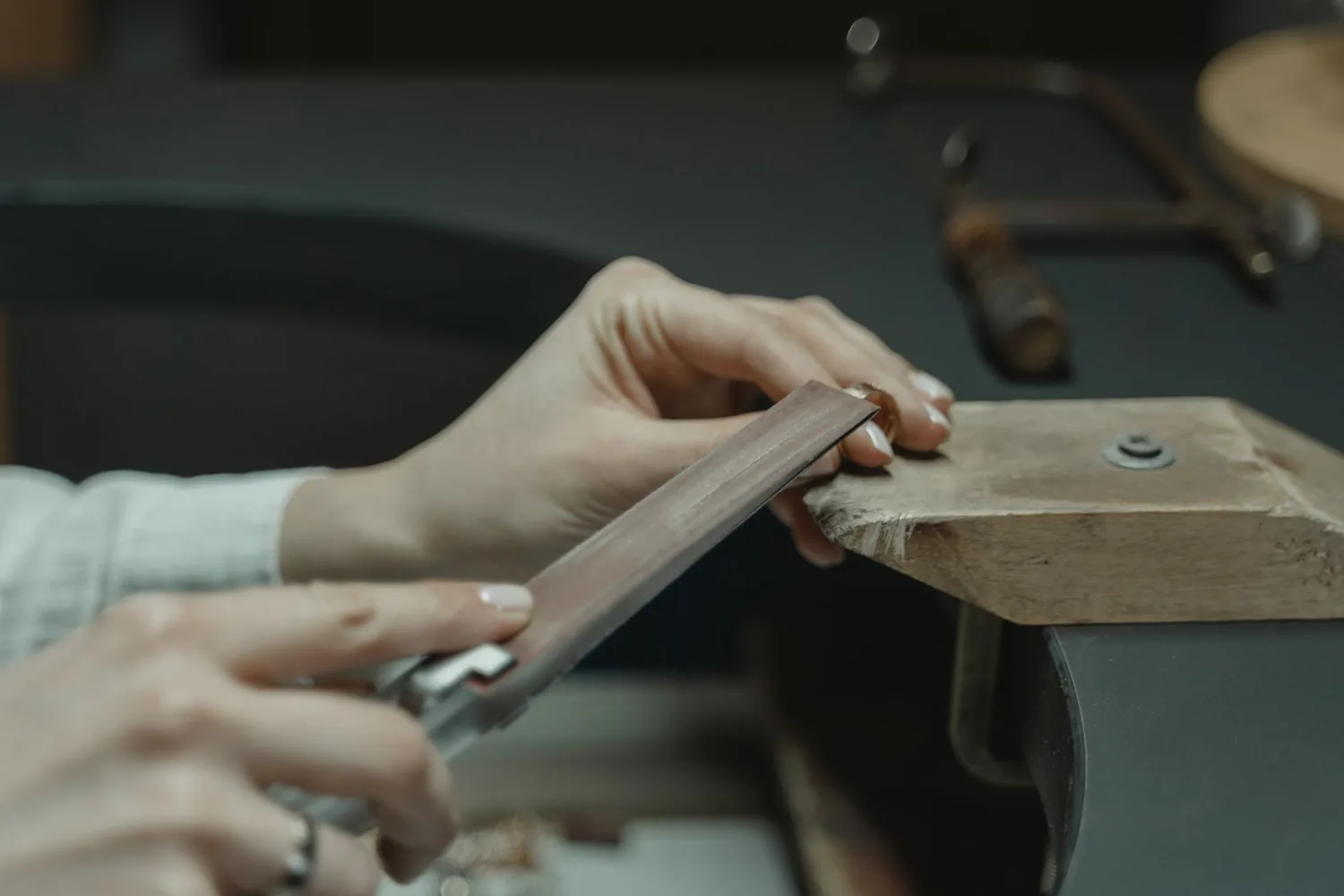
A band is the ring that never comes off, so the bench offers a refresh whenever you want it looking like the day it arrived. Request a prepaid label, send it in, and it comes back re-plated and polished within 5 business days of arrival. The first one is free. After that, $45 with the label included. Many people send a band in before an anniversary, the way a watch goes in for a service.
Between visits, the care guide is short: ring on last after lotion, off for the pool and the gym, a soft cloth, its own pouch.
The bands
Dorvelle makes eight bands in sterling silver with lab-grown diamonds: three full eternity bands, one three quarter band, two half eternity bands and two set-stone bands, from 0.75 to 3 ct.
Round eternity band, 3 ct. Round lab-grown diamonds all the way around. The classic.
Oval eternity band, 3 ct and emerald cut eternity band, 3 ct. The same idea in two other shapes, for matching an oval or an emerald cut solitaire.
Round half eternity band, 0.75 ct. Stones across the top, plain beneath. The everyday band.
Asscher half eternity band, 2 ct. Square step-cut stones, bigger presence, still smooth against the palm.
Emerald cut three quarter band, 2 ct. Most of the way around, with room to size.
Pear five stone band, 2 ct and emerald cut seven stone band, 1 ct. A set number of larger stones across the top. More ring, less row.
Each band lists its stone shape and carat weight on its page, with the 14k price of the same design beside ours.
The engagement ring question
A silver band beside a gold engagement ring, both rings in silver, or a silver ring now and a gold band for a tenth anniversary are all common pairings, and all three come off the same bench so they match. Sterling silver for an engagement ring is the straight answer on the ring itself.
Free insured shipping in the US and 30-day returns in original condition. See the bands.