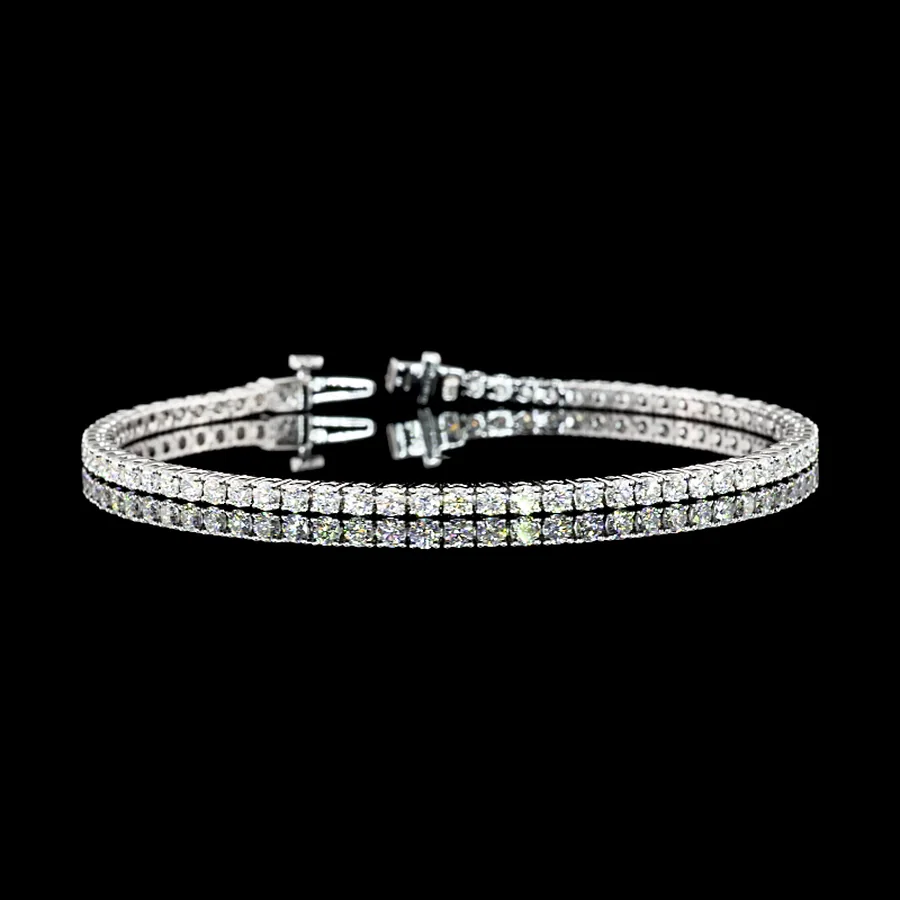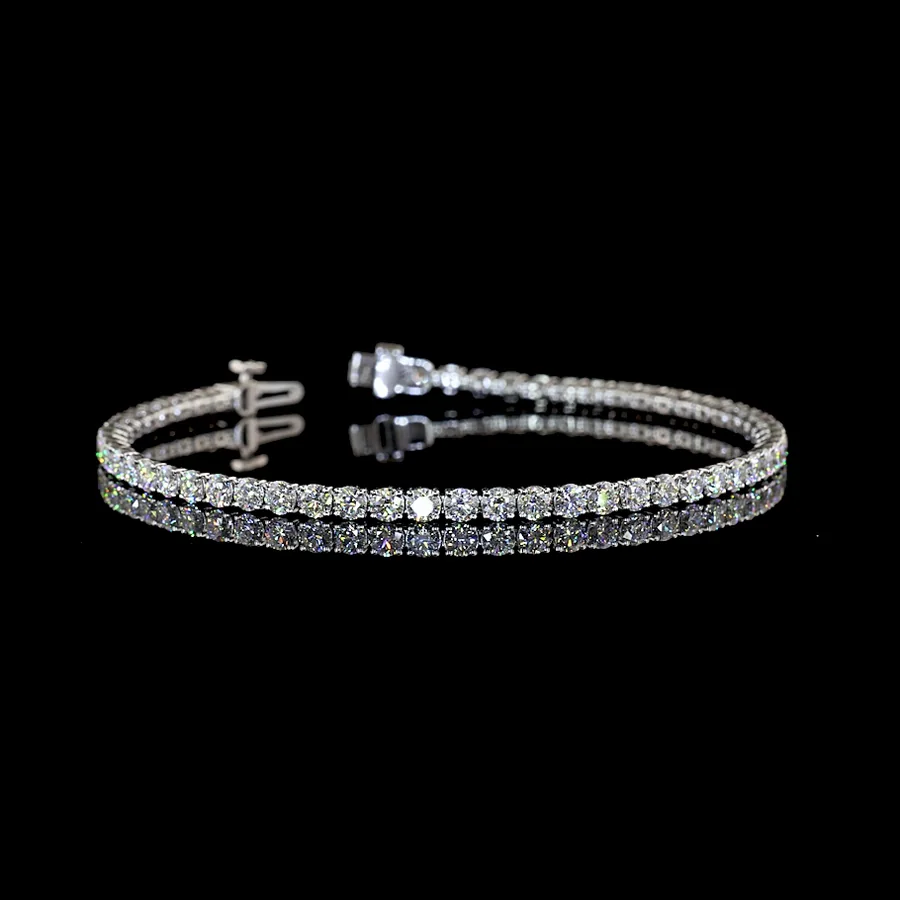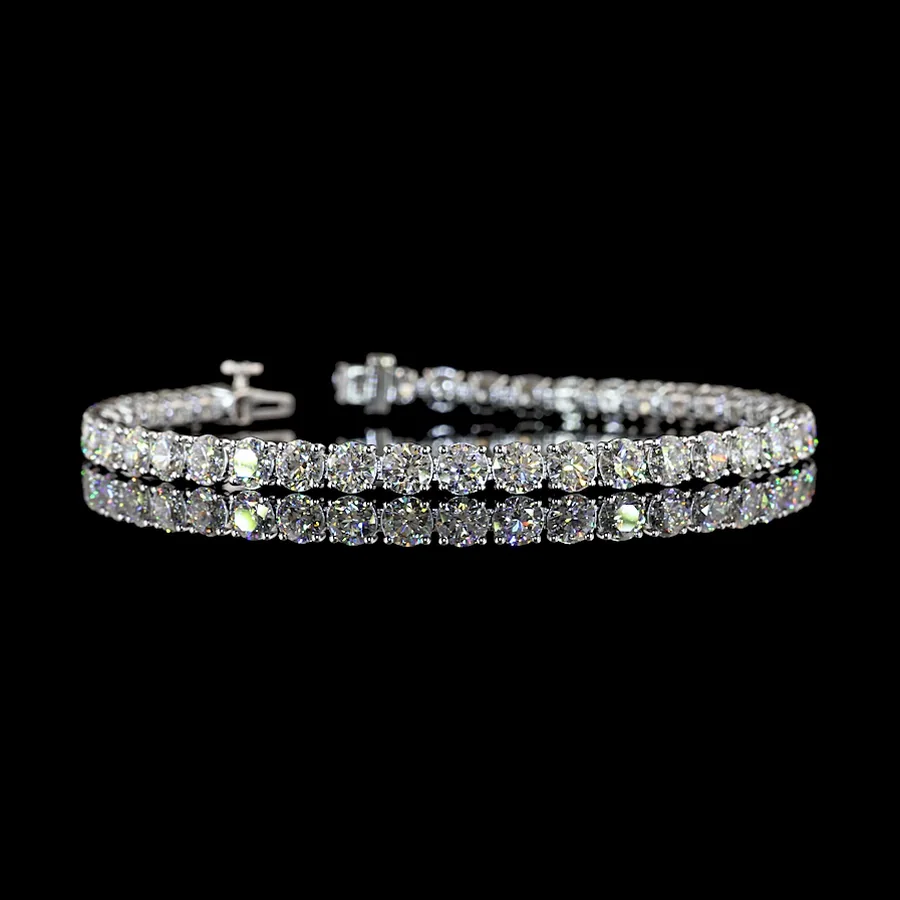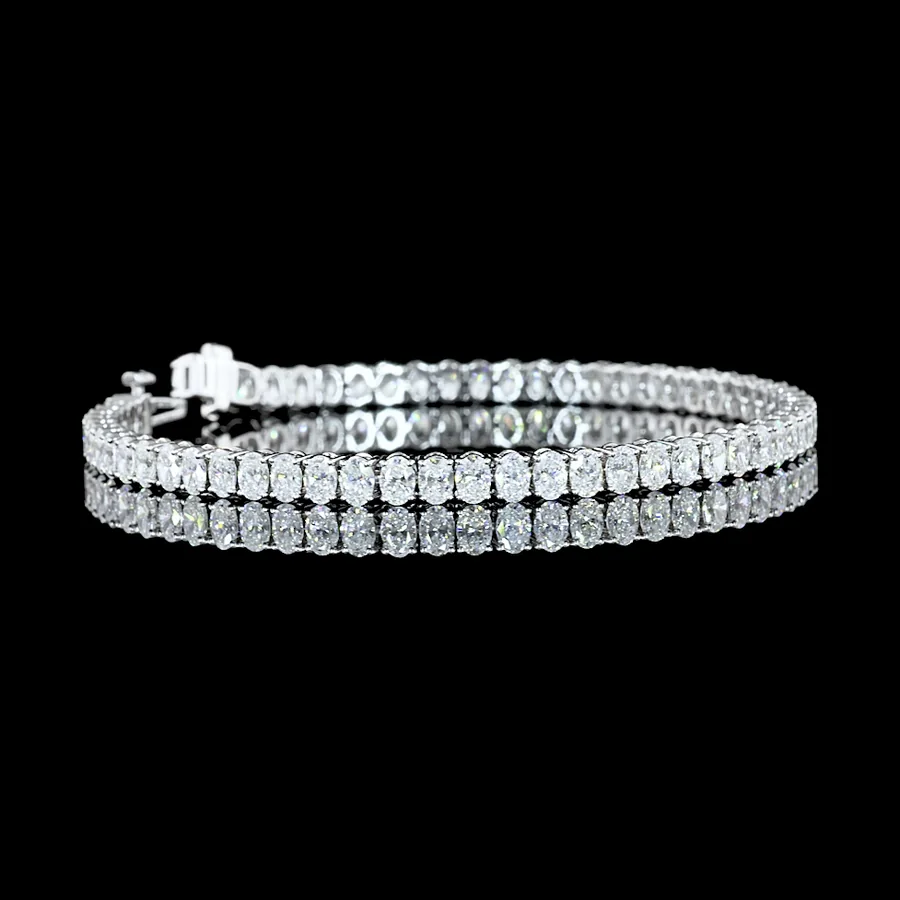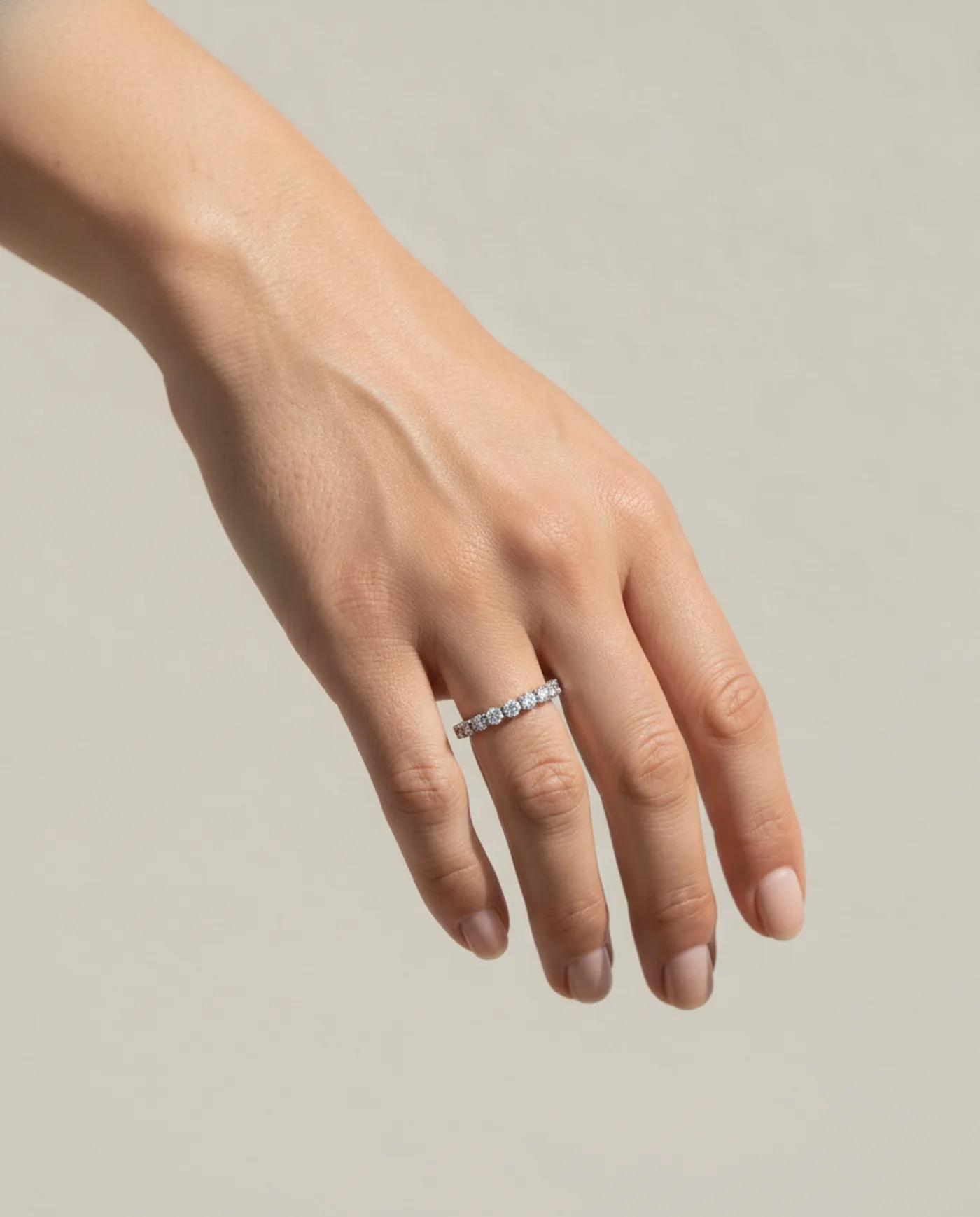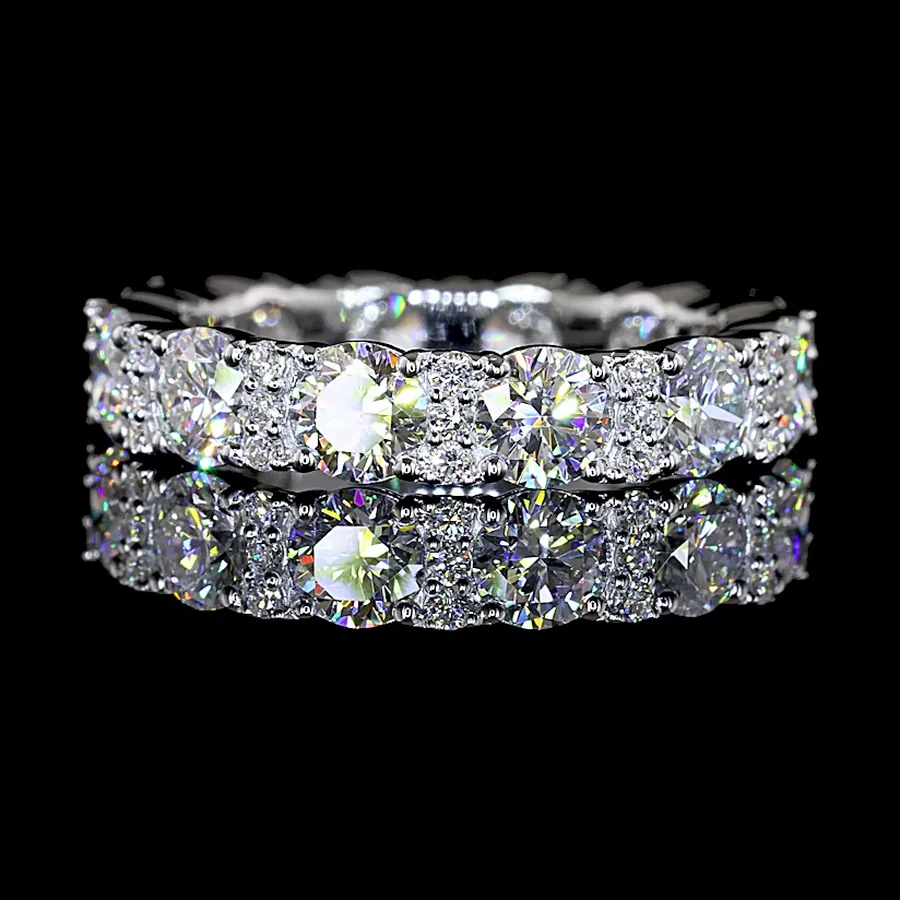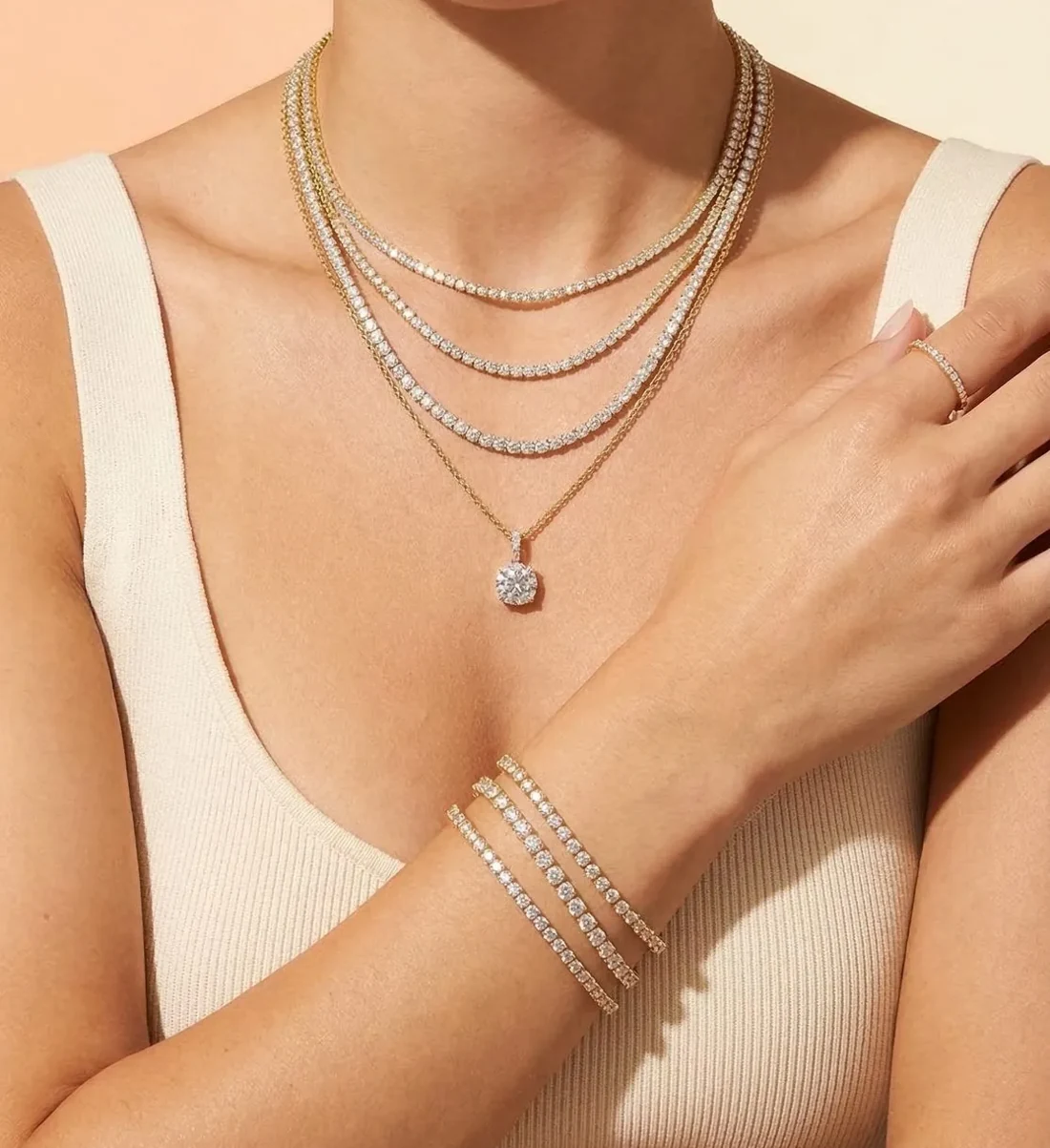
A tennis bracelet is a flexible line of matched diamonds, each held in its own small setting, joined into a single strand. It is named for a bracelet Chris Evert lost on court at the US Open and stopped play to find. Dorvelle makes tennis bracelets in sterling silver with lab-grown diamonds, from 3 to 10 carats.
The design
Before the name, the trade called it an eternity bracelet or a line bracelet: a row of equal stones, prong or bezel set, with the links hinged so the strand bends around the wrist. The stones face up, the metal stays out of sight, and the bracelet reads as a thin line of light. Nothing about the design has changed in a century. The name did.
How it got the name
Chris Evert was wearing a diamond line bracelet in an early round of the US Open when the clasp gave and the bracelet fell to the court. She asked for play to stop while she found it, and the moment made the news. The bracelet became the tennis bracelet.
The year is usually given as 1987. Evert herself has said it happened at the first US Open held at Flushing Meadows, which was 1978, and the phrase was in print before 1987 either way. The story is right; the date depends on who tells it.
Standard lengths
Tennis bracelets run from 6 to 8 inches, and 7 inches is the standard a jeweler stocks first. Most women fall between 6 and 7.5: 6 to 6.5 for a smaller wrist, 7 to 7.5 for a looser drape.
To measure: wrap a soft tape, or a strip of paper, around the wrist just below the wrist bone, where the bracelet will sit. Add half an inch for a close fit, three quarters for a standard fit, up to an inch for a loose one. A tennis bracelet should move a little on the wrist and should not slide over the hand.
| Wrist measurement | Fit | Add |
|---|---|---|
| Just below the wrist bone | Close | Half an inch |
| Just below the wrist bone | Standard | Three quarters of an inch |
| Just below the wrist bone | Loose | Up to an inch |
The clasp
The right tennis bracelet clasp is a box clasp with a safety latch: the tongue clicks into the box and a small hinged catch folds over the join as a second lock. This is the part that failed on court. Some bracelets add a hidden safety catch as a third. A lobster or spring ring clasp is fine on a chain; on a line of diamonds, a box and safety is the standard.
Check the clasp now and then. A clasp that no longer clicks firmly is the first thing to send to the bench.
Carat totals
A tennis bracelet’s carat weight is the total across all its stones, so a 3 ct bracelet with 40 stones is a line of small diamonds and a 7 ct bracelet with the same count uses stones more than twice the weight each. The total tells you the overall presence; the stone count tells you how it reads up close. Every Dorvelle page lists both the total and the stone shape.
The bracelets
Dorvelle makes twelve bracelets in sterling silver with lab-grown diamonds: round tennis bracelets at 3, 5 and 10 ct, oval, emerald cut, pear and marquise lines at 7 ct, two station bracelets and two bangles.
Round tennis bracelets. The round tennis bracelet, 3 ct is the classic line. The tennis bracelet, 5 ct steps up the stone size. The round tennis bracelet, 10 ct is the full statement.
Other shapes. The oval tennis bracelet, 7 ct, the emerald cut tennis bracelet, 7 ct and the pear tennis bracelet, 7 ct use elongated stones that cover more wrist per carat. The marquise riviera bracelet, 7 ct sets marquise stones end to end.
Stations and bangles. The round station tennis bracelet, 6 ct spaces larger stones along the line. The station bracelet, 2.5 ct is lighter still. The round bangle, 1 ct and the round bangle, 3 ct are rigid rather than hinged.
All sterling silver, finished in rhodium or gold vermeil, with the finish refreshed by mail whenever you like. The first time is free. How to clean sterling silver jewelry covers the routine, and the care guide has it in short form.
Free insured shipping in the US and 30-day returns in original condition. If you are between lengths, ask a specialist.