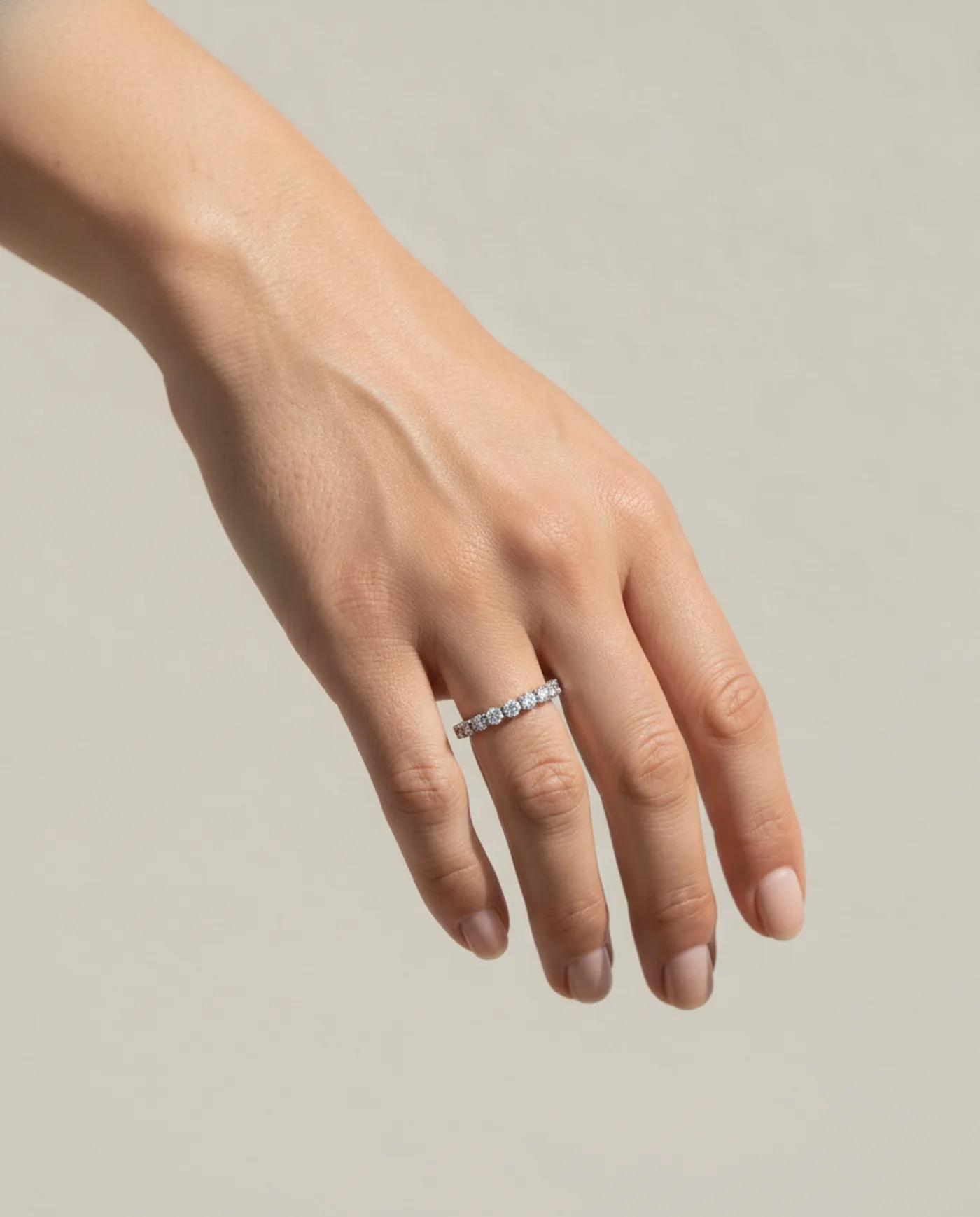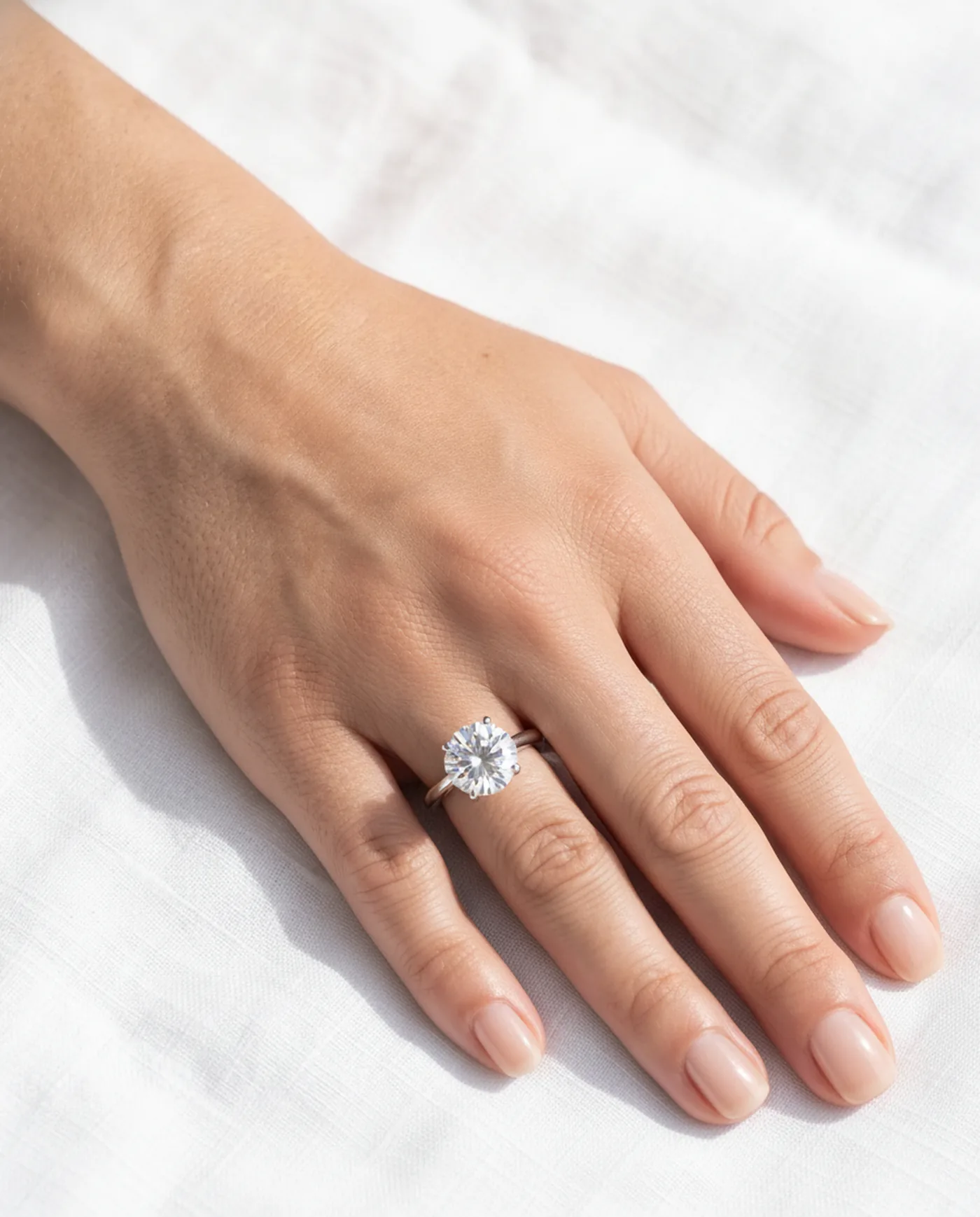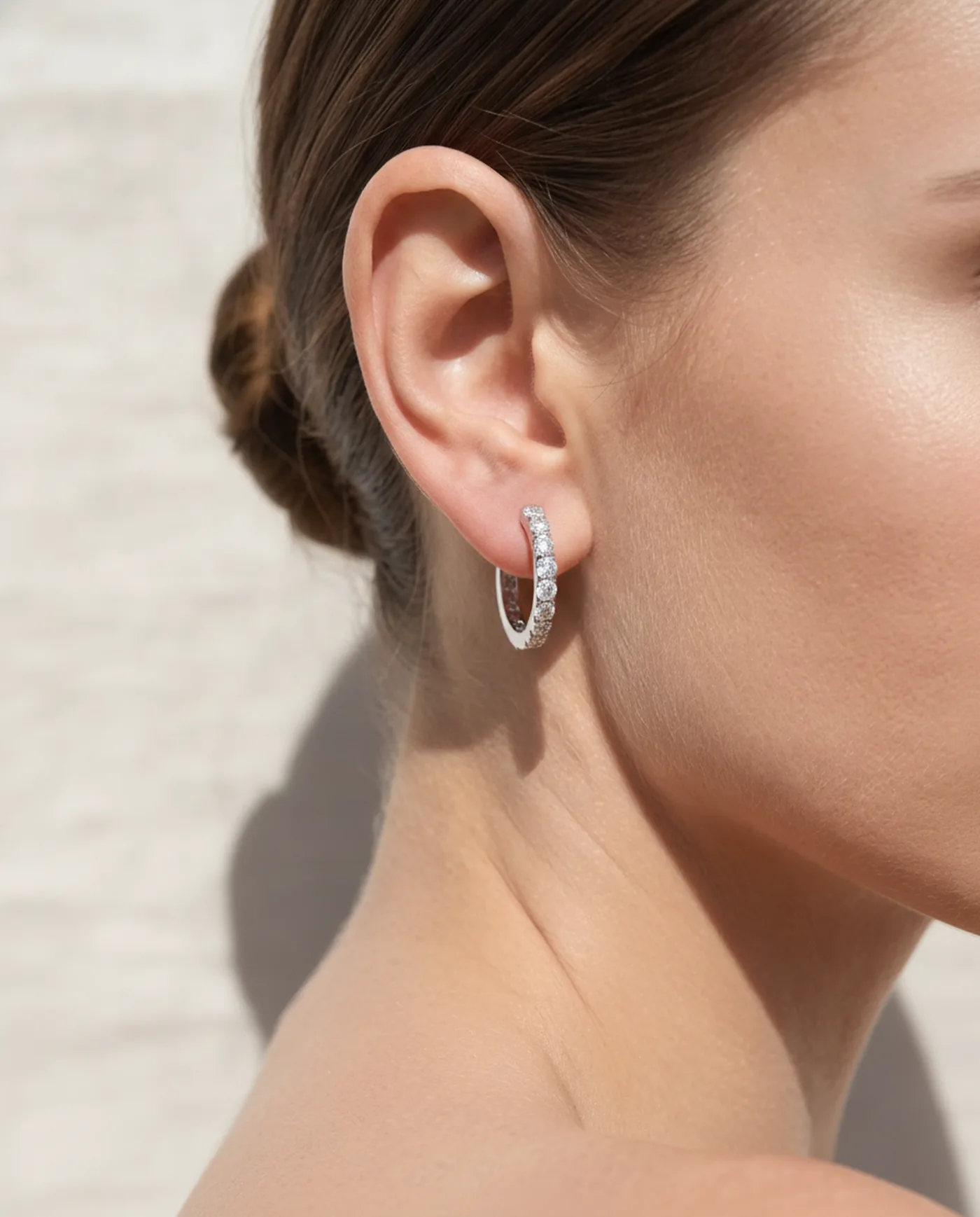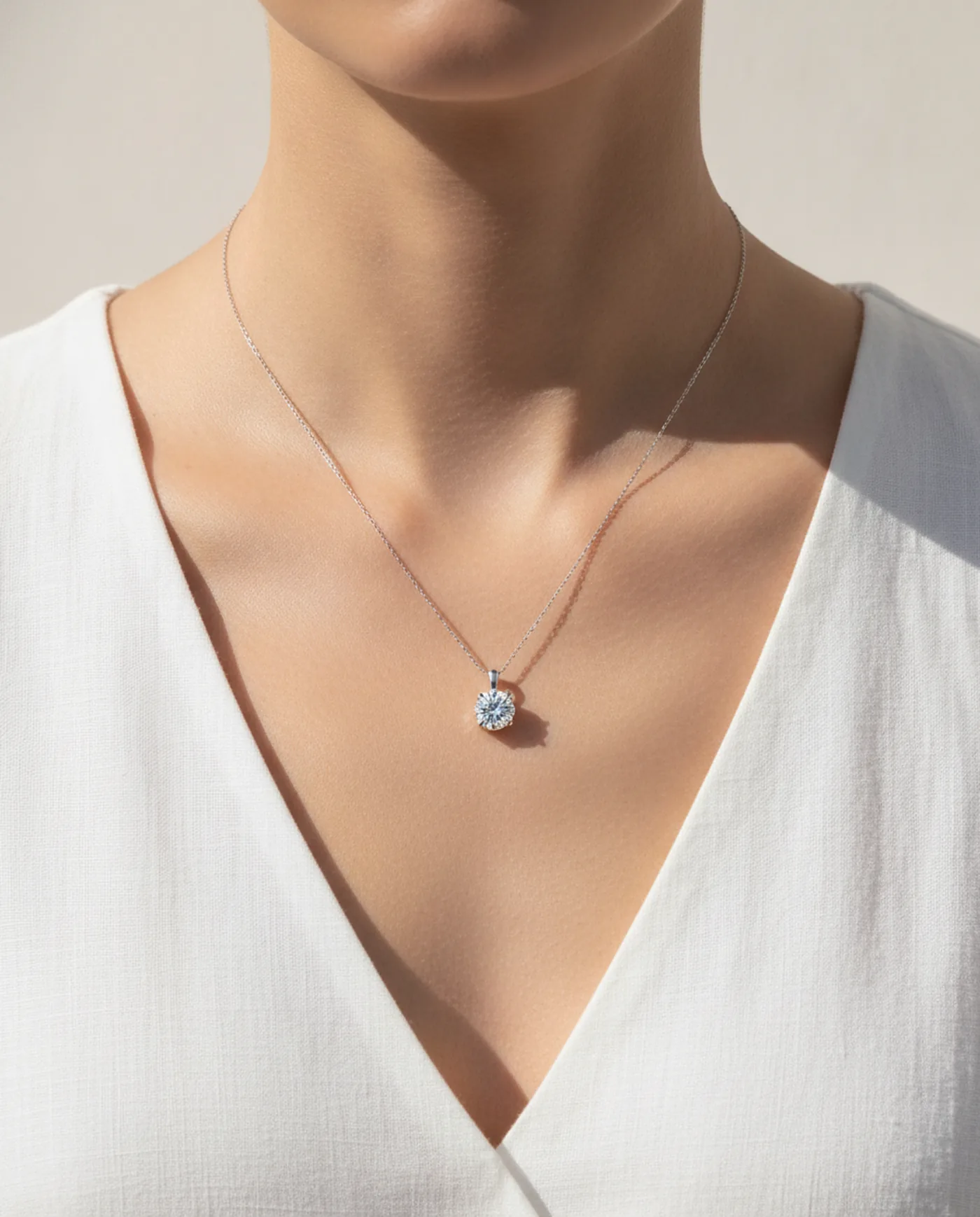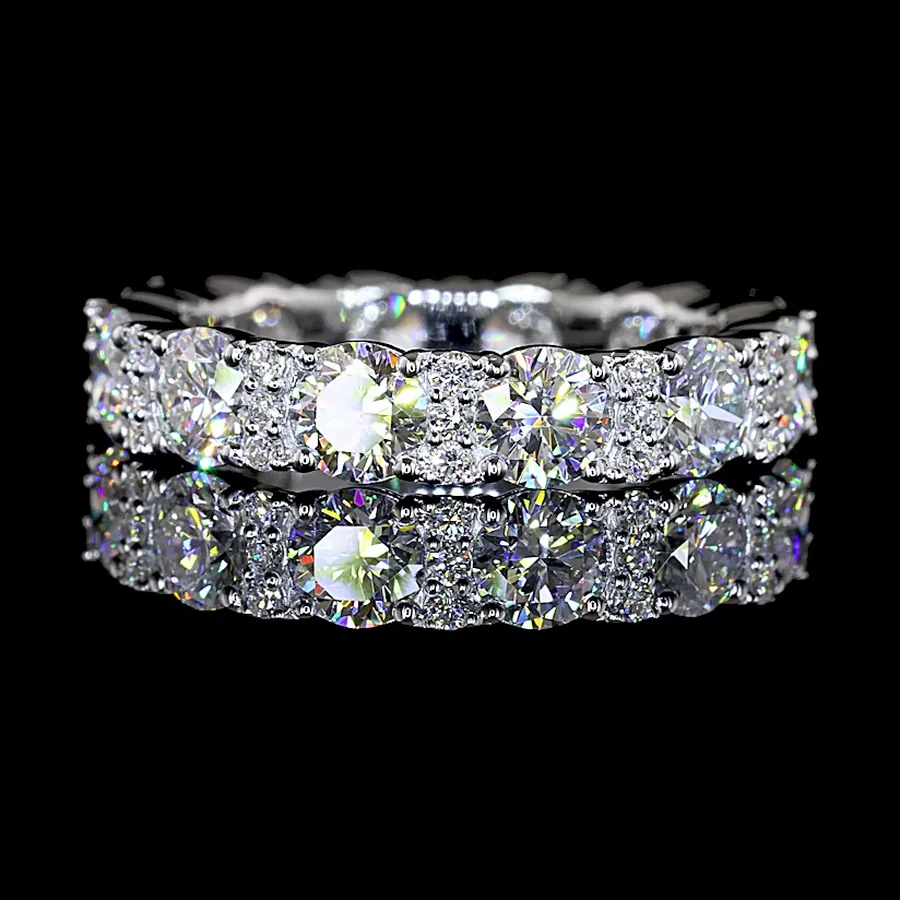
Rhodium is a rare platinum-group metal, element 45, that jewelers electroplate onto white gold and sterling silver to give them a hard, bright, mirror-white surface. Nearly every white gold ring sold today carries it. Dorvelle finishes every white piece in rhodium, the same way the house on 47th Street finishes its 14k white gold.
The metal
Rhodium is element 45, a platinum-group metal found with platinum and palladium in the same ores, first isolated in 1803 by the English chemist William Hyde Wollaston. He named it for the rose color of one of its salts, from the Greek rhodon.
It is one of the rarest metals mined. It is dense, about 12.4 grams per cubic centimeter, melts at 1964 degrees Celsius, and does not form an oxide in air even when heated, which is the property jewelers care about. A rhodium surface stays white.
It is also hard. On the Mohs scale, silver and gold sit around 2.5 to 3, platinum around 4 to 4.5, and rhodium around 6. A rhodium surface resists the fine scratching of daily life better than any of the metals it is plated onto.
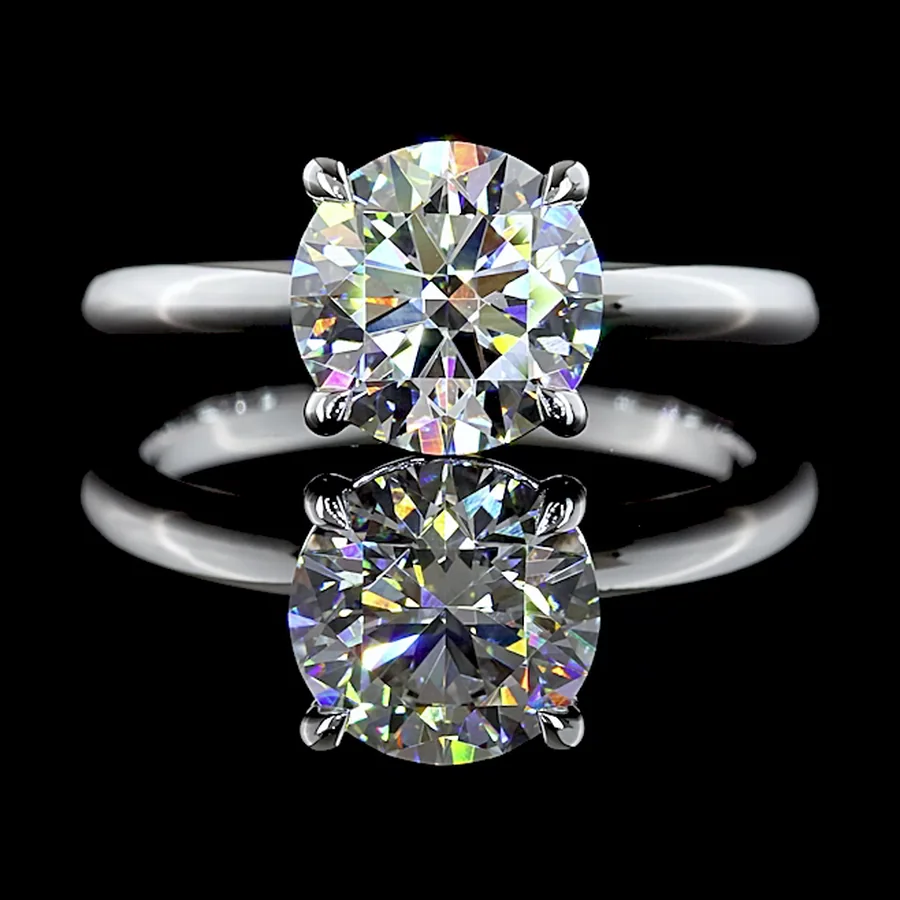
And it is bright. Rhodium is among the most reflective of metals, which is why a freshly finished piece has a mirror quality that bare silver or white gold does not.
| Metal | Mohs hardness | Color in air |
|---|---|---|
| Silver | 2.5 to 3 | White |
| Gold | 2.5 to 3 | Yellow |
| Platinum | 4 to 4.5 | Gray white |
| Rhodium | 6 | Mirror white, no oxide |
Why white gold is rhodium finished
White gold is yellow gold alloyed with white metals such as nickel or palladium and then plated in rhodium, because the alloy alone comes out slightly warm or gray rather than true white. There is no white gold in the ground. Nickel white golds in particular need the rhodium finish to look truly white.
So the jewelry trade settled on a standard: cast the white gold, polish it, then plate it in rhodium. The ring you see in the case is the rhodium. The white gold is underneath. This has been the norm for decades, and white gold owners send their rings in for a fresh coat as a matter of routine, the way shoes go to a cobbler.
Why it is the same white on silver
Rhodium plated on sterling silver and rhodium plated on 14k white gold give the same surface, because the finish metal, the bath and the thickness are the same on both. The bath does not know what is under it. Put a Dorvelle white ring beside the 14k white gold version of the same design and the color is identical, because what you are looking at is rhodium on both.
That is the whole idea behind Dorvelle. The design is the same CAD file. The stone is the same lab-grown diamond. The finish is the same rhodium. What changes is the metal beneath it, and the price. Sterling silver vs white gold goes through the differences that remain.
How the finish is applied
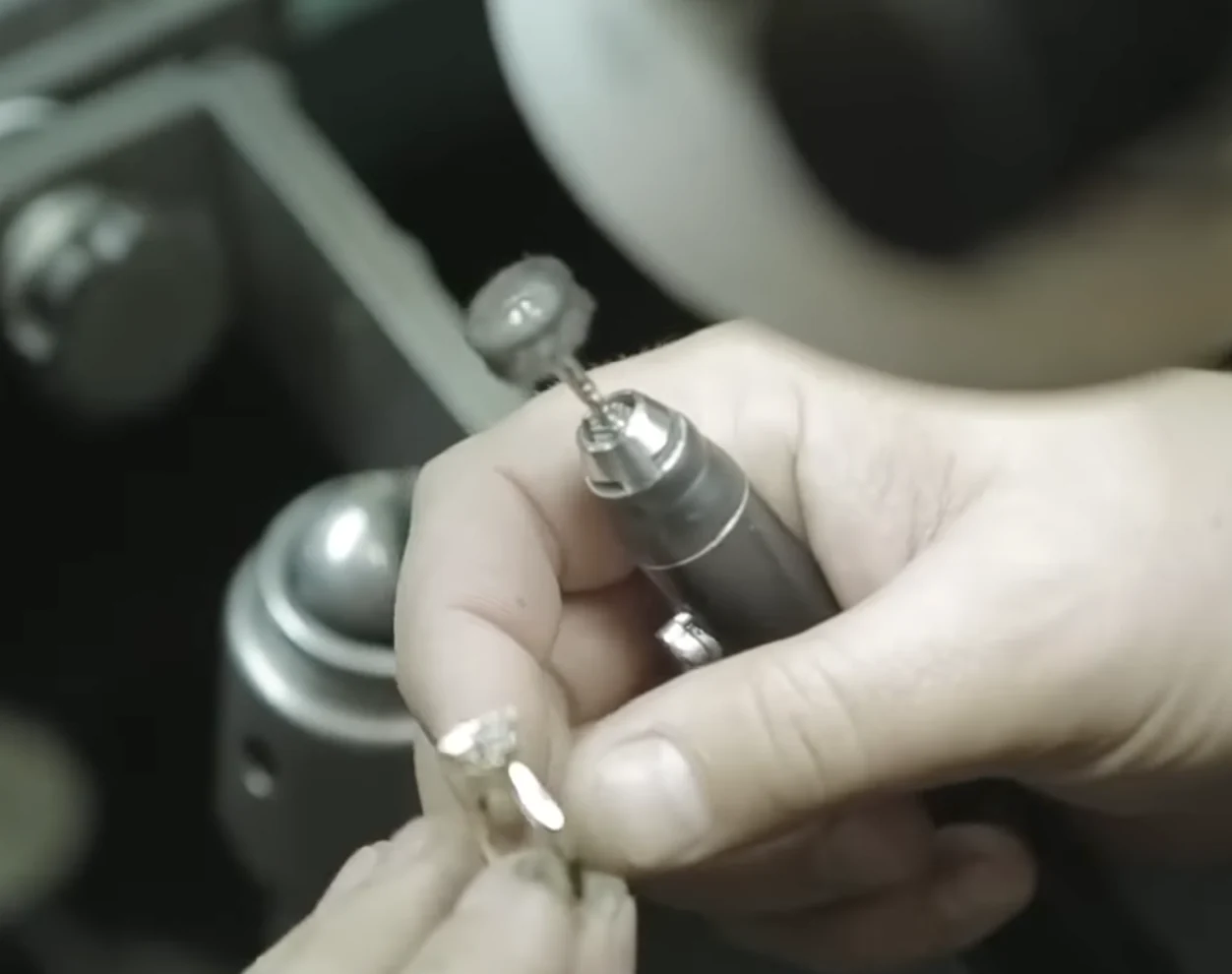
Rhodium is applied by electroplating: the polished piece becomes the cathode in a rhodium solution and a current moves the metal onto the surface, following every mark beneath it. So the piece is polished to its final shape first, then cleaned in several stages, because any trace of oil or polish stops the rhodium from bonding.
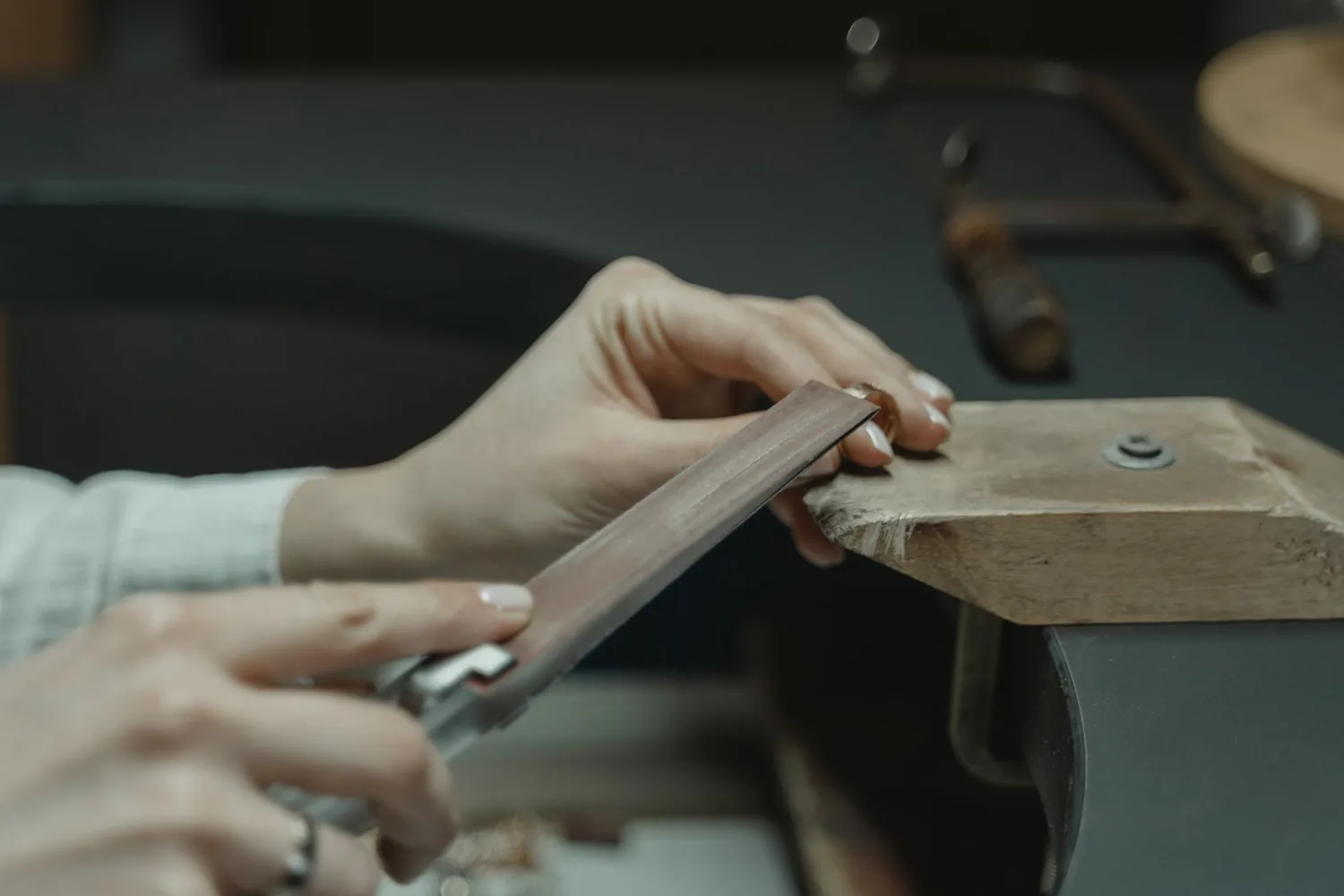
Decorative rhodium goes on as a hard, bright layer over a polished surface, the same way it goes onto white gold. The polish underneath is what the finish shows, which is why the bench polishes first and plates last.
The refresh
Dorvelle re-plates any piece by mail: request a prepaid label, send it in, and it comes back re-plated and polished within 5 business days of arrival, the first time free and $45 after that. A ring is the piece that never comes off, so the bench offers this as a standing service.
People use it the way they would use a jeweler’s cleaning service. Before an anniversary, before a wedding, before a trip, or once a year on a date they remember. The care guide explains how to send a piece in.
What you do not need to do
A rhodium finished piece needs no silver dip, polishing compound or abrasive cloth, because those are made for bare silver and the surface of a Dorvelle piece is rhodium, not silver. A soft cloth and the four habits in the care guide, on last, off for the pool and the gym, its own pouch, are enough between visits to the bench.
Yellow pieces
Yellow Dorvelle pieces are finished in gold vermeil instead, a layer of gold at least 2.5 microns thick over the sterling. What is gold vermeil explains the difference, and the same refresh service covers both finishes.