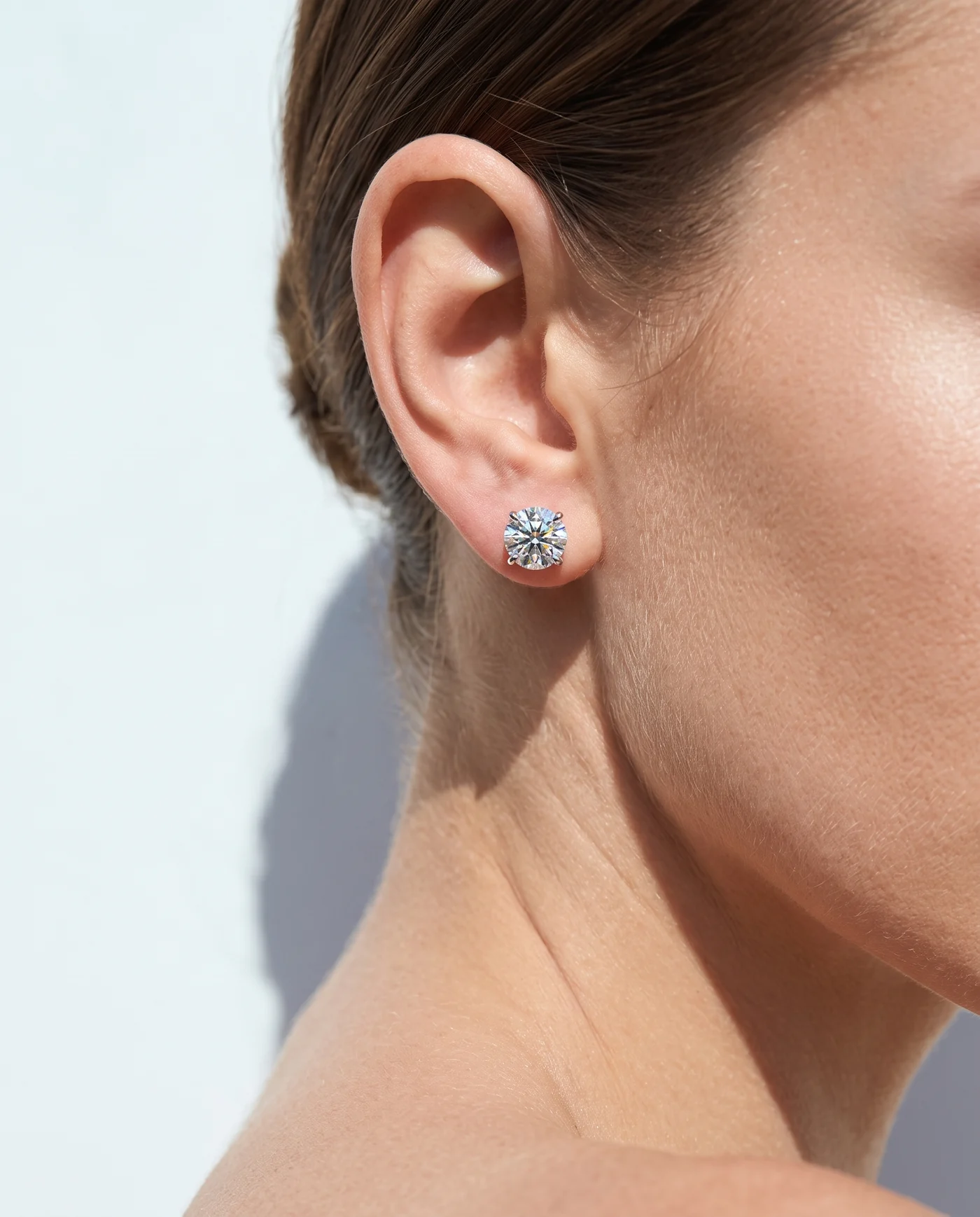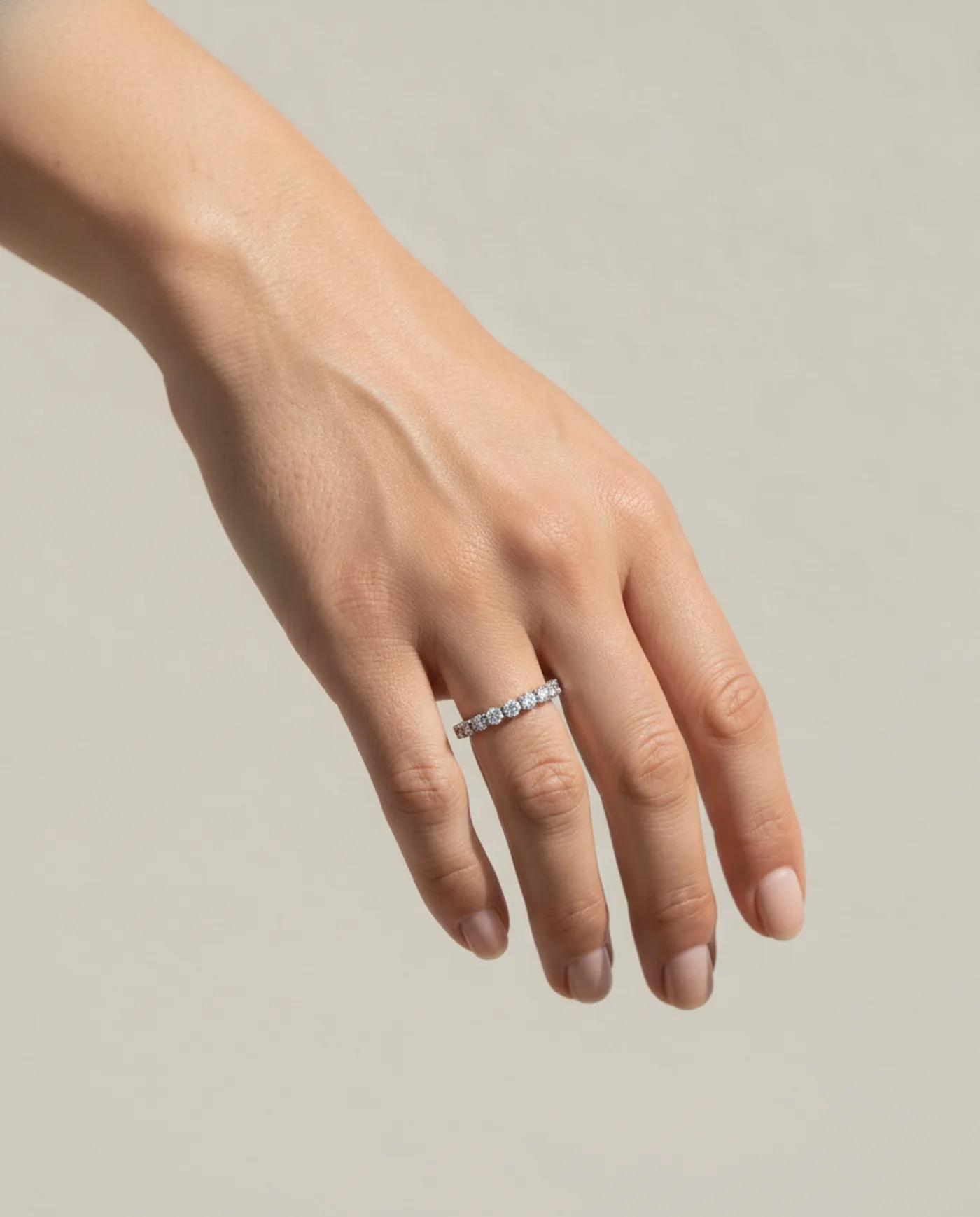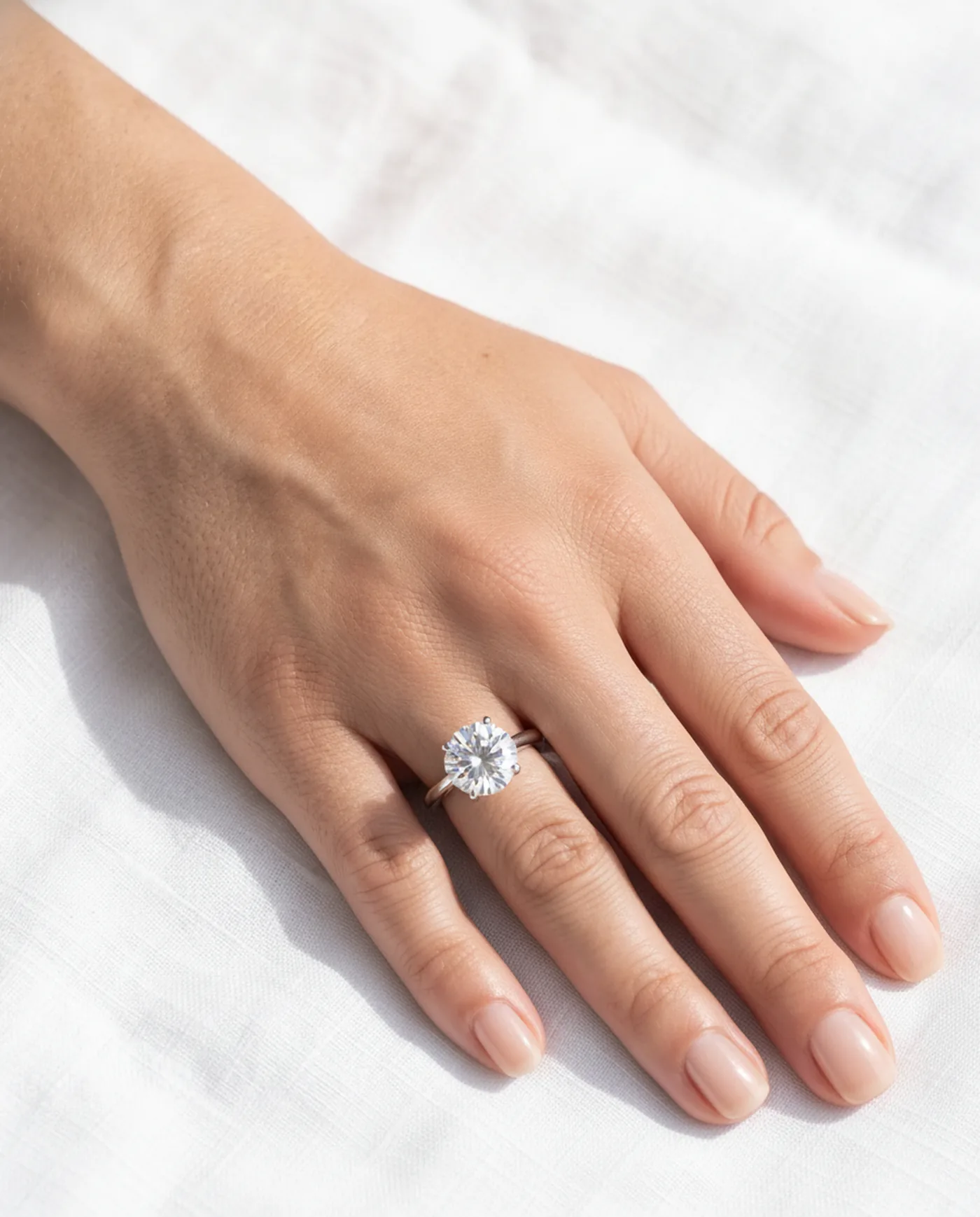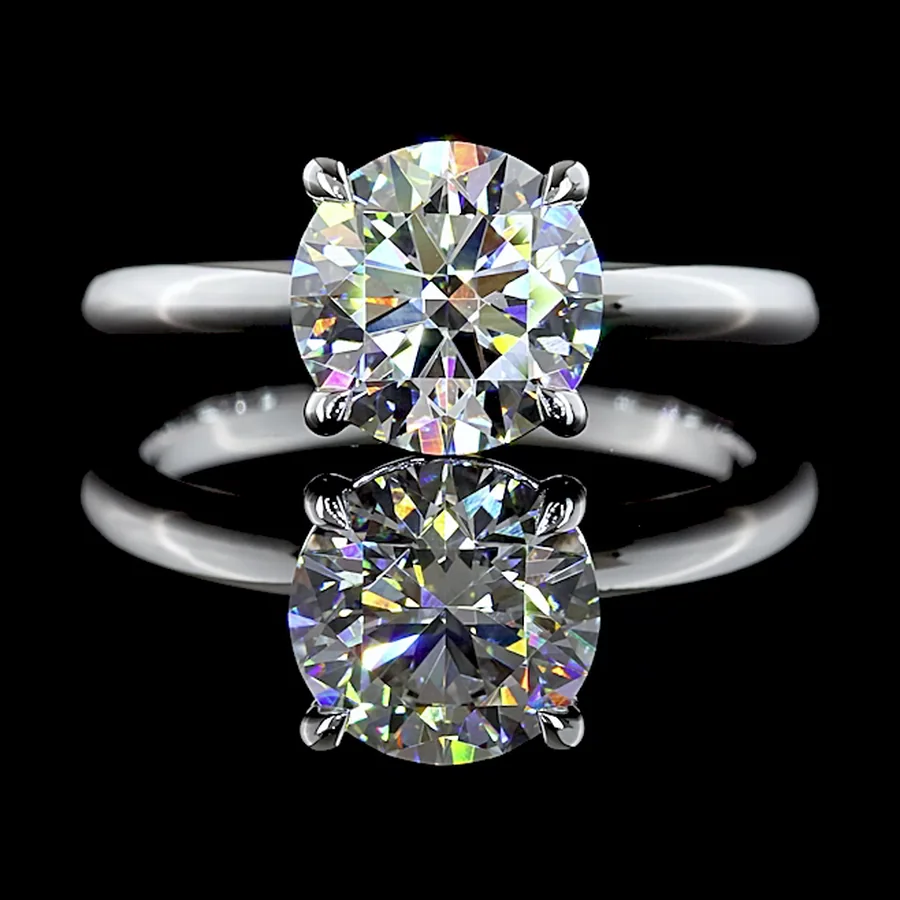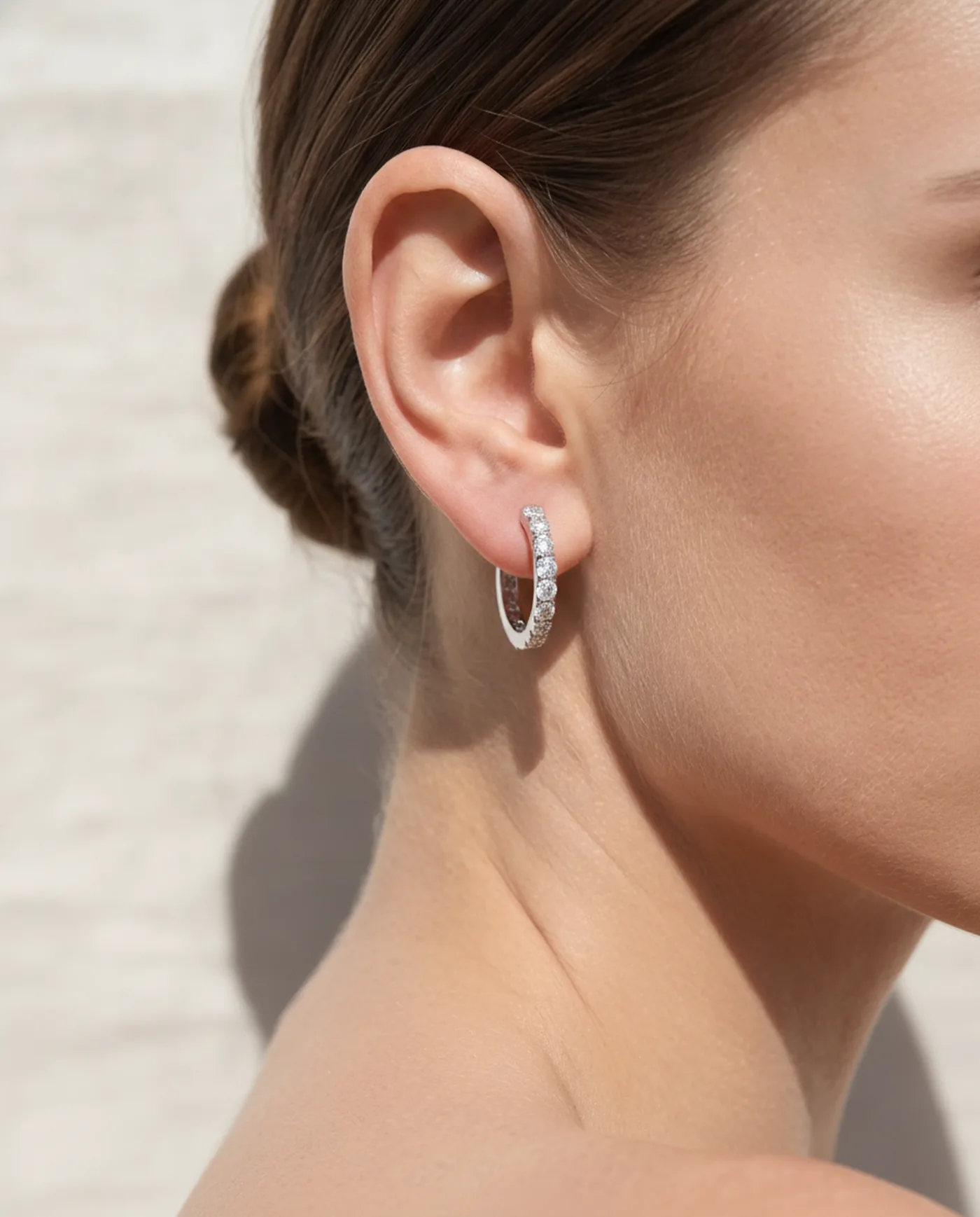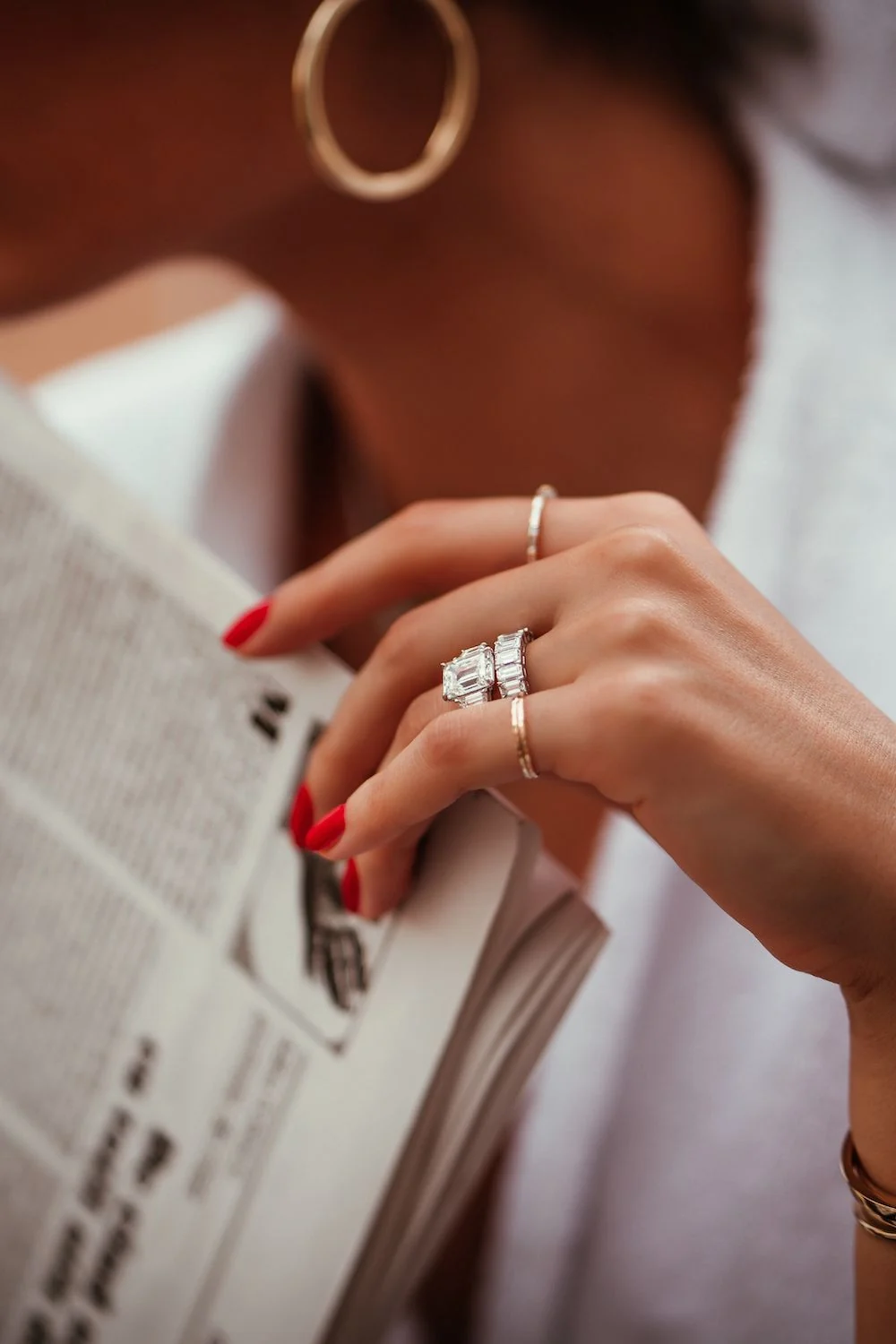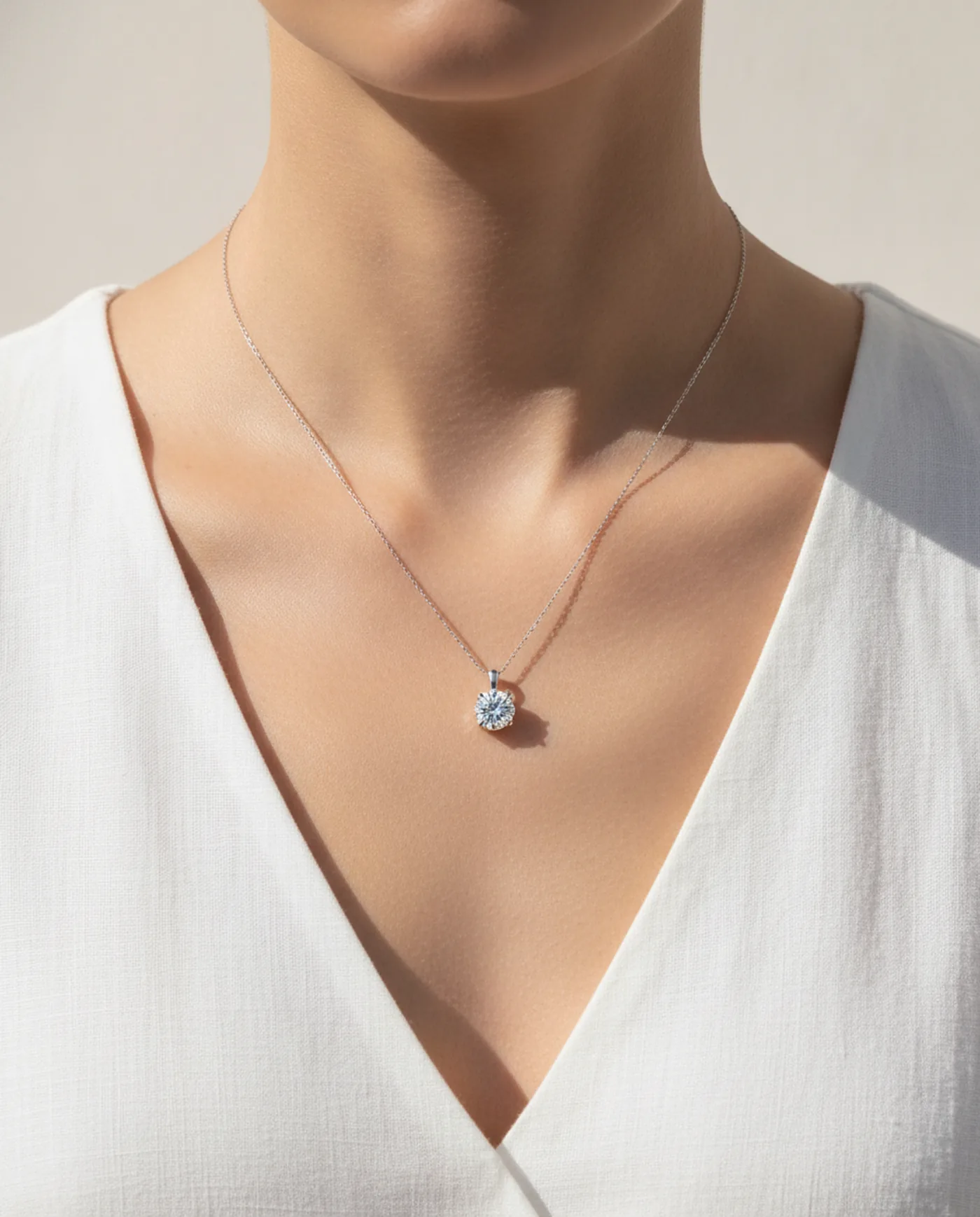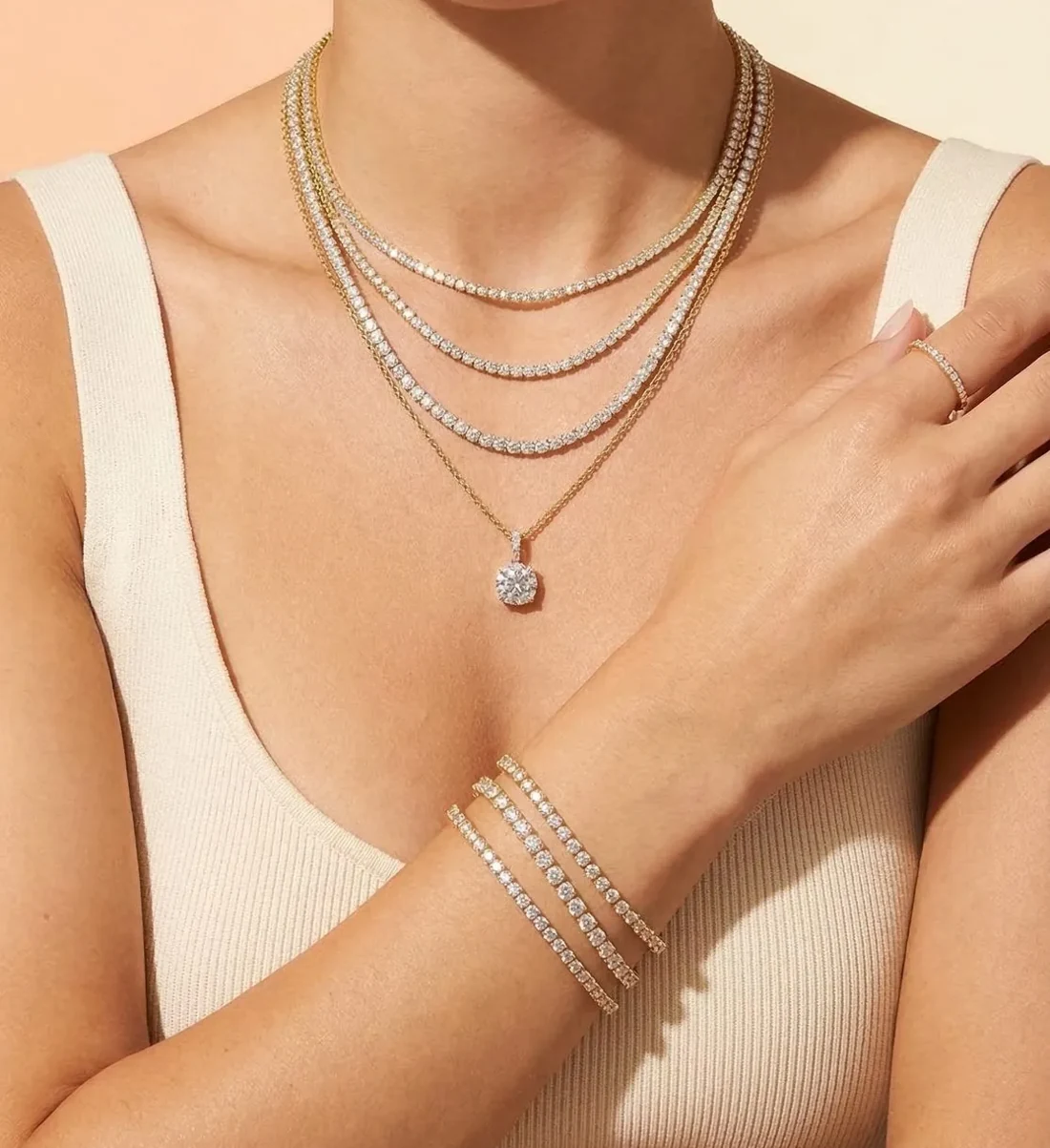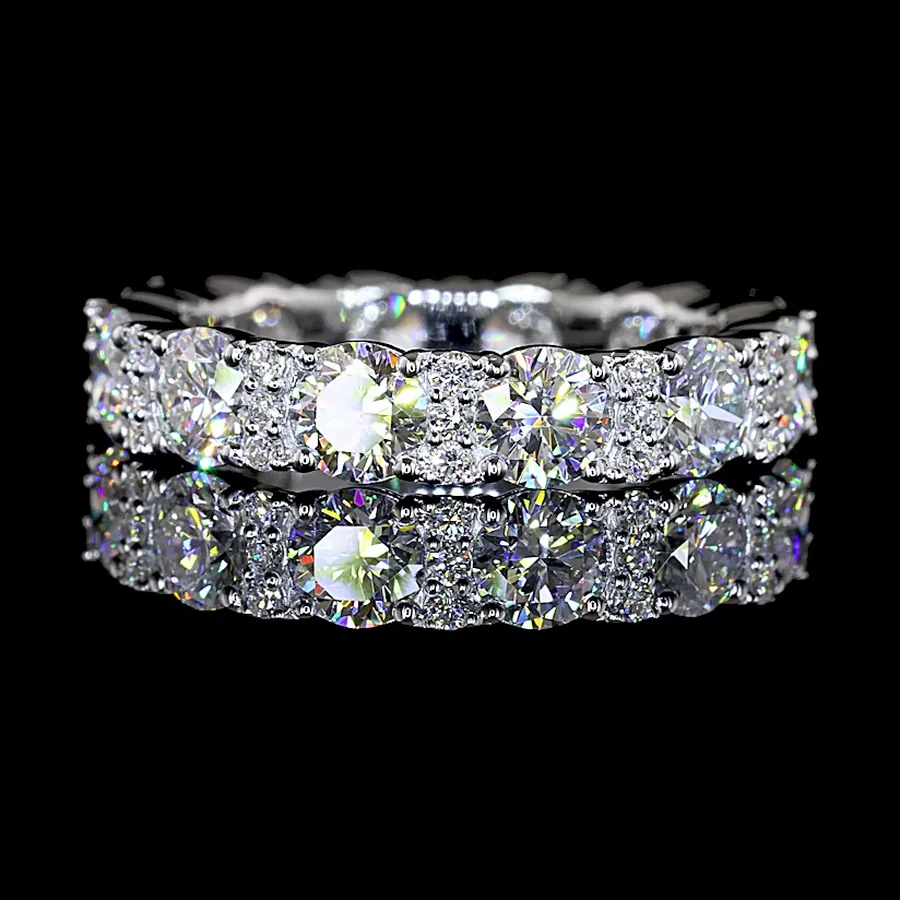
Sterling silver and white gold look the same on the hand because both are finished in rhodium. The difference is the metal underneath, its weight, and its price. Dorvelle offers each design both ways: in 14k white gold at the house on 47th Street, and in sterling silver here, with the same lab-grown diamond in each.
What is under the white
White gold is 58.3 percent gold alloyed with white metals and plated in rhodium; sterling silver is 92.5 percent silver, stamped 925, and plated in the same rhodium, so the two surfaces are identical.
White gold is yellow gold alloyed with white metals. A 14k white gold is 58.3 percent gold; the rest is nickel or palladium, with copper and zinc. The alloy comes out of the mold a little warm or gray, so the trade plates it in rhodium to get a true white. Nickel white golds in particular need it.
Sterling silver is 92.5 percent silver, the rest usually copper, stamped 925. It is a white metal to begin with. A Dorvelle piece is plated in rhodium all the same, for the same reasons white gold is: a harder surface and a mirror finish that is identical to the one on the gold version.
So the surface of both rings is rhodium. What is rhodium covers the metal. The eye sees the same thing. The hand feels the difference.
Weight
A 14k white gold alloy weighs about 12.8 to 14.5 grams per cubic centimeter and sterling silver about 10.4, so a ring cast from the same file in silver weighs roughly a fifth to a quarter less than its gold twin.
Some people like the heft of gold. Some prefer a lighter ring for every day. Pick up both if you can. If you cannot, know that the silver ring has the same dimensions as the gold one, so it still feels like a proper ring, only lighter.
Price
The Dorvelle round solitaire, a 2.02 ct lab-grown diamond in D color and VVS2 clarity, is $3,850 in 14k gold at the house and $750 in sterling silver, with the same stone, the same design file and the same bench.
Gold trades at around $4,150 a troy ounce as this is written. Silver trades at a small fraction of that, and the silver ring contains less metal by weight to begin with, because silver is less dense. The metal in a 14k ring is a large share of its price. The metal in a sterling ring is a small one.
Dorvelle prices follow the metal. Why the metal became the expensive part has the full arithmetic.
What is the same
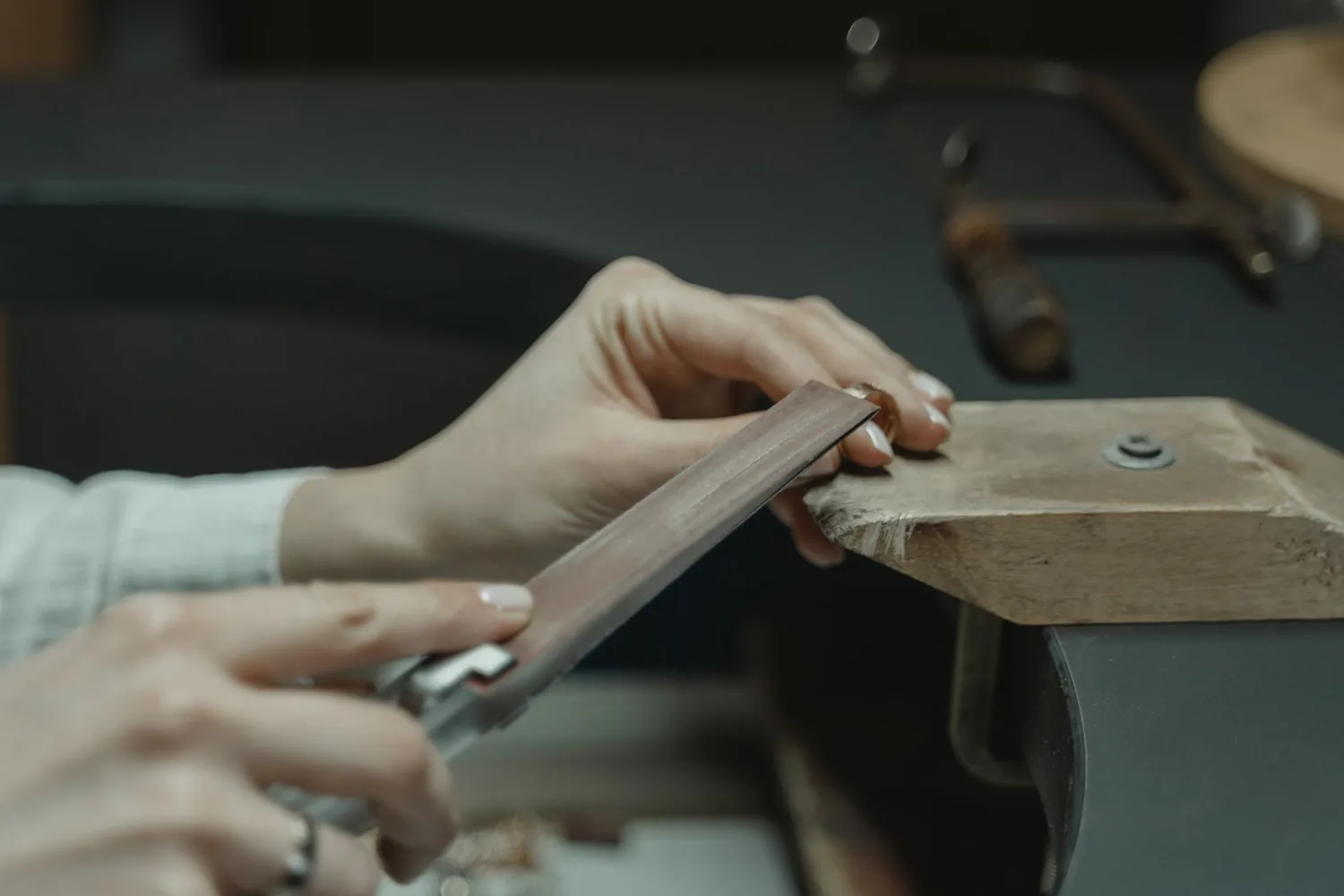
Four things are identical between a Dorvelle piece and its 14k twin: the lab-grown diamond, the design file, the bench that sets and finishes it, and the rhodium on the surface.
The stone. Every Dorvelle diamond is a lab-grown diamond of the same shape, carat weight, color and clarity as the one in the 14k version, with a lab report on center stones over one carat. Graded the same way explains why that is not a smaller claim than it sounds.
The design. One CAD file, two castings. Same prong count, same gallery, same shank width.
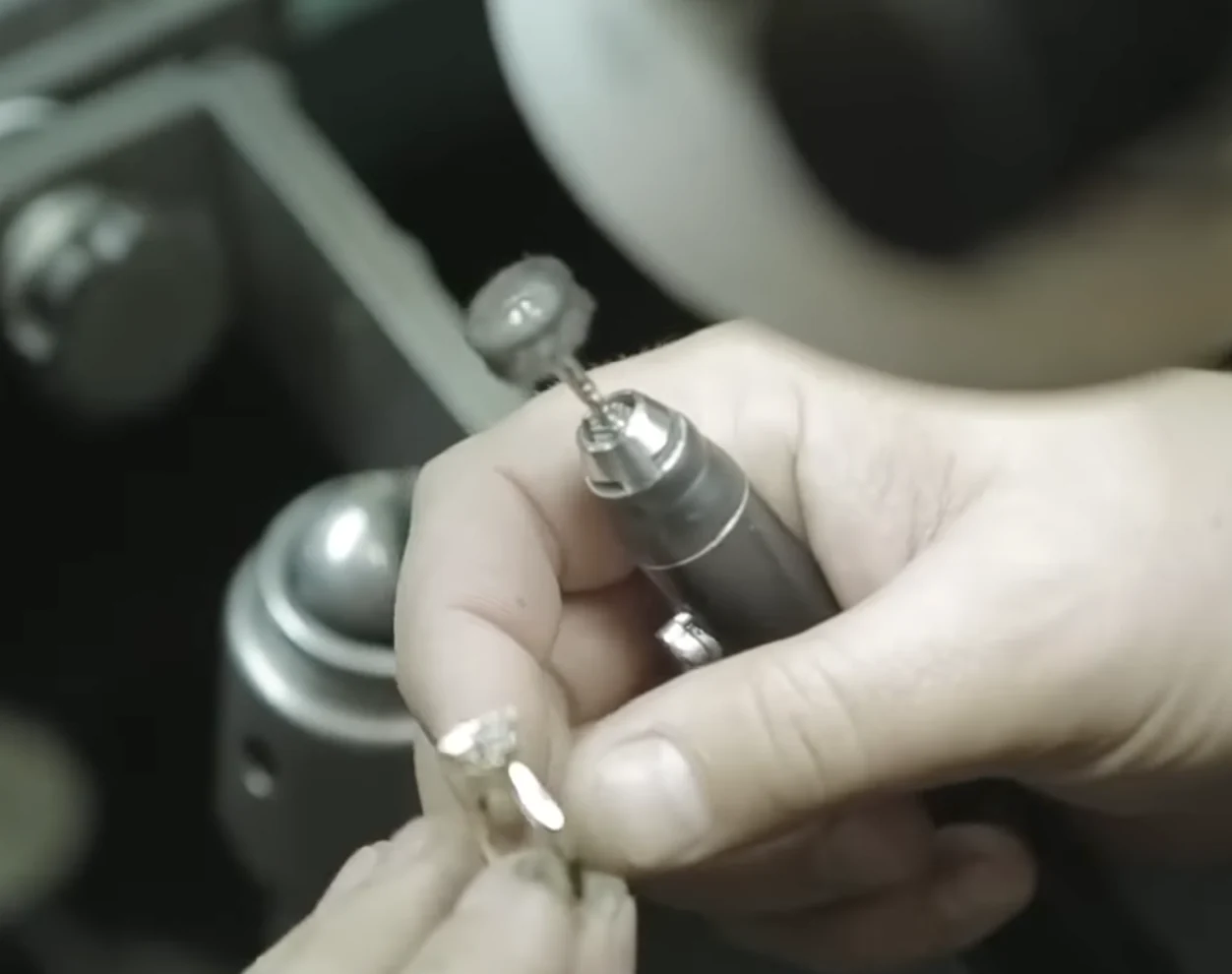
The hands. The same bench sets, finishes and checks both. The same specialists answer for both.
The finish. Rhodium on both, refreshed by the same bench. The first refresh on a Dorvelle piece is free; after that it is $45, label included.
| Sterling silver | 14k white gold | |
|---|---|---|
| Metal under the finish | 92.5 percent silver | 58.3 percent gold |
| Surface | Rhodium | Rhodium |
| Density, g per cm3 | About 10.4 | About 12.8 to 14.5 |
| Round solitaire, 2.02 ct D VVS2 | $750 | $3,850 |
| Diamond, design file, bench | Same | Same |
Who should pick white gold
White gold is the right choice when the metal itself matters: it holds value, carries more weight on the hand, and is the version the house has made the same way since 1959.
Anyone who wants the metal to hold value. Gold is a store of value in a way silver is not, and part of the point of a gold ring, for many people, is the gold.
Anyone buying for the next generation. The 14k pieces are the ones the house has made the same way since 1959. If the ring is meant to be handed down, that is the version to hand down.
Anyone who wants the heavier ring. Weight is a preference. If you want it, gold has it.
Who should pick sterling silver
Sterling silver is the right choice when the stone is the point, when the money is better spent elsewhere, or when you want the same look now at a fraction of the price.
Anyone who wants the stone to carry the ring. On a solitaire, the diamond is what people see. Silver puts the money there.
Anyone who wears more than one ring. At silver prices the second and third piece come easily, and they stack with the first.
Anyone with other plans for the money. The gap between the two prices on the same design is often thousands of dollars.
Anyone who wants the look now. The look is the same look. Sterling silver for an engagement ring is the straight answer if the ring in question is that one.
How to get the gold version
Every Dorvelle product page shows the 14k price of the same design beside ours. The gold version is made and sold by the house on 47th Street. Ask a specialist and we will point you to it by text. The same people answer for both.