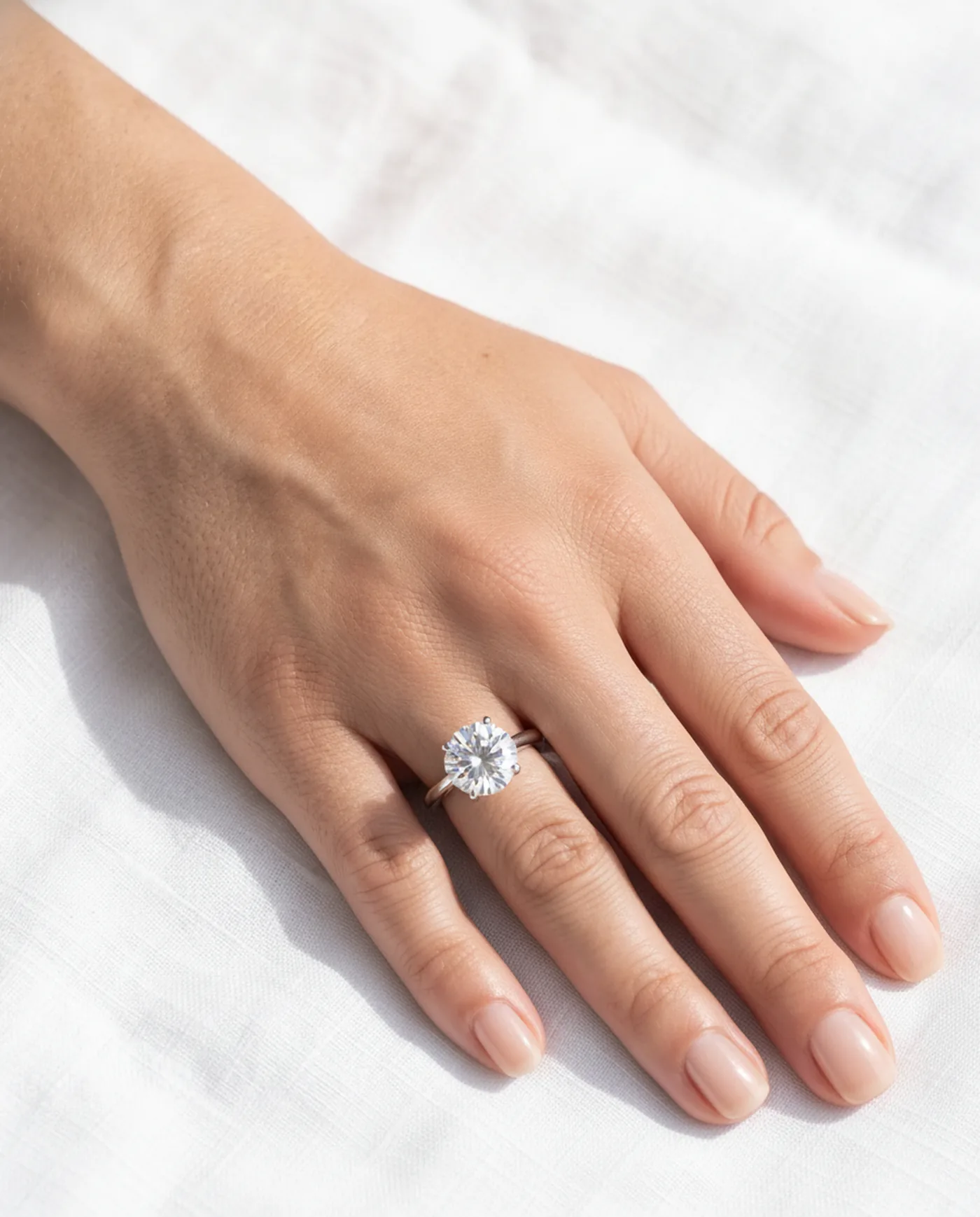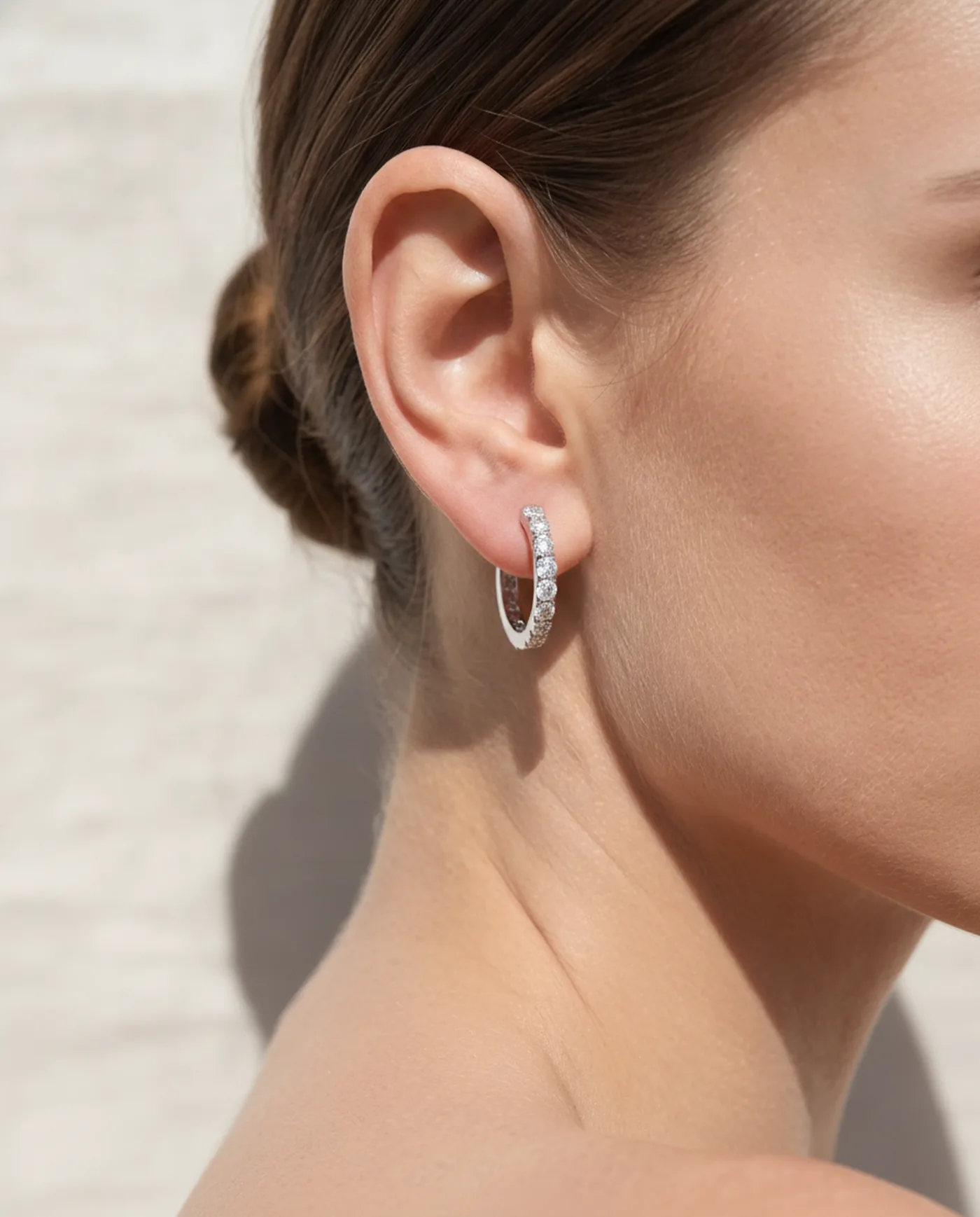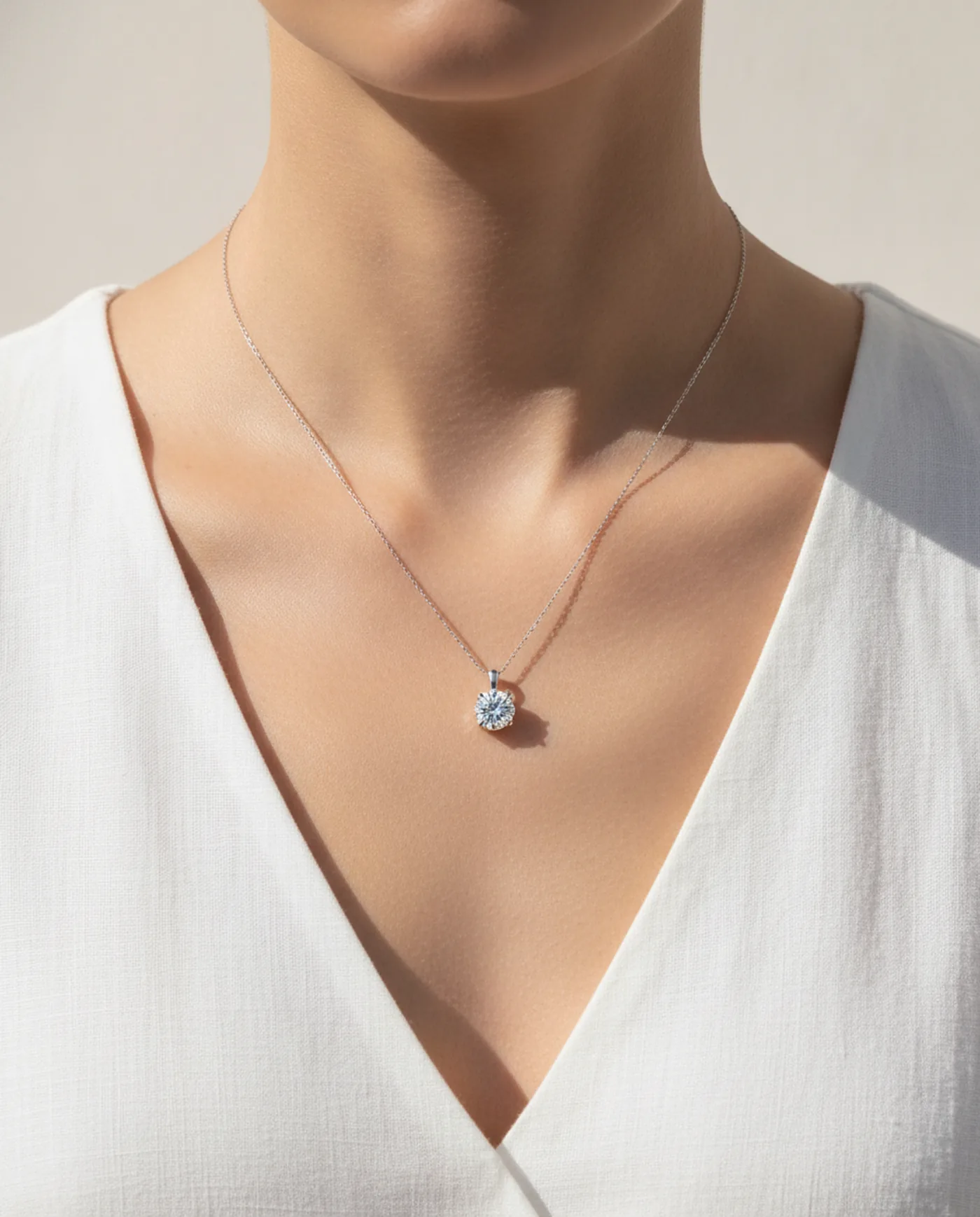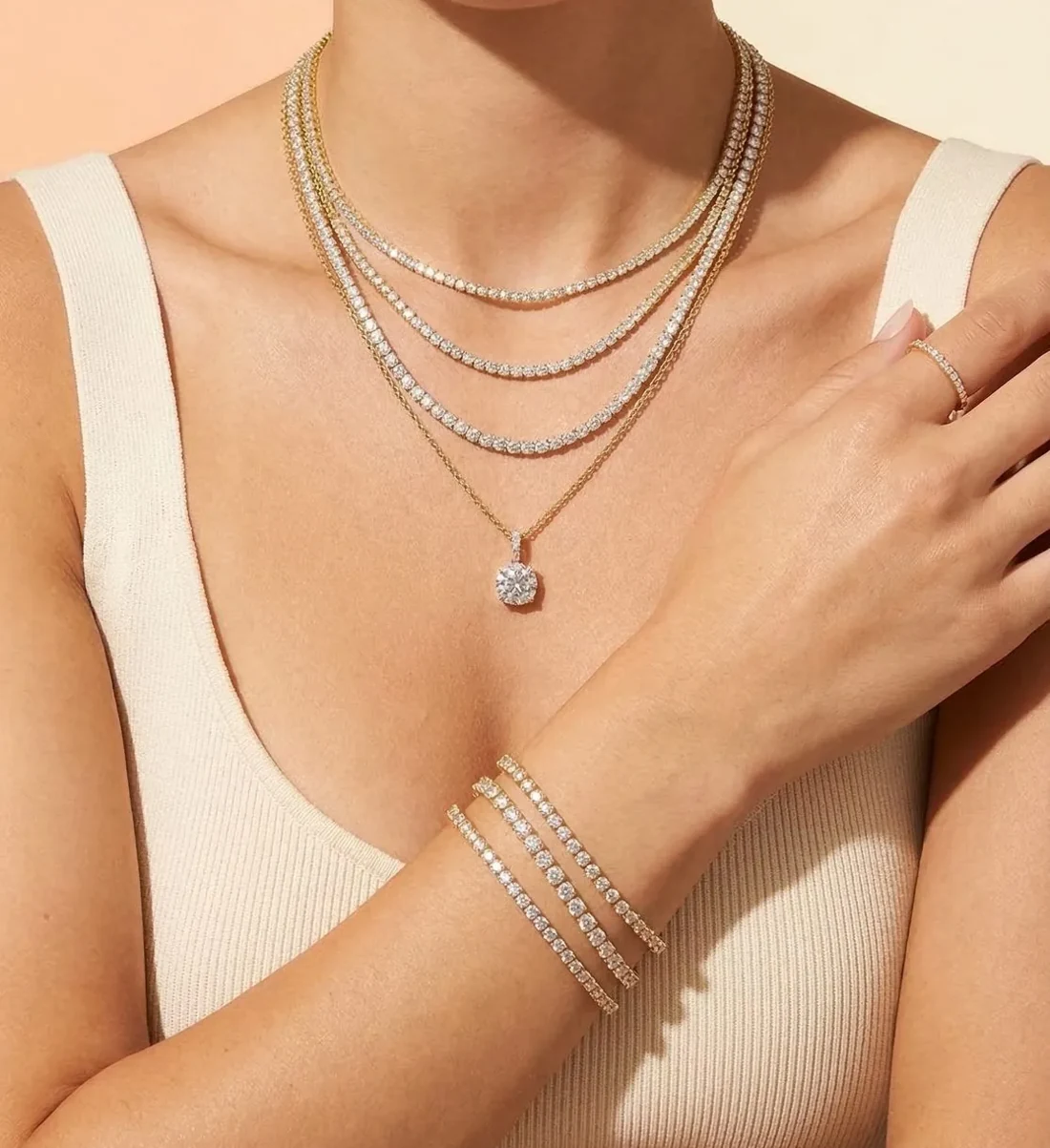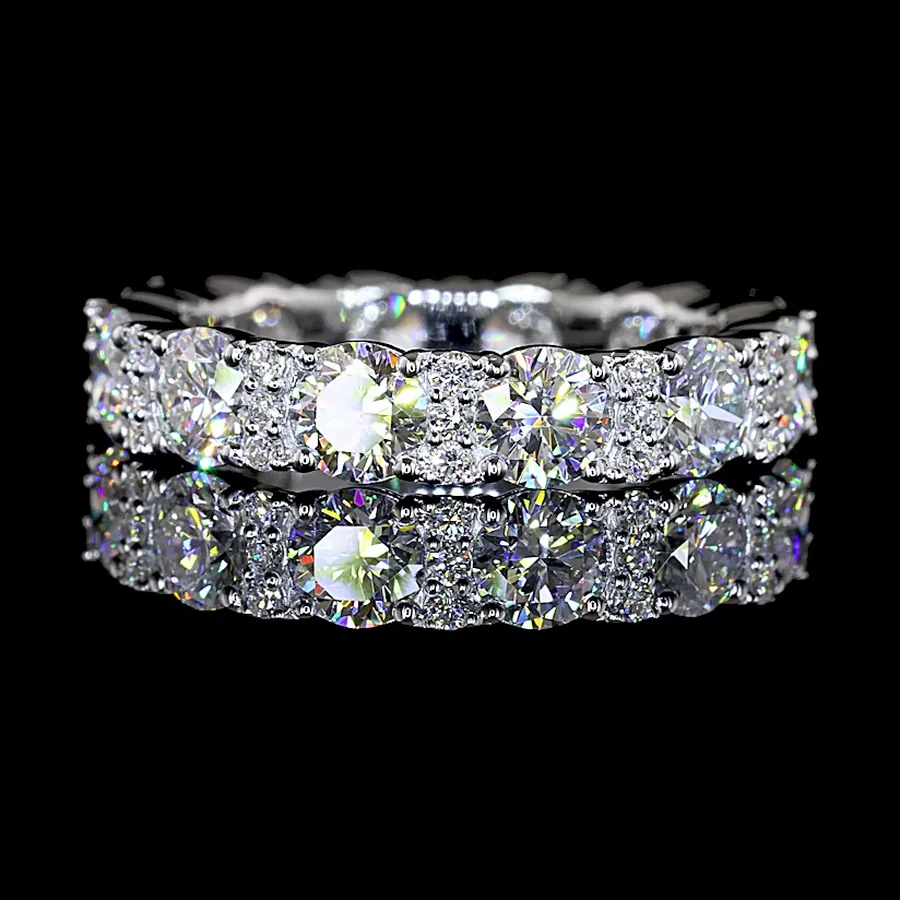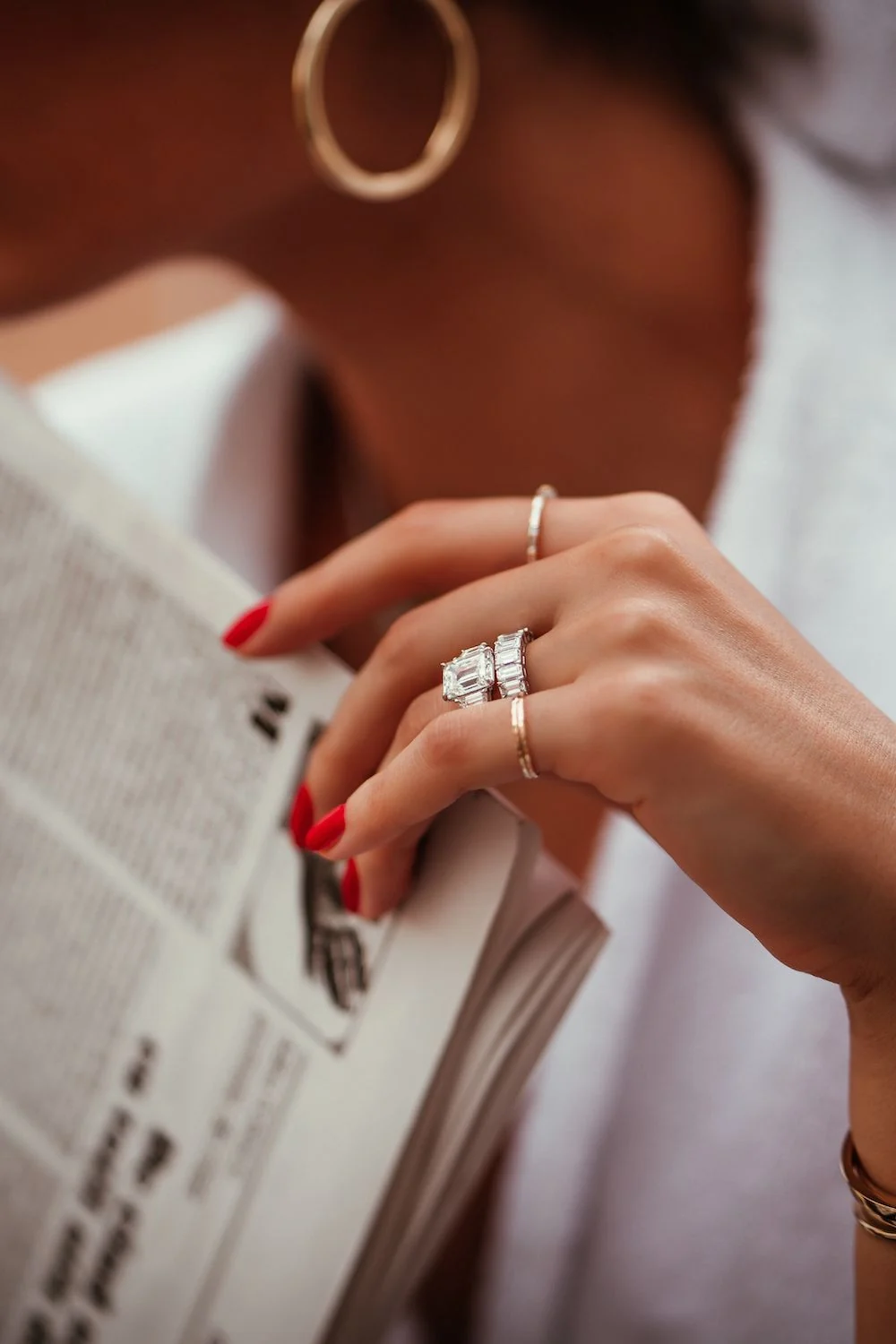
A lab-grown diamond and a natural diamond are the same material: carbon crystallized in the same cubic structure, with the same hardness, the same fire and the same grading scale. No eye can tell them apart; a gemological laboratory can, with instruments. Dorvelle sets lab-grown diamonds in every piece and says so on every page.
The same crystal
The US Federal Trade Commission defines a diamond as a mineral consisting essentially of pure carbon crystallized in the isometric system, and a lab-grown stone meets that definition in full. It is grown rather than mined, which the rules require sellers to disclose, and we do. But the thing on the hand is a diamond. Our lab-grown guide explains how the two growing methods, CVD and HPHT, produce the crystal.
Hardness is the same: 10 on the Mohs scale, the hardest material known. The refractive index is the same, so the stone bends light the same way. The dispersion is the same, so it throws the same fire. Cut the two stones to the same proportions and they return light identically.
Graded the same way
A lab-grown diamond is graded on the same four scales as a mined one: carat weight, color from D to Z, clarity from Flawless to Included, and cut. GIA issues laboratory-grown diamond reports with the same grades and the same wording as its natural reports, plus the growth method and any post-growth treatment. Graded the same way walks through what changed at GIA and why the report matters.
A D color, VVS2 clarity lab-grown stone is a D VVS2. The letter means the same thing it means on a mined stone. Diamond color and clarity, explained covers the scales themselves.
How they are told apart
Lab-grown and mined diamonds are told apart by spectroscopy and screening instruments in a gemological laboratory, not by eye: a trained grader with a loupe cannot separate them, and neither can a jeweler at the counter. The differences are in trace elements and growth patterns inside the crystal. That is what a laboratory reads when it issues a report.
Two visible markers exist, and both are added on purpose. Most graded lab-grown diamonds carry a laser inscription on the girdle, the thin edge of the stone, reading “Laboratory-Grown” with the report number. It is microscopic and read under magnification. And the paperwork says it: the report, the listing and the receipt all carry the words.
What is different
Three things differ between a lab-grown and a mined diamond: where it formed, what it costs, and whether it trades on a secondary market; nothing differs in how it looks or wears.
Origin. A mined diamond formed underground over geological time and was dug out. A lab-grown diamond formed in a chamber over weeks. Both are then cut and polished by the same trade, often on the same benches.
Price. Lab-grown prices have fallen hard as production scaled. One wholesale index tracked by analyst Edahn Golan is down more than 85 percent since 2018. A two carat lab-grown diamond now costs a small fraction of its mined equivalent, which is the reason the metal, not the stone, is now the expensive part of a ring. Why the metal became the expensive part has the arithmetic.
Resale. Mined diamonds trade on a secondary market. A lab-grown diamond is priced to be worn, not held, which is the whole reason a two carat stone can sit in a $750 ring.
Rarity. A mined stone of a given size and grade is rarer than a grown one. Some people value that. It changes nothing about how the stone looks or wears.
| Lab-grown diamond | Mined diamond | |
|---|---|---|
| Material | Carbon, cubic crystal | Carbon, cubic crystal |
| Mohs hardness | 10 | 10 |
| Grading | Same 4Cs, same labs | Same 4Cs, same labs |
| Told apart by | Laboratory instruments | Laboratory instruments |
| Formed | In a chamber, over weeks | Underground, over geological time |
| Price since 2018 | Down more than 85 percent | Holds a secondary market |
What Dorvelle does
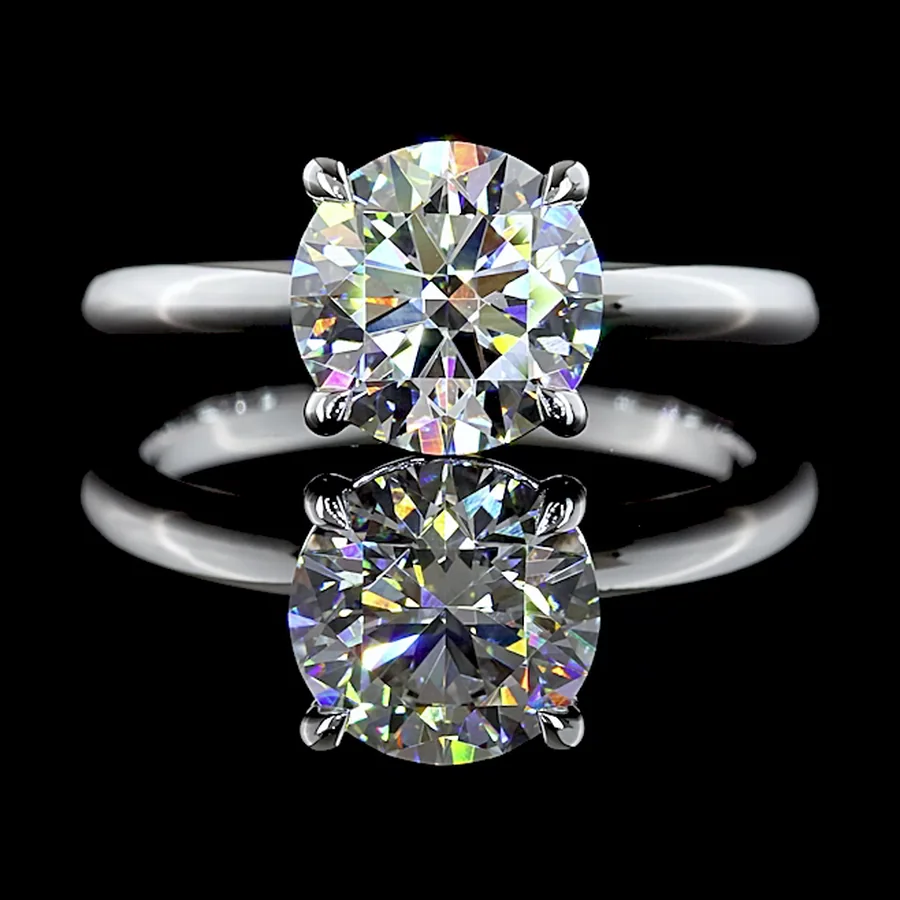
Every Dorvelle piece is set with a lab-grown diamond, graded for color and clarity, with a lab report on center stones over one carat. The same stone, in the same grade, goes into the 14k gold version the house makes on 47th Street. The sterling version carries the same diamond at a price that follows the metal down. The round solitaire holds a 2.02 ct, D color, VVS2 stone. Every product page lists the shape, carat weight, color and clarity.