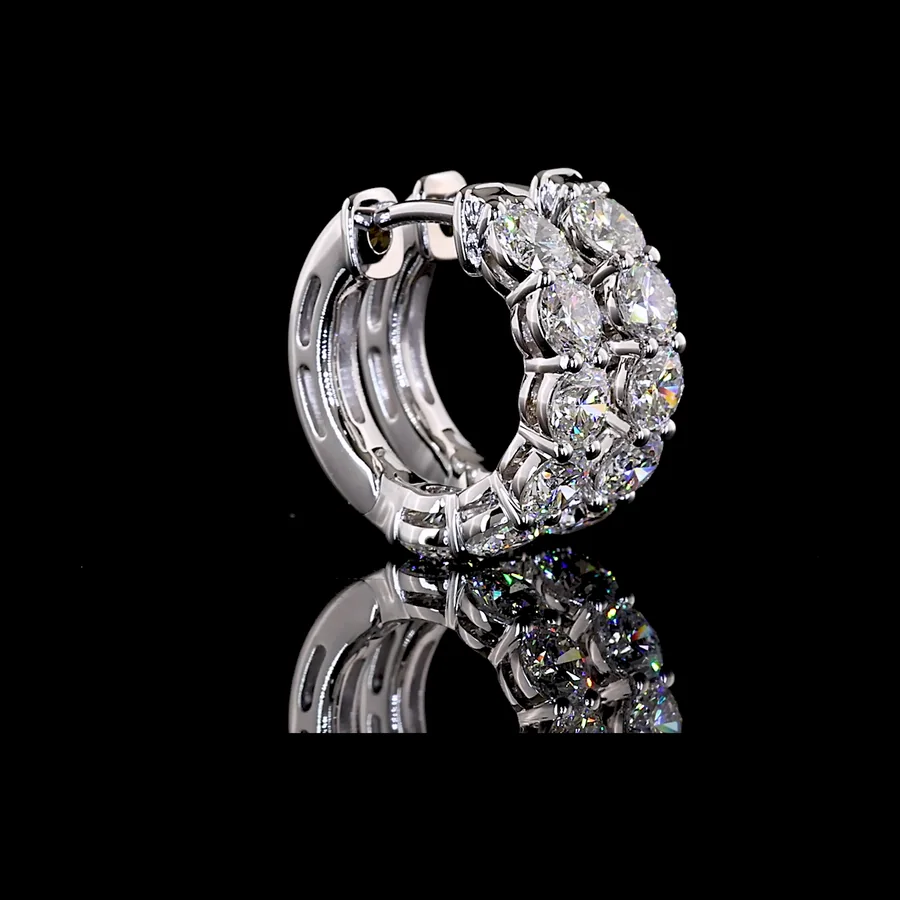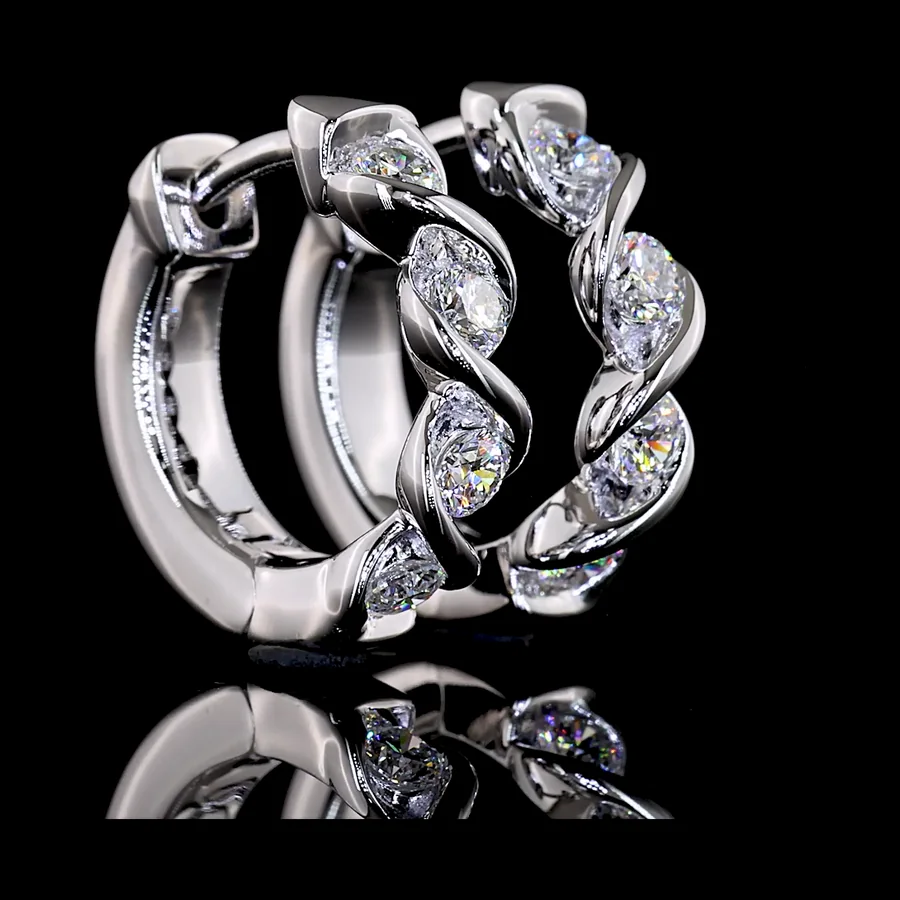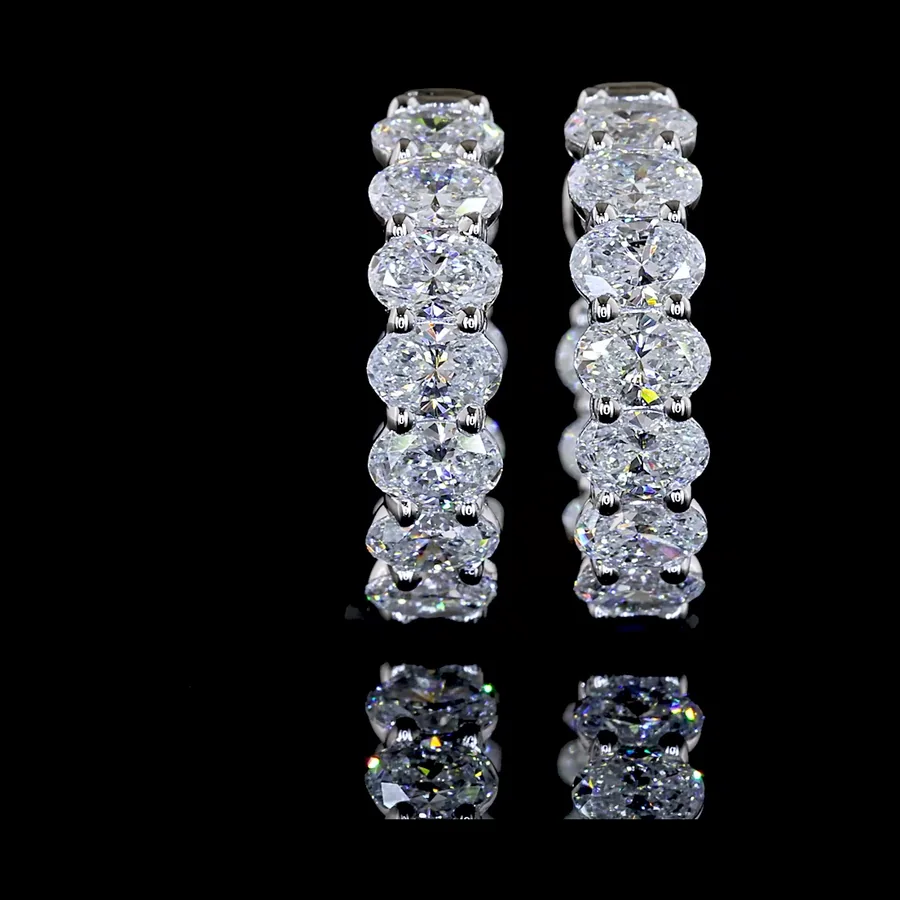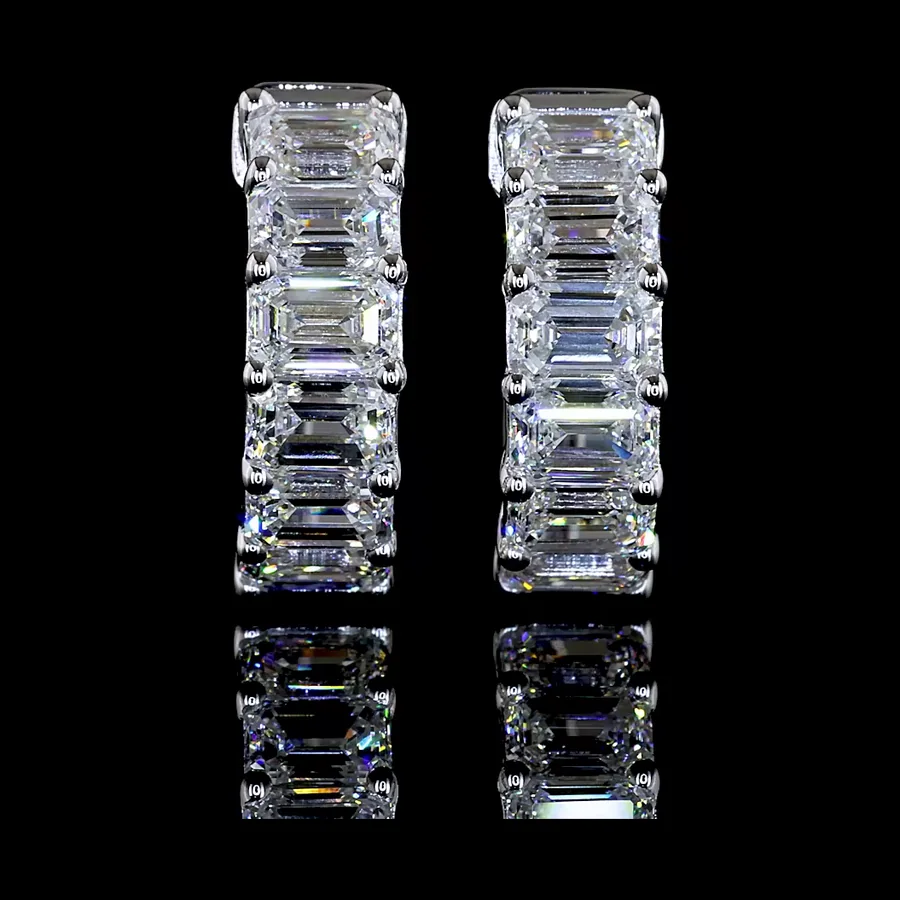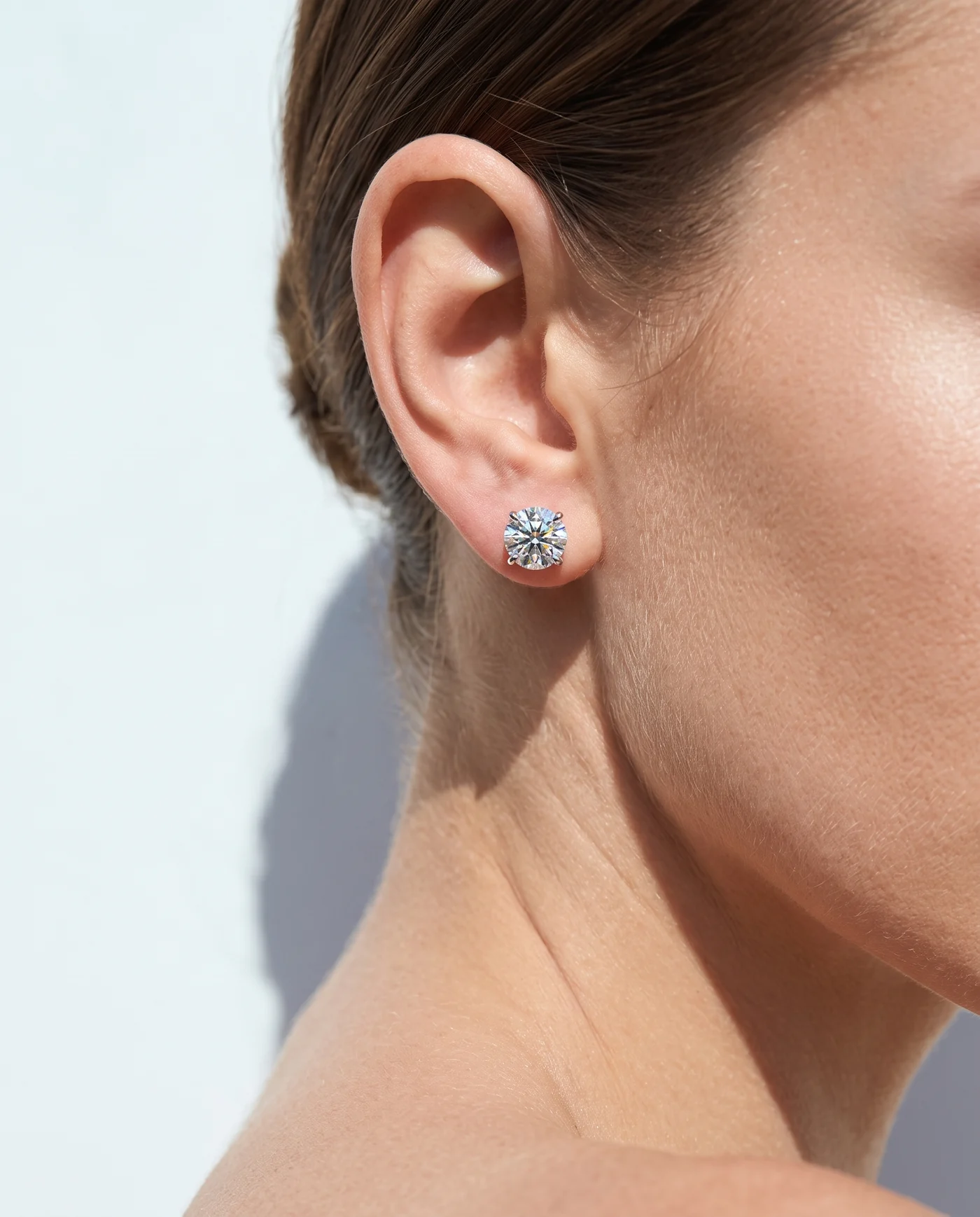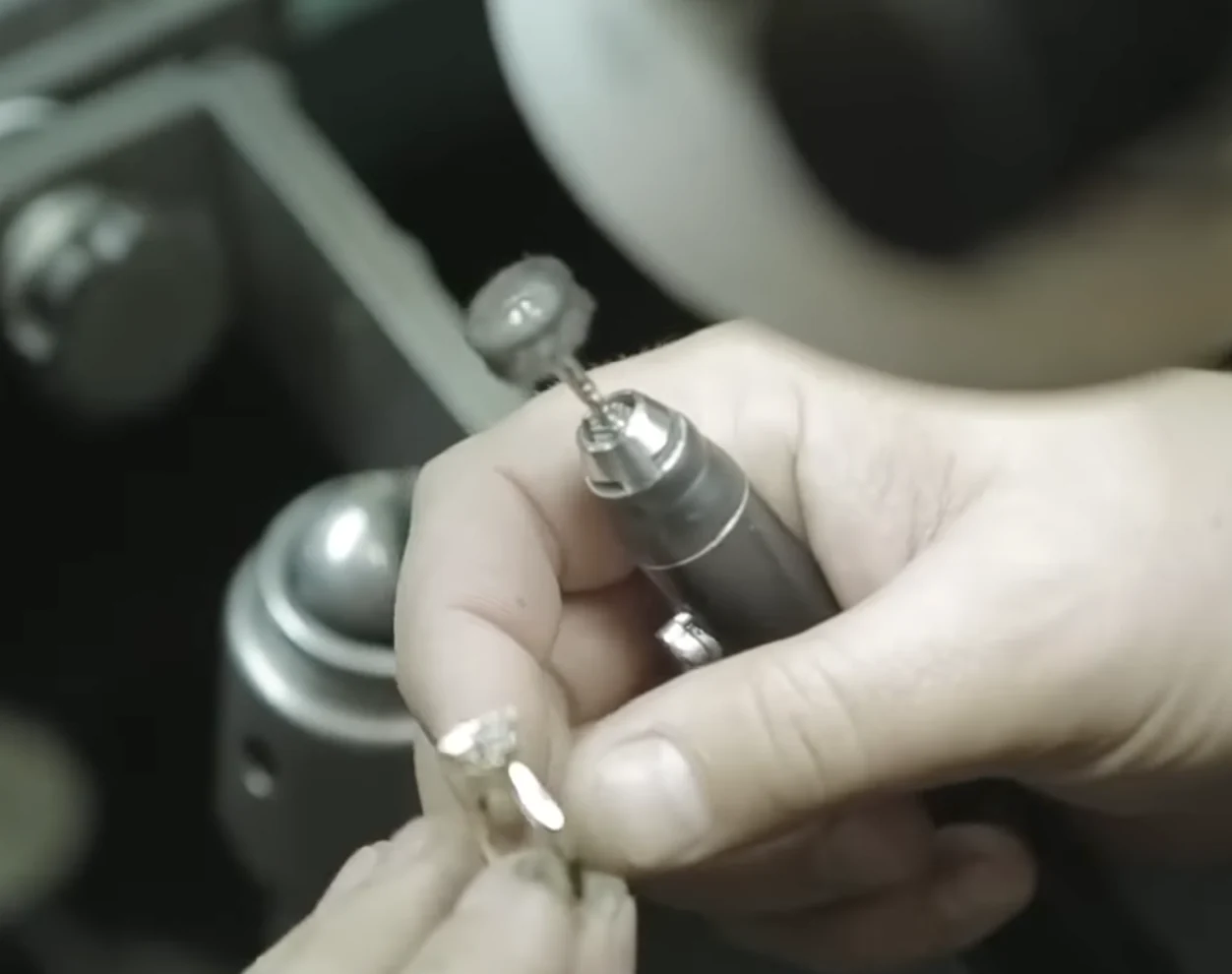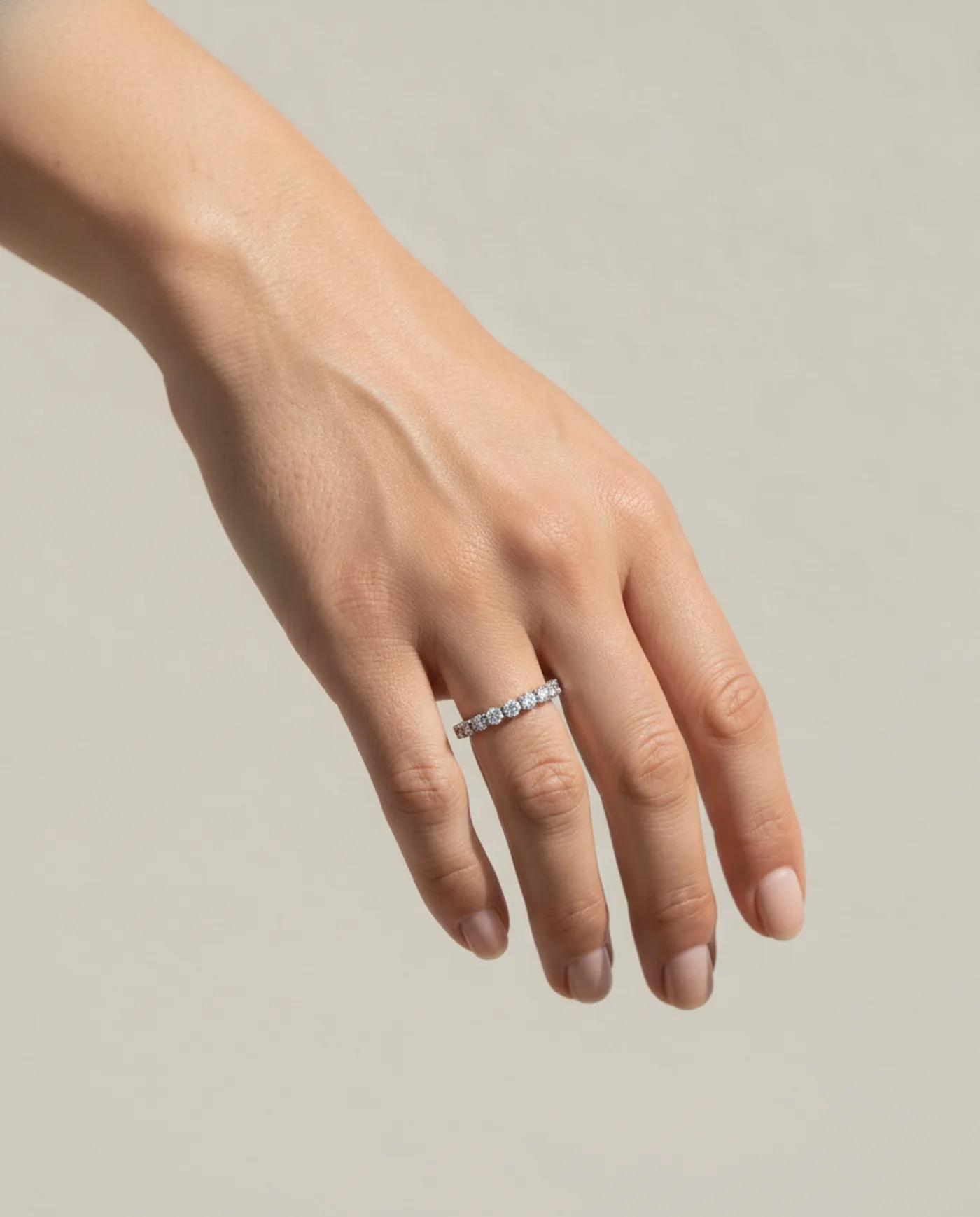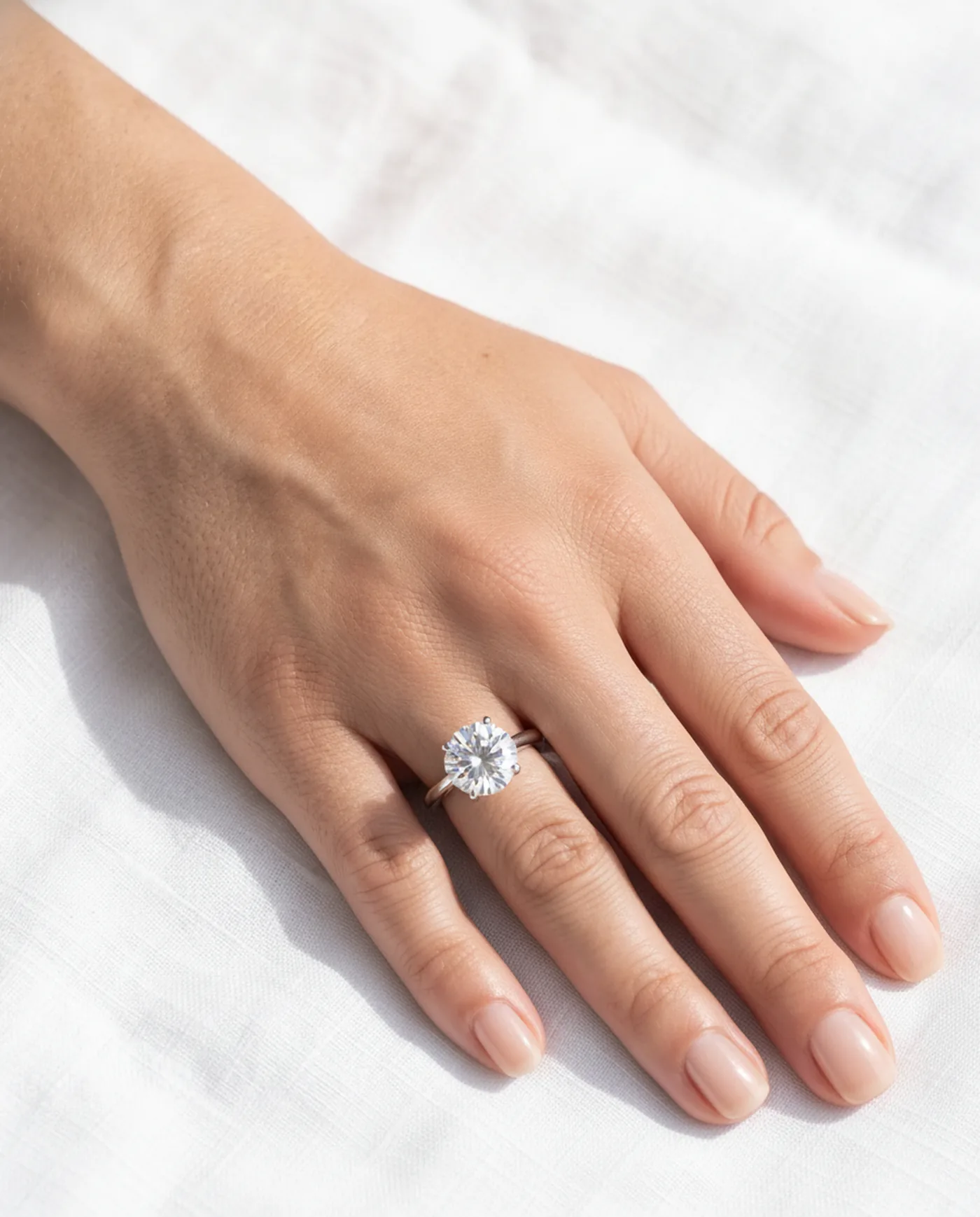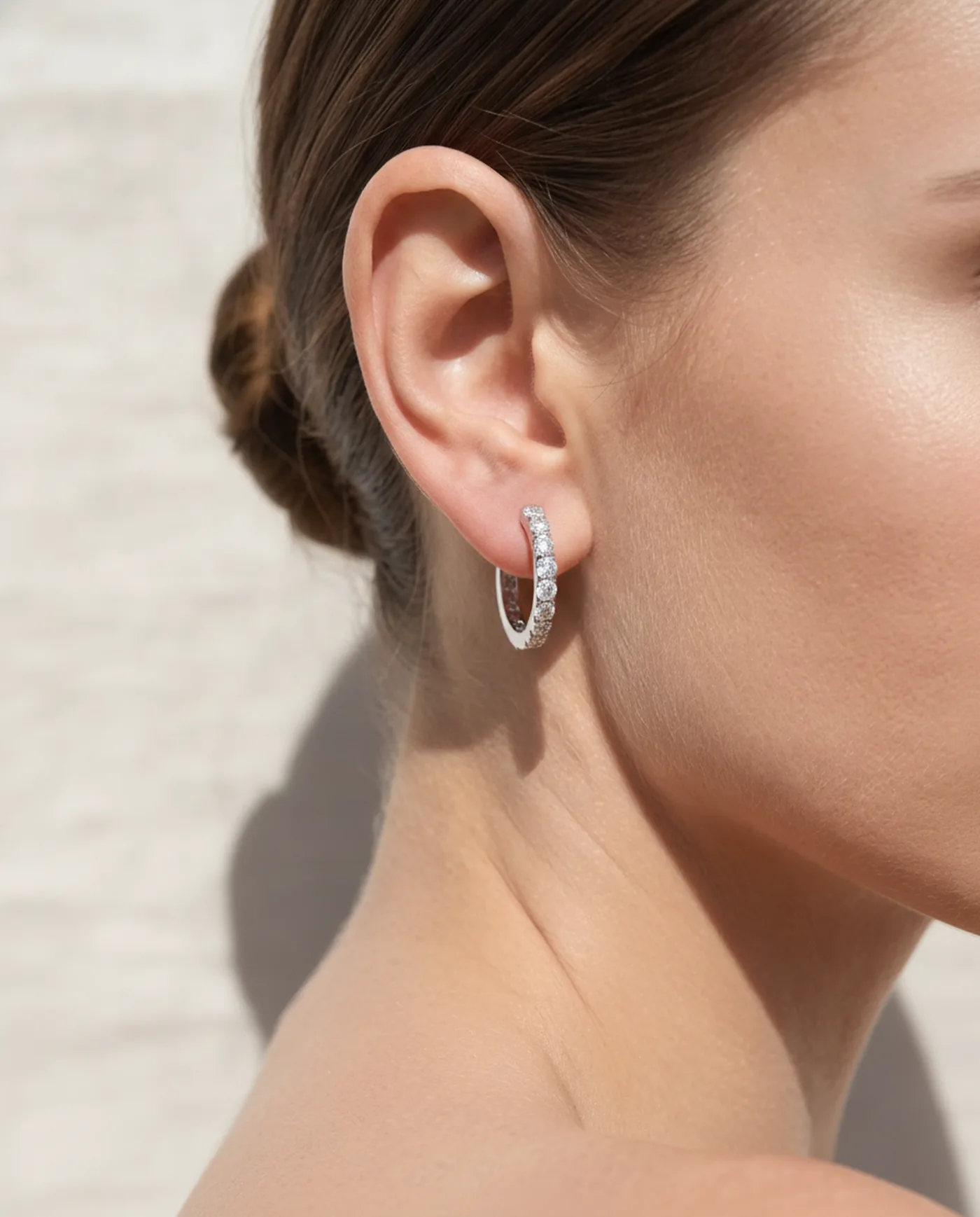
A huggie is a small hoop, usually 8 to 15 mm across, with a built-in hinge that clicks shut flush against the earlobe. A hoop is any larger ring that hangs below the lobe with air between the earring and the ear. Dorvelle makes both in sterling silver, set with lab-grown diamonds.
The difference, in three parts
A huggie is a hinged hoop of 8 to 15 mm that clicks shut flush against the lobe; a hoop is 15 mm or larger, hangs below the lobe, and closes with a hinged post, latch back or push back.
Size. Huggies run from about 8 mm to 15 mm in inner diameter, with 10 to 12 mm the most common. Small hoops start around 15 mm and run to 25 or 30 mm. Statement hoops go to 50 mm and beyond.
Fit. A huggie wraps the lobe. There is no gap. A hoop hangs, and the gap is part of the look.
Closure. Huggies close with a hinge and a click, built into the earring. Hoops use a hinged post, a latch back or a push back, depending on the design.
| Huggie | Hoop | |
|---|---|---|
| Size | 8 to 15 mm | 15 mm to 50 mm and beyond |
| Fit | Wraps the lobe, no gap | Hangs below the lobe |
| Closure | Built-in hinge and click | Hinged post, latch back or push back |
| Reads as | A stud with more presence | An earring seen across a room |
Where each one sits
A 10 mm huggie sits on the lobe as a thin line of stones, a 20 mm hoop sits just below the lobe and swings a little, and a 40 mm hoop reaches the jaw and moves with you. A huggie reads as a stud with more presence, and it stays put through hair, collars and sleep.
Face shape matters less than people think. What matters is how much of the earring you want visible from the front and how much movement you want. Our hoops guide goes through every size from 8 mm to 80 mm, the styles and how to judge a clasp.
Stones on a huggie
Carat total weight on a pair of diamond huggies is spread across many small stones, so a 1.5 ct pair is a row of small diamonds reading as a single bright curve, not one stone. The FAQ explains ct tw.
Stones on a hoop
A larger hoop has room for larger stones, set in a full circle or across the front-facing half, with the inside of the hoop against the neck often left plain to keep the earring light and comfortable.
The Dorvelle huggies and hoops
Dorvelle makes four huggies, from 0.33 to 2 ct, and four hoops, from 2 to 5 ct, all in sterling silver set with lab-grown diamonds and finished in rhodium or gold vermeil.
Huggies. The round huggies, 1.5 ct are the classic: a row of round stones all the way around. The round huggies, 0.33 ct are the smaller, quieter pair. The oval huggies, 2 ct and the emerald cut huggies, 2 ct use elongated stones for a flatter, more architectural line.
Hoops. The diamond hoops, 3 ct and the round hoops, 2.5 ct are the everyday hoop with stones. The oval hoops, 2 ct and the oval hoops, 5 ct carry larger oval stones for a bolder front.
All are sterling silver, finished in rhodium or gold vermeil, with the finish refreshed by mail whenever you like. The first time is free. The care guide covers the routine.
Wearing two at once
A huggie in the second piercing and a stud or hoop in the first is now the default ear, because a huggie sits flush and never knocks against the earring below it. If you are building a pair for a second piercing, measure the distance between the holes: a 10 mm huggie needs about that much clearance to close without touching the stud beneath.
Which to choose
Choose huggies for every day and for a second piercing above a stud, and choose a hoop of 20 mm and up for an earring that is seen across a room. Many people wear one of each, a huggie in the second hole and a hoop in the first.