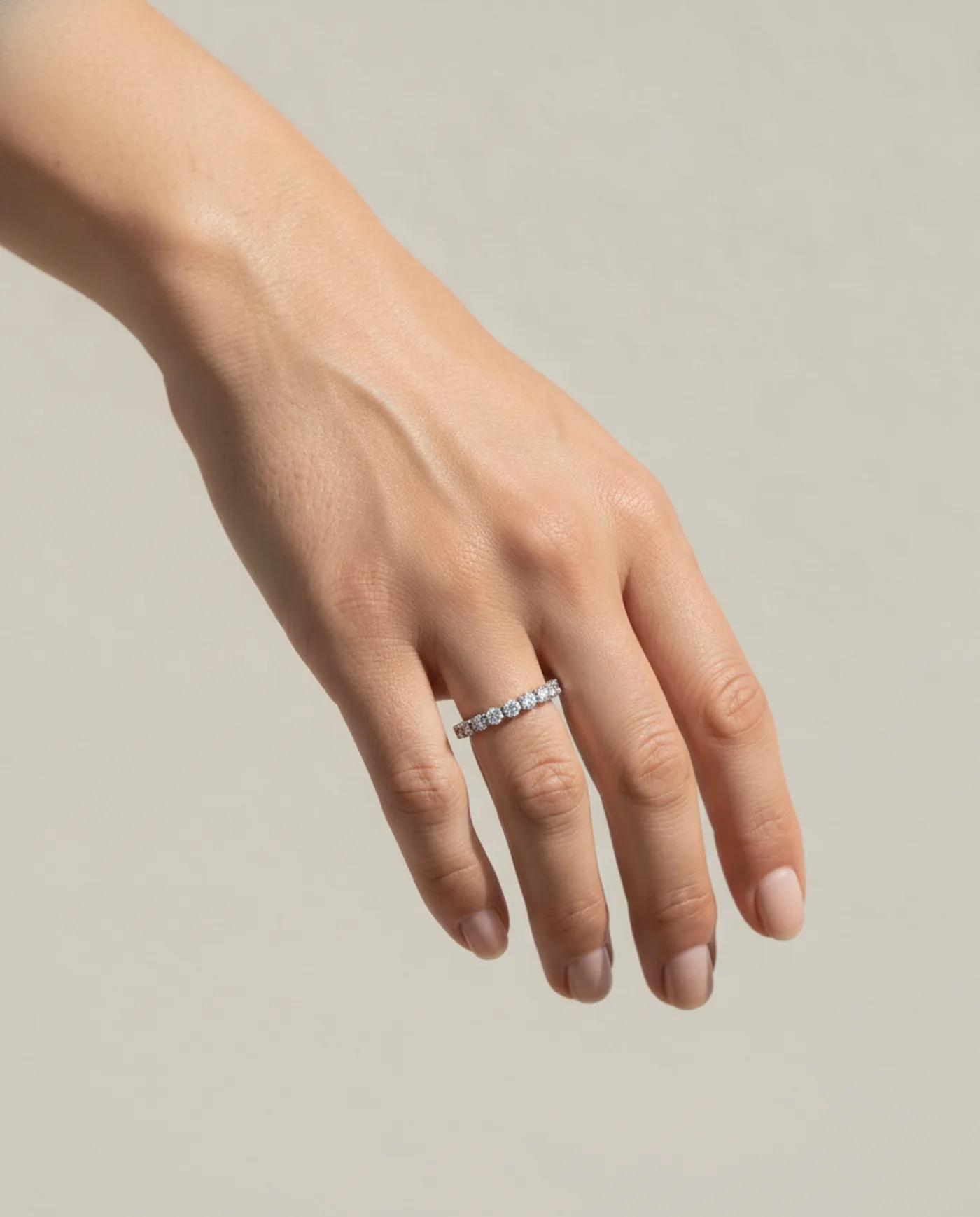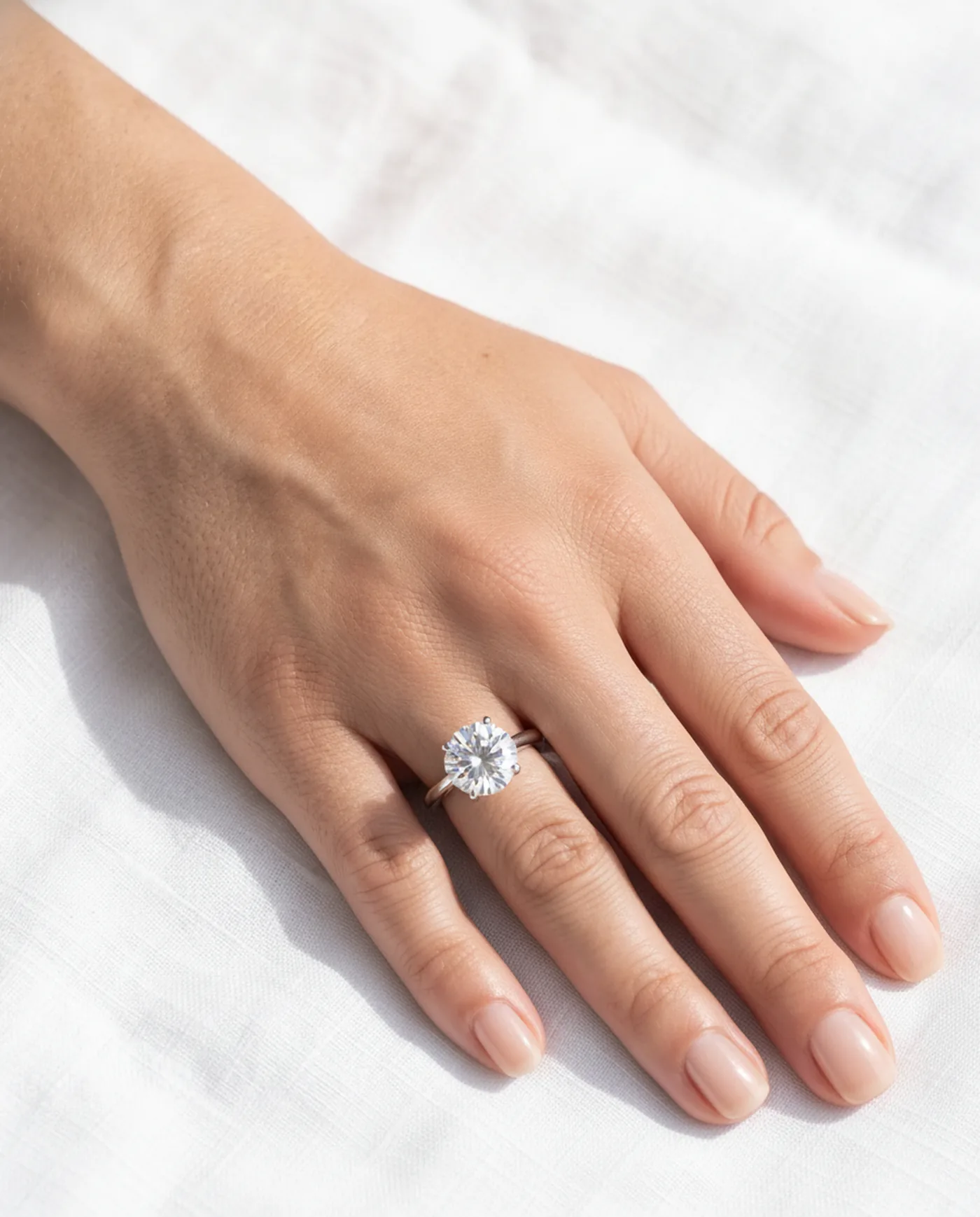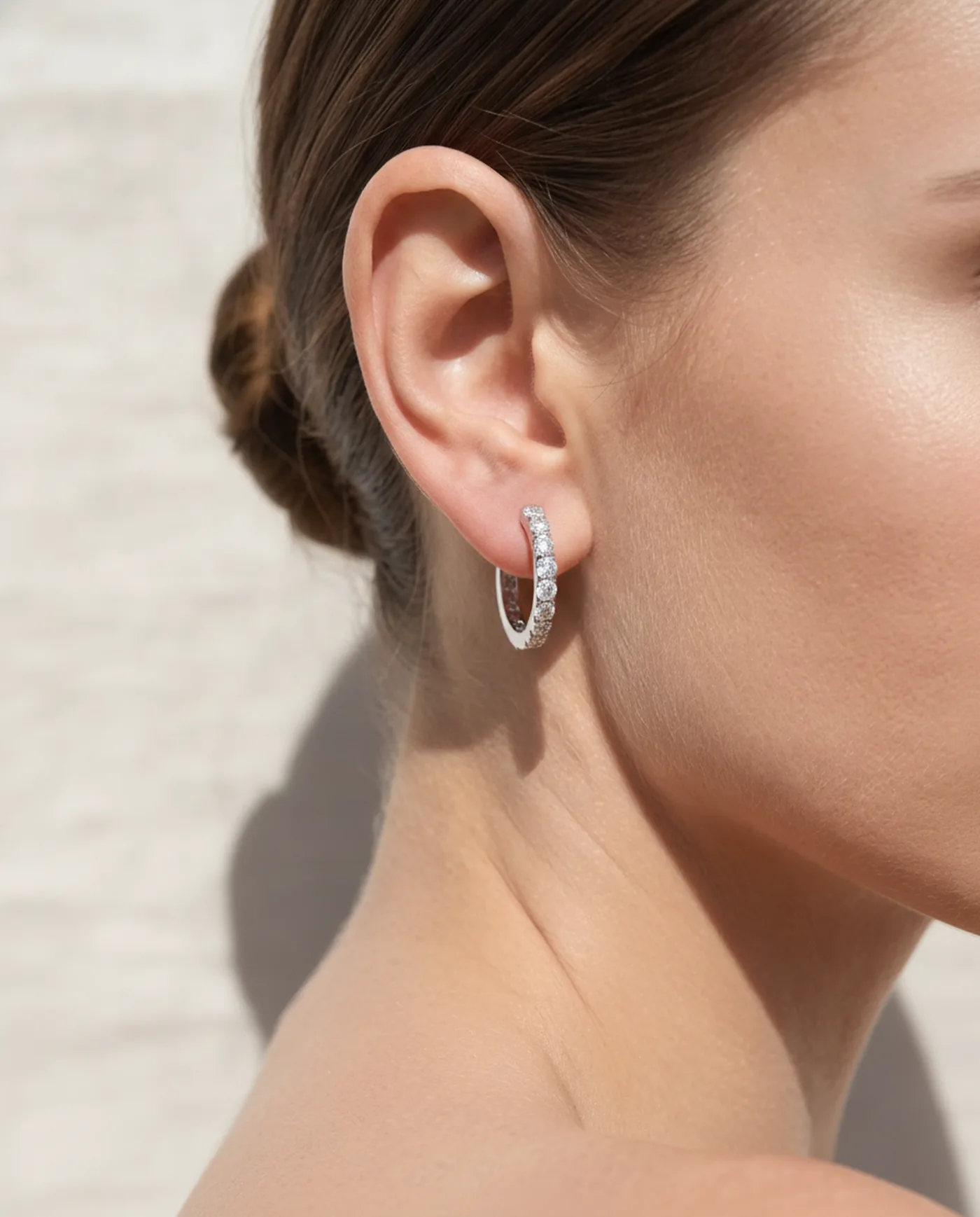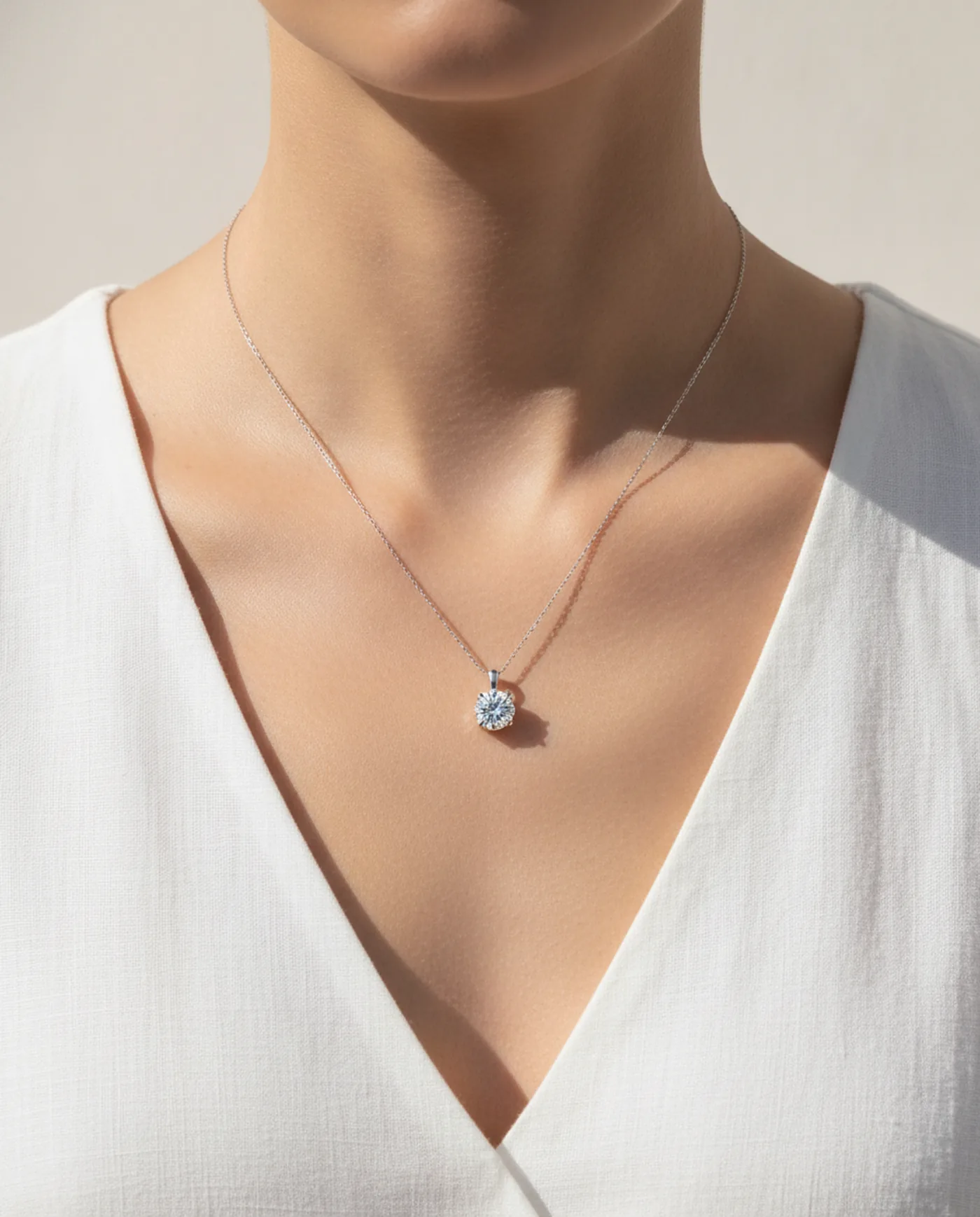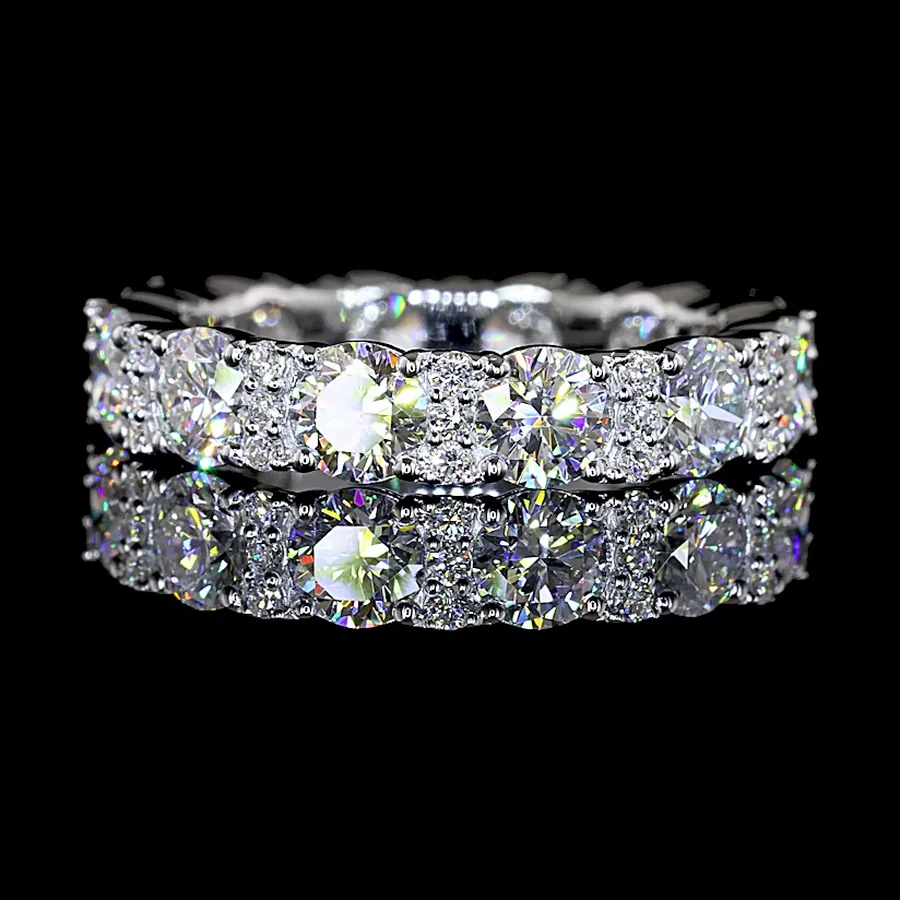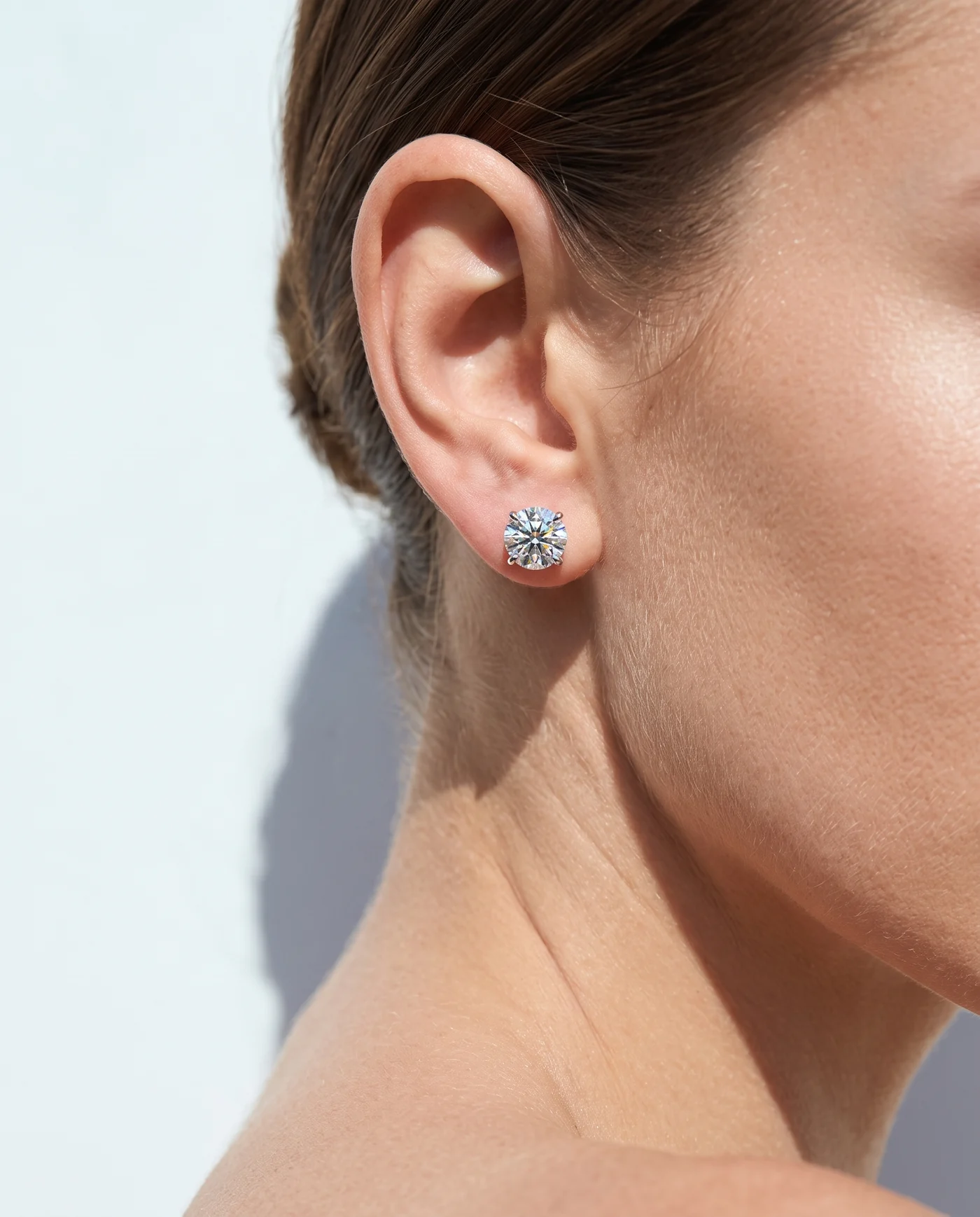
Diamond color is graded from D, which means colorless, down to Z, which shows light yellow or brown. Clarity is graded from Flawless, with nothing visible under 10x magnification, down to Included, where inclusions are obvious to the eye. Dorvelle lists both grades on every page; the round solitaire is D color, VVS2 clarity.
Color: D to Z
The diamond color scale runs 23 grades from D, colorless, to Z, light yellow or brown, set by the Gemological Institute of America and used worldwide. It starts at D on purpose, to break from older systems that used A, B and C loosely. The grades fall into five bands:
- D, E, F: colorless. No detectable color. D is the top of the scale.
- G, H, I, J: near colorless. A trace of warmth that a grader sees against a master stone and most people never see on the hand.
- K, L, M: faint. A warmth that begins to show, especially in larger stones and white metal.
- N to R: very light. Visible tint.
- S to Z: light. Clear yellow or brown.
Grades are judged face-down against master stones under controlled light, because color shows more from the side than from the top. Face-up, in a ring, the difference between D and F is invisible to nearly everyone. The difference between D and J is visible in a white setting to someone who looks for it.
| Band | Grades | On the hand |
|---|---|---|
| Colorless | D, E, F | No detectable color |
| Near colorless | G, H, I, J | A trace of warmth most people never see |
| Faint | K, L, M | Warmth begins to show in larger stones |
| Very light | N to R | Visible tint |
| Light | S to Z | Clear yellow or brown |
Clarity: Flawless to Included
Clarity describes inclusions, the small crystals, clouds and feathers inside a diamond, and blemishes on its surface, as seen under 10x magnification by a trained grader. Eleven grades:
- FL, Flawless. No inclusions and no blemishes at 10x.
- IF, Internally Flawless. No inclusions; minor surface blemishes only.
- VVS1, VVS2, Very Very Slightly Included. Inclusions so small that a skilled grader has difficulty finding them at 10x.
- VS1, VS2, Very Slightly Included. Minor inclusions that a grader finds with effort at 10x.
- SI1, SI2, Slightly Included. Inclusions a grader finds easily at 10x; sometimes visible to the eye in SI2.
- I1, I2, I3, Included. Inclusions obvious at 10x and often to the eye, which may affect how the stone handles light.
What “eye-clean” means, and why it matters more than the letter
A stone is eye-clean when nothing is visible to the unaided eye at normal viewing distance. Every VVS and VS diamond is eye-clean by definition; the inclusions in those grades exist only under a loupe. Many SI1 stones are eye-clean too.
That is the practical point of the scale. Above VS2, you are paying for what a grader sees under magnification, not for what you see on the hand. A D VVS2 stone and a D VS1 stone look identical across a table and nearly identical under a loupe. The grades matter for what you are buying and what the report certifies; they do not change what your eye sees once you are past eye-clean.
Reading the grades on a lab-grown diamond
Lab-grown diamonds are graded on the same color and clarity scales as mined stones, by the same laboratories, and the grades mean the same thing. GIA issues laboratory-grown diamond reports with the full 4Cs. Graded the same way covers how those reports read and what changed at GIA in 2025.
One practical difference: because a grown stone can be grown clean, high clarity grades are far more common in lab-grown diamonds than in mined ones. A VVS lab-grown stone is an ordinary thing to find. Lab-grown diamond vs natural covers the rest of the comparison.
The grades on Dorvelle pieces
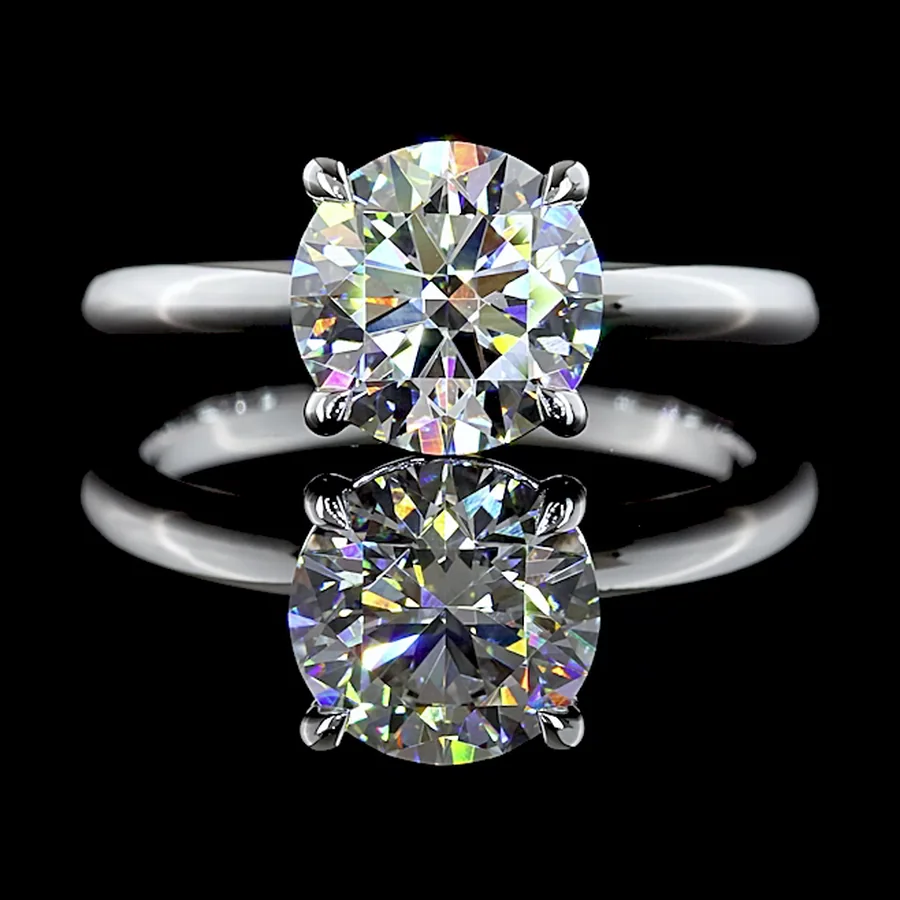
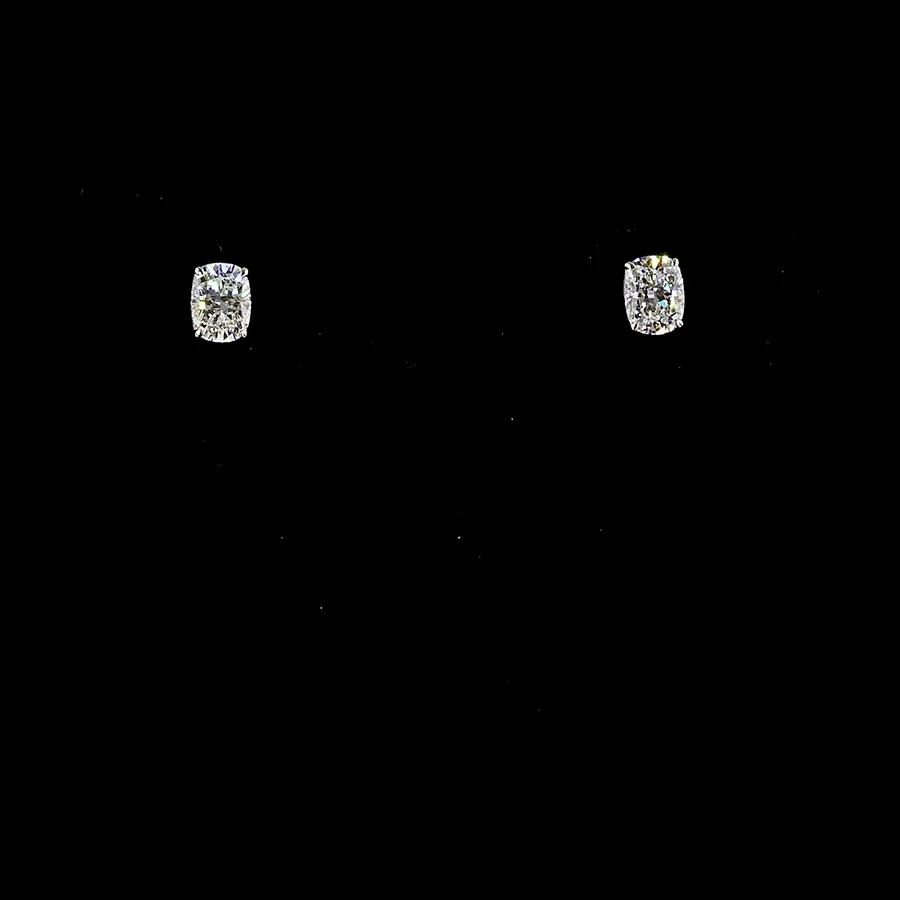
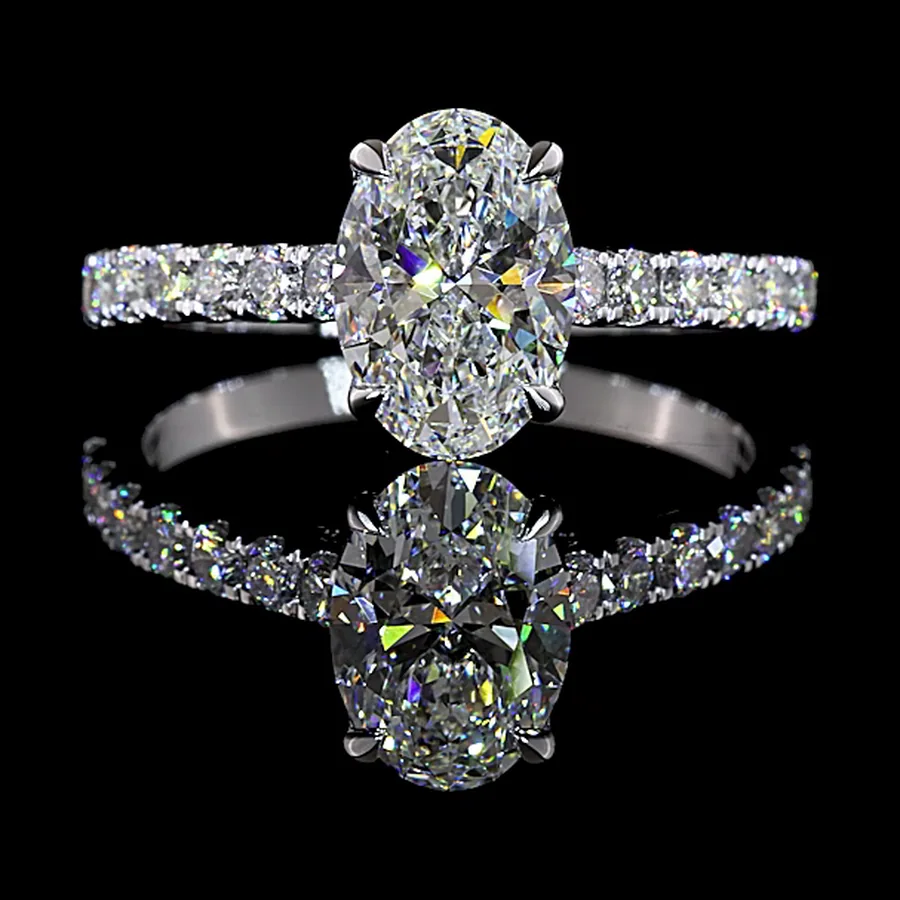
Every Dorvelle product page lists shape, carat weight, color and clarity, and most of the collection sits in E to F color and VS1 to VVS2 clarity, colorless and eye-clean. The round solitaire, 2 ct is a 2.02 ct, D color, VVS2 stone. The cushion studs, 2 ct are D VVS2. The oval hidden halo is D VVS2. Center stones over one carat come with a lab report; our lab-grown guide explains what is on it.